Top 5 Digital Pianos
with 88 Weighted Keys
Our #1 pick is the Roland FP-30X. A real piano touch for practice at home. We compared the 5 best 88-key weighted digital pianos on Amazon from Roland, Yamaha and Casio, from the budget FP-10 to the step-up Yamaha P225.
How we picked: we shortlist by Amazon Best Seller rank and number of ratings, then compare published specs. We don't test these products hands-on.
By Jamilur Rahman, Founder & Editor · Updated October 9, 2026
- Owner reviews checked
- Features side by side
- Quick & easy compare
- Smarter purchase

The short answer
For most players, the Roland FP-30X is the digital piano to buy. It pairs Roland’s PHA-4 Standard keyboard, with ivory-feel keys and a weighted, acoustic-style touch, with the SuperNATURAL Piano sound engine and a 22-watt stereo speaker system that fills a room. It is the sweet spot of Roland’s portable range: noticeably better sound and speakers than the entry FP-10, without jumping to stage-piano prices.
Brand-new beginners should look at the Yamaha P-145. Its Graded Hammer Compact action feels like a real piano, it adds Bluetooth audio so you can play along to songs, and Yamaha’s apps help with practice. On a tight budget, the Roland FP-10 gives you the same PHA-4 keys as the FP-30X for less, with smaller speakers. If space is tight or you want to move the piano around, the Casio Privia PX-S1100 is very slim, weighs under 25 lbs and can even run on batteries. Returning players who want more should step up to the Yamaha P225, with Yamaha’s CFX concert grand sound and a graded action.
Skip the FP-30X if you play mostly through headphones in a small apartment. Its biggest upgrade over the FP-10 is the louder speaker system, which you will not hear in headphones. And if you only want to learn a few songs or chords for fun, a 61-key keyboard is cheaper and lighter. Buy a weighted 88-key piano when you want to learn real piano technique.
Compare them side by side
Everything that matters, in one table. Swipe to see all 5.
| Product | Best Overall Roland FP-30X 88-key portable digital piano |  Best for Beginners Yamaha P-145BT 88-key compact digital piano |  Best Budget Roland FP-10 88-key compact digital piano |  Most Portable Casio Privia PX-S1100 Slim 88-key digital piano | 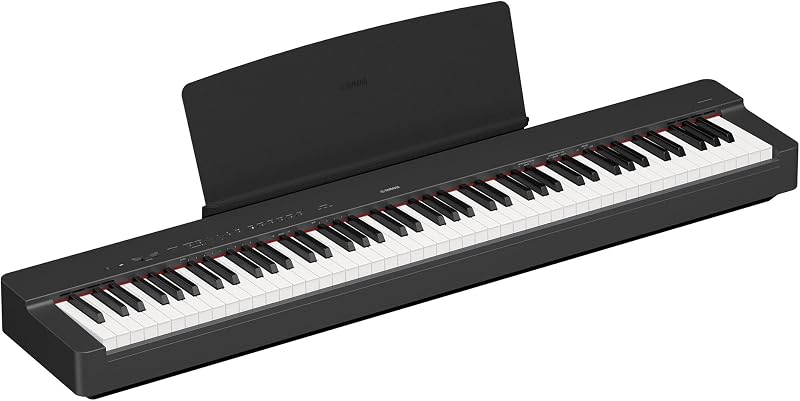 Best Upgrade Yamaha P225 88-key portable digital piano |
|---|---|---|---|---|---|
| BeastScore | 92 / 100 | 90 / 100 | 88 / 100 | 87 / 100 | 89 / 100 |
| Best for | Most players, beginner to intermediate | New players learning with apps | Getting great keys for the least money | Small spaces and players on the move | Returning players who want a better sound |
| Typical price (checked October 9, 2026) | $600–$700 | $500–$560 | $450–$520 | $700–$760 | $730–$800 |
| Key action | PHA-4 Standard, ivory feel | Graded Hammer Compact (GHC) | Ivory-feel weighted keys | Weighted, touch-responsive | Graded weighted action |
| Sound engine | SuperNATURAL Piano | Yamaha grand piano sample | SuperNATURAL Piano | German grand piano tone | Yamaha CFX concert grand |
| Speakers | 22 W stereo | Built-in | Built-in | Built-in | Built-in |
| Bluetooth | See listing | Bluetooth audio | Bluetooth MIDI (Roland Piano App) | Audio and MIDI (WU-BT10 adapter included) | See listing |
| Key features |
|
|
|
|
|
BeastScore here is our overall rating out of 100, based on published specs and Amazon owner reviews. Prices change daily, so tap "View on Amazon" for today's price. We may earn a small commission, at no extra cost to you. Learn more
Why each one made the list
What each pick does best, where it falls short, and the typical Amazon price when we checked.
- 1. Best Overall
Roland FP-30X
BeastScore 92 / 100Typically $600–$700 on Amazon (checked October 9, 2026)The FP-30X is the sweet spot of Roland’s portable pianos. The listing says it uses the PHA-4 Standard keyboard, with ivory-feel keys and an acoustic-style weighted touch, and Roland’s SuperNATURAL Piano engine for expressive tone from soft to loud. Compared with the FP-10, Roland lists a better sound engine, more polyphony and a much stronger 22-watt stereo speaker system, so it sounds full in a living room without external speakers. It also has electric pianos, organs, strings and synths, and a desktop setting for when it sits on a table. Owners praise the key feel. The trade-offs: no stand in the box, and it costs more than the FP-10.
Pros- PHA-4 keys are among the best-feeling at this price
- 22 W speakers fill a room
- Plenty of extra sounds: electric piano, organ, strings
Cons- Stand, bench and pedal unit sold separately
- Costs more than the FP-10 with the same key action
- Speaker upgrade is wasted if you only use headphones
- 2. Best for Beginners
Yamaha P-145BT
BeastScore 90 / 100Typically $500–$560 on Amazon (checked October 9, 2026)The P-145BT is Yamaha’s current entry piano, and it is the friendliest place to start. The listing says it has 88 weighted, touch-sensitive keys with the Graded Hammer Compact action for a natural acoustic feel, and a Yamaha grand piano sound with natural resonance. The big beginner perk is Bluetooth audio: stream a song from your phone through the piano’s speakers and play along. Yamaha’s Smart Pianist and Rec’n’Share apps help with practice and recording. It is slim and light, and comes with a music rest and sustain foot switch. The trade-offs: the speakers are modest, and the basic foot switch is not a real piano pedal.
Pros- Easy for beginners with practice apps
- Bluetooth audio for playing along to songs
- Slim, light body fits small rooms
Cons- Smaller speakers than the FP-30X
- Included foot switch is basic, not a real pedal
- Fewer sounds than the Roland
- 3. Best Budget
Roland FP-10
BeastScore 88 / 100Typically $450–$520 on Amazon (checked October 9, 2026)The FP-10 is the cheapest way to get Roland’s excellent key feel. The listing says its 88 ivory-feel keys feel like an acoustic piano, and it uses the same SuperNATURAL Piano engine family as the FP-30X. A quiet key action and headphone output let you practice late without bothering anyone. USB and Bluetooth MIDI connect it to GarageBand, piano-learning apps and the Roland Piano App, which handles sound selection and the metronome from your phone. It is one of the most-reviewed 88-key pianos on Amazon. The trade-off is the speakers: they are fine for a bedroom but thin in a big room, and there are fewer sounds.
Pros- Roland key feel at an entry price
- Bluetooth MIDI works with learning apps
- Quiet keys and headphone jack for late practice
Cons- Small speakers sound thin in a big room
- Few onboard sounds
- No Bluetooth audio streaming
- 4. Most Portable
Casio Privia PX-S1100
BeastScore 87 / 100Typically $700–$760 on Amazon (checked October 9, 2026)The PX-S1100 is the piano for small rooms and people who move it a lot. The listing says it is 43% smaller than earlier Privia models, weighs under 25 lbs and runs on batteries, so you can play it on a desk, a table or even your bed. It has a German grand piano tone with string and damper resonance plus 17 other sounds, and the included WU-BT10 adapter adds Bluetooth audio and MIDI. The Casio Music Space app adds learning tools. The trade-offs: touch controls are easy to bump, and it costs more than the Roland and Yamaha entry models.
Pros- Very slim and light, runs on batteries
- Bluetooth audio and MIDI adapter in the box
- Stylish gloss finish with lit touch controls
Cons- Pricier than the FP-10 and P-145
- Touch controls can be bumped by accident
- Slim keys feel a little lighter than the Roland’s
- 5. Best Upgrade
Yamaha P225
BeastScore 89 / 100Typically $730–$800 on Amazon (checked October 9, 2026)The P225 is the step up for players who already know they will stick with it. The listing says it uses the Yamaha CFX Full Concert Grand voice, sampled from Yamaha’s flagship concert piano, and a graded weighted action that is heavier in the low keys and lighter in the high keys, just like an acoustic. You get 24 voices, including pianos, organs, strings and bass, and the same Smart Pianist and Rec’n’Share apps as the P-145. A music rest and foot switch are included. The trade-offs: it is the priciest here, and the included foot switch is basic for a piano at this level.
Pros- CFX concert grand sound is the richest here
- Graded action like a real acoustic
- 24 voices plus Yamaha’s practice apps
Cons- Most expensive piano here
- Basic foot switch, a real pedal is extra
- Stand sold separately
All 5 compared, in one look
See every pick on one chart, or tap one to put it head to head with Roland FP-30X. Ratings out of 10 are our estimates from published specs and Amazon owner reviews, not hands-on tests. Bigger shape = better.
- Key feelTie
- Piano soundYamaha P225 · 9.6/10
- SpeakersRoland FP-30X · 9.2/10
- PortabilityCasio Privia PX-S1100 · 9.8/10
- Learning toolsYamaha P-145BT · 9.4/10
- ValueRoland FP-10 · 9.6/10
Roland FP-30X
Roland’s excellent PHA-4 keys, a rich piano sound and room-filling 22 W speakers.
- PHA-4 keys
- SuperNATURAL sound
- 22 W speakers
Quick tips before you buy
Fully weighted, graded keys build real technique. Skip semi-weighted keyboards if you want to play acoustic piano later.
If you mostly practice in headphones, put your money into keys, not speakers. Bigger speakers help in a living room.
Most portable pianos ship without a stand. A matching stand and an adjustable bench make practice comfortable.
Bluetooth and USB connect to learning apps and recording software, which keep beginners practicing.
Quick answers
What is the best digital piano for beginners?+
The Yamaha P-145 for the easiest start: weighted Graded Hammer Compact keys, Bluetooth audio to play along to songs and Yamaha’s practice apps. The Roland FP-10 is the best budget alternative with excellent key feel.
Roland FP-30X or Yamaha P-145?+
The FP-30X has a more refined PHA-4 action, more sounds and much bigger 22 W speakers. The P-145 is lighter, cheaper and very beginner-friendly with Bluetooth audio. Choose Roland for sound and feel, Yamaha for simplicity and price.
Do I need 88 weighted keys?+
If you want to learn real piano, yes. 88 keys cover every piece you will play, and weighted keys build the finger strength and control you need on an acoustic piano.
Is the Roland FP-10 good enough?+
Yes. It shares Roland’s PHA-4 key feel with the FP-30X. The main difference is the speakers and number of sounds, which matter less if you practice with headphones.
What else do I need to buy with a digital piano?+
A stand, an adjustable bench, a real sustain pedal (the included foot switches are basic) and a good pair of headphones. Budget roughly $100 to $250 for the extras.
How long do digital pianos last?+
With normal home use, owners report 10 years or more from Yamaha, Roland and Casio. Unlike an acoustic piano, they never need tuning.