
Motorola Razr 50 Ultra vs Xiaomi Redmi Note 14S: Which One Should You Buy?
Motorola Razr 50 Ultra edges ahead with a BeastScore of 84.0/100 — but the right choice depends on what matters to you.
Motorola Razr 50 Ultra

Xiaomi Redmi Note 14S
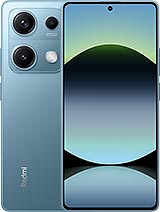
Motorola Razr 50 Ultra wins 4 of 7 categories
Here's exactly where each phone is stronger.
Bigger shape = better phone.
Scores out of 100. How we score
- SpeedMotorola Razr 50 Ultra9086
- CameraMotorola Razr 50 Ultra8880
- VideoNot enough data
- SelfieNot enough data
- BatteryXiaomi Redmi Note 14S7086
- DisplayMotorola Razr 50 Ultra10084
- ConnectivityMotorola Razr 50 Ultra6555
- SecurityXiaomi Redmi Note 14S1434
- ValueXiaomi Redmi Note 14S5585
- Xiaomi Redmi Note 14S has the bigger battery5,000 mAh vs 4,000 mAh
- Xiaomi Redmi Note 14S charges faster67W vs 45W
- Motorola Razr 50 Ultra has a smoother screen165 Hz vs 120 Hz
- Motorola Razr 50 Ultra has the bigger screen6.9" vs 6.67"
- Xiaomi Redmi Note 14S is lighter179 g vs 189 g
- Motorola Razr 50 Ultra has newer Bluetooth5.4 vs 5.2
- Motorola Razr 50 Ultra has the faster chipSnapdragon 8s Gen 3 vs Helio G99 Ultra
- Xiaomi Redmi Note 14S is better protected from water and dustIP64 vs IP48
Why buy each phone
Swipe ⇄Motorola Razr 50 Ultra wins — BeastScore 84.0/100
The Motorola Razr 50 Ultra is the better pick for most people thanks to its smoother screen (165 Hz vs 120 Hz) and bigger screen (6.9" vs 6.67"). The Xiaomi Redmi Note 14S is worth a look if you prefer its bigger battery (5,000 mAh vs 4,000 mAh).
Smoother display: 165 Hz vs 120 Hz
Larger battery: 5,000 mAh vs 4,000 mAh · Faster wired charging: 67W vs 45W
Common questions
Which is better: Motorola Razr 50 Ultra or Xiaomi Redmi Note 14S?
The Motorola Razr 50 Ultra is the better pick for most people thanks to its smoother screen (165 Hz vs 120 Hz) and bigger screen (6.9" vs 6.67"). The Xiaomi Redmi Note 14S is worth a look if you prefer its bigger battery (5,000 mAh vs 4,000 mAh). BeastScore: Motorola Razr 50 Ultra 84.0/100, Xiaomi Redmi Note 14S 84.1/100.
What are the main battery and display differences between Motorola Razr 50 Ultra and Xiaomi Redmi Note 14S?
Motorola Razr 50 Ultra has a 6.9-inch display and 4000 mAh battery. Xiaomi Redmi Note 14S has a 6.67-inch display and 5000 mAh battery.
How do Motorola Razr 50 Ultra and Xiaomi Redmi Note 14S compare for speed?
Motorola Razr 50 Ultra scores 90/100 for performance; Xiaomi Redmi Note 14S scores 86/100.
Similar Smartphones






More Smartphones comparisons
Motorola Razr 50 Ultra vs Motorola Razr 70 Ultra
Motorola Razr 40 Ultra vs Motorola Razr 50 Ultra
Samsung Galaxy Z Flip7 FE 5G vs Motorola Razr 50 Ultra
Galaxy Z Flip 7 vs Motorola Razr 50 Ultra
Galaxy Z Flip6 vs Motorola Razr 50 Ultra
Xiaomi Redmi Note 12S vs Xiaomi Redmi Note 14S
Xiaomi Redmi Note 14 vs Xiaomi Redmi Note 14S
Xiaomi Redmi Note 14 Pro vs Xiaomi Redmi Note 14S
Gear for the Motorola Razr 50 Ultra
All Amazon Finds →Related articles
All articles → Copilot+ PC Silicon Deep Dive
Intel Lunar Lake (Core Ultra 200V) vs. AMD Strix Point (Ryzen AI 300) vs. Qualcomm Snapdragon X Elite: The Definitive Copilot+ PC Silicon Architecture, Battery Life, NPU, and x86 vs. ARM Benchmark Showdown (2026)
An exhaustive 3-way architectural breakdown pitting Intel's Memory-on-Package Lunar Lake (Core Ultra 7 258V / 288V), AMD's Zen 5 / RDNA 3.5 Strix Point (Ryzen AI 9 HX 370), and Qualcomm's ARM Oryon Snapdragon X Elite against each other across IPC, multi-threaded efficiency, gaming FPS, local NPU TOPS, and real-world 20+ hour battery life.
Read → Flagship Monitor Shootout
Samsung Odyssey Neo G9 57" vs. Odyssey OLED G9 49" vs. ASUS ROG Swift PG49WCD vs. LG UltraGear 45GS96QB: The Definitive Flagship Super Ultrawide & Curved Gaming Monitor Architecture, Dual 4K 7680x2160 vs. Dual QHD QD-OLED, DisplayPort 2.1 Bandwidth (UHBR 13.5/20), 240Hz Refresh Rates, 2,392 Mini-LED Local Dimming Zones vs. Infinite Contrast OLED, KVM Multitasking, and GPU Driveability Shootout (2026)
A comprehensive architectural shootout of the world's most advanced curved super ultrawide monitors. We compare Samsung's 57-inch Dual 4K Quantum Mini-LED titan against 49-inch Gen 2 QD-OLEDs and LG's 45-inch 800R curved WOLED across DisplayPort 2.1 bandwidth tunneling, 240Hz motion clarity, text rendering subpixel matrices, multi-window KVM workflows, and GPU horsepower requirements.
Read → FLAGSHIP 4K WEBCAM BENCHMARK
Elgato Facecam Pro vs. Razer Kiyo Pro Ultra vs. Insta360 Link 2 vs. Logitech MX Brio: The Definitive Flagship 4K60 & AI Streaming Webcam Architecture, 1/1.2" Sony STARVIS 2 vs. 1/1.8" STARVIS Sensors, Uncompressed 4K60 YUY2 Pipelines, 2-Axis AI Gimbal PTZ, Hardware HDR, and Real-World Optical Studio Shootout (2026)
An exhaustive hardware, optical sensor, and ISP deep dive comparing the four titans of desktop streaming: Elgato Facecam Pro's uncompressed 4K60 pipeline, Razer Kiyo Pro Ultra's massive 1/1.2-inch STARVIS 2 sensor, Insta360 Link 2's AI motorized 2-axis gimbal, and Logitech MX Brio's workstation ergonomics.
Read →