
Best Home Battery Backup
Whole-home and plug-in picks for outages
Our #1 pick is the EcoFlow DELTA Pro 3. A home backup battery is a quiet, fume-free generator you can run indoors. We compared the best big batteries on Amazon, from a 2kWh plug-in unit for the fridge to 4kWh systems that can power a whole house through a transfer switch.
How we picked: we shortlist by Amazon Best Seller rank and number of ratings, then compare published specs. We don't test these products hands-on.
By Jamilur Rahman, Founder & Editor · Updated October 12, 2026
- Owner reviews checked
- Features side by side
- Quick & easy compare
- Smarter purchase

The short answer
For most homes, the EcoFlow DELTA Pro 3 is the backup battery to buy. It stores 4,096Wh in long-life LFP cells, puts out 4,000W at both 120V and 240V, and can grow to 48kWh with extra batteries. That is enough to run 240V loads like a well pump or, the listing says, a 3-ton central AC. It switches over in 10 ms when the power cuts out and runs as quietly as 30 dB. With EcoFlow’s Smart Home Panel 2 or a transfer switch, it can back up your home’s circuits.
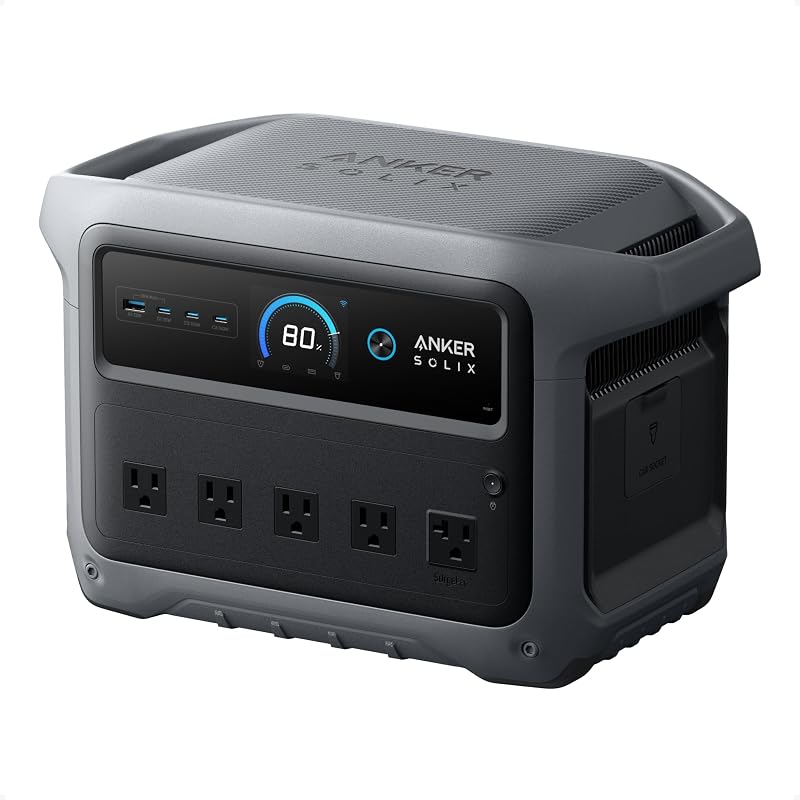
The Anker SOLIX F3000 is the best value: 3,072Wh and a 6,000W rating for much less money, with 3,600W pass-through charging from a generator. The Jackery HomePower 3600 Plus has the most capacity in one box, 3,584Wh, and rolls on wheels. If you only need to keep the fridge, Wi-Fi and phones going, the Anker SOLIX C2000 Gen 2 is the plug-in pick: 2,048Wh for a fraction of the price. RV owners should look at the BLUETTI AC200PL, which has a 30A camper outlet.
Who should *not* buy the DELTA Pro 3? Anyone who just wants to keep a fridge cold for a day. It is heavy and expensive, and its whole-home features need a panel or transfer switch installed by an electrician. Homes with long, frequent outages may also be better served by a standby generator. And note that we don’t test these units ourselves; run times below are the brands’ own claims.
Compare them side by side
Everything that matters, in one table. Swipe to see all 5.
| Product | Best Overall EcoFlow DELTA Pro 3 Home backup power station |  Best Value Anker SOLIX F3000 Home backup power station |  Most Capacity in One Box Jackery HomePower 3600 Plus Home backup power station |  Best Plug-In Backup Anker SOLIX C2000 Gen 2 Plug-in backup power station |  Best for Home and RV BLUETTI AC200PL Backup power station |
|---|---|---|---|---|---|
| BeastScore | 92 / 100 | 90 / 100 | 88 / 100 | 87 / 100 | 84 / 100 |
| Best for | Whole-home backup with 240V loads | Big backup for less money | Long outages and cold climates | Fridge, Wi-Fi, CPAP and phones | Homeowners with an RV or camper |
| Typical price (checked October 12, 2026) | $1,500–$1,700 | $950–$1,100 | $1,650–$1,800 | $600–$700 | $1,100–$1,250 |
| Capacity | 4,096Wh LFP | 3,072Wh | 3,584Wh LFP | 2,048Wh | 2,304Wh LiFePO4 |
| AC output | 4,000W (6,000W X-Boost) | 6,000W rated in title | 3,600W (7,200W in parallel) | 2,400W (4,000W peak) | 2,400W |
| Voltage | 120V and 240V | 120V (240V with two units) | 120V (240V in parallel) | 120V | 120V |
| Expands to | 48kWh | 24kWh | 21kWh per unit | 4kWh | 8,448Wh |
| Key features |
|
|
|
|
|
BeastScore here is our overall rating out of 100, based on published specs and Amazon owner reviews. Prices change daily, so tap "View on Amazon" for today's price. We may earn a small commission, at no extra cost to you. Learn more
Why each one made the list
What each pick does best, where it falls short, and the typical Amazon price when we checked.
- 1. Best Overall
EcoFlow DELTA Pro 3
BeastScore 92 / 100Typically $1,500–$1,700 on Amazon (checked October 12, 2026)The DELTA Pro 3 is the most complete home backup battery here. The listing gives it 4,096Wh of LFP capacity, 4,000W of output (6,000W with X-Boost) and 120V/240V in one unit, so it can run things like a 1 HP well pump or a 3-ton central AC. Add batteries or EcoFlow’s smart generator and it grows to 48kWh, which EcoFlow says is 2–4 days of whole-home backup. It switches to battery in 10 ms, fast enough for computers and a NAS, and it runs as quietly as 30 dB. You get a 5-year warranty. It is heavy, and whole-home use needs a panel or transfer switch.
Pros- 120V and 240V from one unit
- Expands to 48kWh
- 10 ms switch-over keeps electronics running
Cons- Heavy to move around the house
- Whole-home use needs a panel or transfer switch
- Costs more than the Anker F3000
- 2. Best Value
Anker SOLIX F3000
BeastScore 90 / 100Typically $950–$1,100 on Amazon (checked October 12, 2026)The F3000 gives you most of a whole-home system for far less than the EcoFlow. The listing says 3,072Wh of starting capacity, enough for essentials for about 10 hours, expandable to 24kWh, which Anker says is 80 hours of backup. During long outages, its 3,600W pass-through lets a gas generator recharge it while your appliances keep running, and combined generator plus solar input reaches 6,000W. Low idle draw means it can run a 190W fridge for 42 hours. It outputs 120V; you need two units paired for 240V appliances.
Pros- Lowest cost per watt-hour among the big units
- Very fast recharging from solar and generator
- Low idle draw stretches run time
Cons- 240V needs a second unit
- Less capacity than the EcoFlow or Jackery
- Heavy to move between rooms
- 3. Most Capacity in One Box
Jackery HomePower 3600 Plus
BeastScore 88 / 100Typically $1,650–$1,800 on Amazon (checked October 12, 2026)The HomePower 3600 Plus packs the most capacity into a single box here: 3,584Wh, expandable to 21kWh per unit or 43kWh with multiple units. It puts out 3,600W, and two units in parallel give 7,200W and 240V. Jackery says it is the lightest 3.6kWh LFP power station and 34% smaller than rivals, with wheels and a luggage-style handle. Its cells are rated for 6,000 cycles and a 10-year life, and it works down to -4 °F. Recharging takes 2 hours with AC plus solar. With Jackery’s transfer switch, it can power home circuits. It costs more than the bigger-output Anker.
Pros- Most capacity in a single unit here
- Rolls on wheels
- Long cycle life and cold-weather rating
Cons- 240V needs two units
- Pricier per watt than the Anker F3000
- Less output than the EcoFlow in one unit
- 4. Best Plug-In Backup
Anker SOLIX C2000 Gen 2
BeastScore 87 / 100Typically $600–$700 on Amazon (checked October 12, 2026)If you don’t need whole-home backup, the C2000 Gen 2 covers the essentials for a fraction of the cost. The listing says 2,048Wh with 2,400W rated and 4,000W peak, enough for most window ACs, a fridge and a router. It uses only 9W on standby, so Anker says it can run a dual-door fridge for up to 32 hours, or 64 hours with an expansion battery. It recharges fully in 58 minutes from the wall, and an 800W alternator charger can refill it from your car. At 41.7 lb, you can carry it room to room. It is 120V only and can’t back up home circuits like the bigger units.
Pros- Lowest price for real outage backup
- Light enough to carry
- Recharges in under an hour
Cons- Not for whole-home or 240V loads
- Expands only to 4kWh
- You run extension cords to appliances
- 5. Best for Home and RV
BLUETTI AC200PL
BeastScore 84 / 100Typically $1,100–$1,250 on Amazon (checked October 12, 2026)The AC200PL is the most-reviewed unit in this guide, and it earns a spot if your backup battery has to pull double duty in an RV. The listing gives it 2,304Wh of LiFePO4 cells rated for 3,000+ cycles, about a 10-year life, and 2,400W of output from four AC outlets. A 30A TT30 port plugs straight into a camper, and a 48V DC port charges an RV battery. It recharges from 0–80% in 60 minutes on AC and takes up to 1,200W of solar. Extra batteries take it to 8,448Wh. It costs more than the larger Anker F3000 when we checked.
Pros- TT30 port for RVs and campers
- LiFePO4 cells rated for 3,000+ cycles
- Fast 60-minute charge to 80%
Cons- Pricier than the bigger Anker F3000
- 120V only, no home panel option listed
- Less capacity than the 3kWh+ units
All 5 compared, in one look
See every pick on one chart, or tap one to put it head to head with EcoFlow DELTA Pro 3. Ratings out of 10 are our estimates from published specs and Amazon owner reviews, not hands-on tests. Bigger shape = better.
- CapacityJackery HomePower 3600 Plus · 9.6/10
- Output powerEcoFlow DELTA Pro 3 · 9.6/10
- ExpandableEcoFlow DELTA Pro 3 · 9.8/10
- Recharge speedTie
- Easy to moveAnker SOLIX C2000 Gen 2 · 9.4/10
- ValueAnker SOLIX F3000 · 9.6/10
EcoFlow DELTA Pro 3
4kWh, 120V and 240V output, 10 ms switch-over and room to grow to 48kWh. The most complete home backup battery.
- 4,096Wh LFP
- 120/240V
- Expands to 48kWh
Quick tips before you buy
Never plug a battery into a wall outlet to feed your house. Have an electrician install a transfer switch or the brand’s home panel.
List what you must run: a fridge, furnace blower, router and lights often total 500–800W. Divide the battery’s Wh by that number for rough hours.
Fridges, pumps and ACs pull several times their running watts when they start. Check the surge or peak rating, not just the rated output.
Keep the battery indoors, charged to the level the brand suggests, and top it up every few months so it’s ready when a storm hits.
Quick answers
What is the best home battery backup?+
The EcoFlow DELTA Pro 3 is the best home battery backup for most homes: 4,096Wh, 120V and 240V output and room to grow to 48kWh. The Anker SOLIX F3000 is the best value.
Can a battery power my whole house?+
Yes, with enough capacity and a transfer switch or smart panel installed by an electrician. Most people back up essential circuits only. Central AC, electric heat and dryers drain batteries very fast.
How long will a home backup battery last in an outage?+
It depends on your load. A 4kWh battery running about 400W of essentials lasts roughly 10 hours. Running just a fridge, brands claim 30 to 40+ hours. Solar panels can recharge it during the day.
Is a battery better than a gas generator?+
Batteries are silent, fume-free and safe indoors, and switch on instantly. Gas generators run as long as you have fuel. Many homes pair the two: Anker’s F3000 can recharge from a generator while powering your home.
Do I need 240V?+
Only for big appliances like well pumps, central AC, electric dryers or ranges. The EcoFlow DELTA Pro 3 does 240V on its own; the Anker F3000 and Jackery need two units paired.
Can I charge a backup battery with solar panels?+
Yes. All five take solar input. The Anker F3000 accepts up to 2,400W of solar, so a big array can refill it in a few hours of good sun.
What size battery do I need for a power outage?+
For a fridge, router, lights and phones, 2kWh covers about a day. To add a furnace blower, sump pump or well pump, look at 3–4kWh or more. For multi-day outages, pick a unit that expands or pairs with solar or a generator.
Keep comparing
 Anker SOLIX vs EcoFlow vs Jackery: Best portable power stationThree 1 kWh power stations for outages, camping and charging everything.
 Best Power Banks: Top 5 on AmazonNever hit 1% again. Pocket chargers compared.
 Best Space Heaters: Top 5 on AmazonWarm up one room fast, without heating the whole house.
 Best Home EV Chargers: Top 5 Level 2 on AmazonWake up to a full battery. The best Level 2 chargers compared.