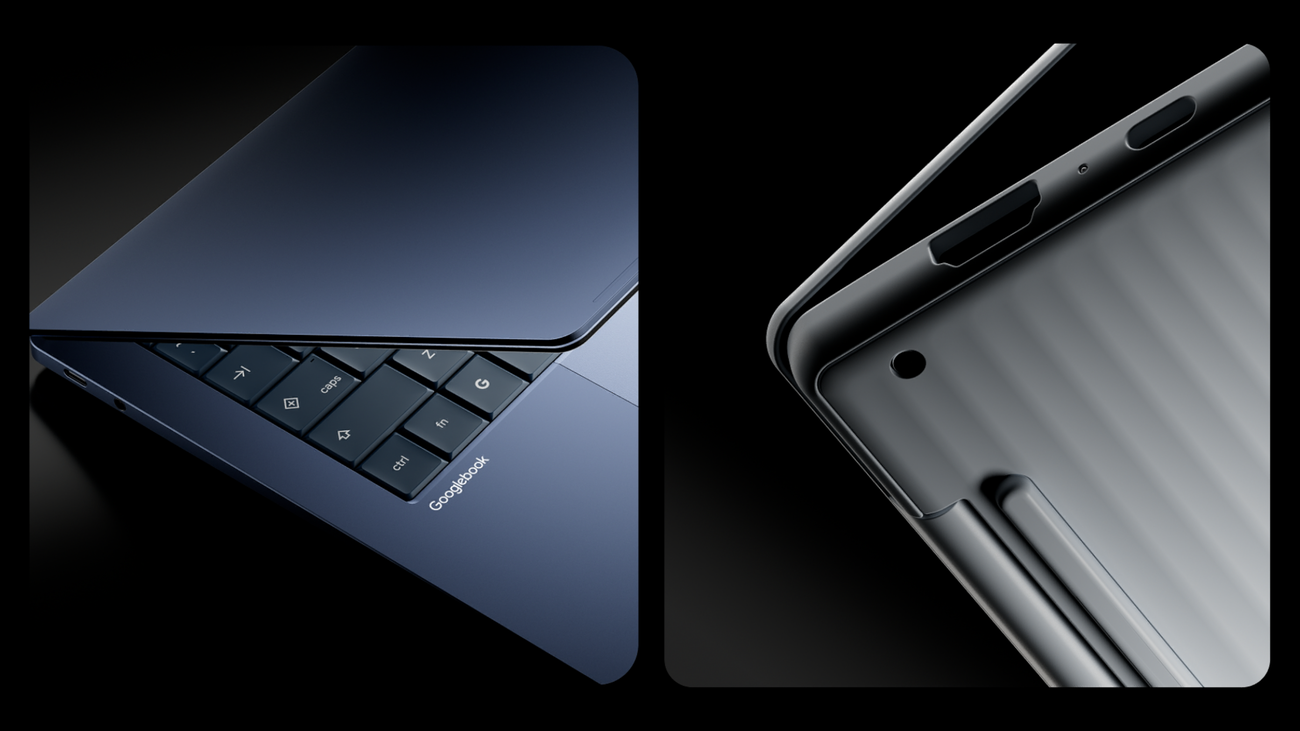
Google's new laptop platform is on shelves today.
The Googlebook, first announced in May as the successor to the Chromebook, goes on sale in the U.S. on October 4. Canada, the UK, Ireland, France, Germany and Australia follow on October 5. Pre-orders opened on September 21.
Googlebooks run a new Android-based desktop operating system (developed under the codename "Aluminium OS") and are built around Gemini, Google's AI model. Google says these laptops sit at the premium end of the market. Chromebooks are not going away and will keep getting support.
Five launch models are available from Acer, ASUS, Dell, HP and Lenovo, priced from $899 to $1,299. Here is how they compare and which one makes sense for you.
Key dates
| Date | What happens |
|---|---|
| May 12 | Googlebook announced at The Android Show: I/O Edition |
| September 21 | Pre-orders open |
| October 4 | On sale in the U.S. |
| October 5 | On sale in Canada, UK, Ireland, France, Germany and Australia |
All five Googlebooks side by side
| Acer Googlebook 14 | Dell XPS Googlebook | Lenovo Googlebook 15 | ASUS Googlebook 14 | HP Googlebook 14 | |
|---|---|---|---|---|---|
| Starting price | $899 | $999–$1,199* | $1,099–$1,299* | $1,299 | $1,299 |
| Chip | Intel Core Ultra 5 / 7 (Panther Lake) | Snapdragon X Elite | Intel Core Ultra 5 (Panther Lake) | Intel Core Ultra 5 / 7 (Panther Lake) | Snapdragon X Elite |
| Screen | 14" 2.8K OLED touch | 13" 2.5K touch | 15.3" 2.8K OLED touch | 14" 3K OLED touch, 500 nits | 14" 2.8K OLED touch, 500 nits |
| RAM | 16GB | 16GB or 32GB | 16GB | 16GB | 16GB+ |
| Stand-out feature | Only convertible (folds into a tablet) | Smallest and lightest-looking, face unlock | Biggest screen, Dolby Atmos | Haptic touchpad | All-aluminum body, haptic touchpad |
*Launch coverage lists two different prices for the Dell and Lenovo models. Check the price at checkout before you order.
What every model has in common:
- An NPU (AI chip) rated at over 45 TOPS for on-device Gemini features
- Google's battery claim of up to 14 hours of video playback
- A touchscreen, backlit keyboard and fingerprint reader
- Up to 10 years of updates and regular feature drops
The Gemini features you actually get
Google calls the AI side Gemini Intelligence. Three features are new and only on Googlebooks for now:
Magic Pointer. Wiggle your cursor and Gemini pops up on whatever is on screen. You can ask it to add an event from an email to your calendar, translate a paragraph or summarize a page, without copying anything into a chat window.
Rambler. Talk out loud, and Rambler turns what you said into clean, organized writing. It removes filler words and adds headers, checklists and key takeaways. This is useful for meeting notes, to-do lists and first drafts.
Create My Widget. Describe a widget in plain English, for example "show my next three meetings and today's weather", and Gemini builds it on your desktop.
These features need the NPU, which is why Google requires 45+ TOPS hardware. That is also why Googlebooks cost more than most Chromebooks.
Built for Android phone owners
The biggest reason to buy a Googlebook over a Windows laptop or a MacBook is how well it works with an Android phone.
- Setup in minutes: your Wi-Fi networks, passwords and settings move over from your phone with end-to-end encryption.
- Continue On: start something on your phone, like an article or a map, and pick it up from the laptop's taskbar.
- Phone files: your phone's photos and files show up in the laptop's Files app.
- Cast My Apps: run your phone's apps in a window on the laptop and use them with the keyboard and mouse.
If you use an iPhone, most of this does not apply to you, and a MacBook is still the more natural fit.
The free stuff in the box
Every Googlebook comes with:
- 12 months of Google AI Pro, which includes 5TB of cloud storage and higher Gemini limits
- 3 months of YouTube Premium
- 3 months of Adobe Photoshop
- 1 year of GeForce NOW cloud gaming
Google AI Pro is a paid subscription, so remember it renews at the full price after 12 months unless you cancel.
Which Googlebook should you buy?
- Best value: Acer Googlebook 14 ($899). You get the same Gemini features as the $1,299 models, a 2.8K OLED screen, and it is the only one that folds into a tablet. This is the one most people should buy.
- Best battery and build: HP Googlebook 14 ($1,299). Snapdragon X Elite chips are known for long battery life and running cool. Add an all-aluminum body and a haptic touchpad, and this is the premium pick.
- Best for travel: Dell XPS Googlebook. The 13-inch screen makes it the most portable, and it is the only one with up to 32GB of RAM listed at launch, plus face unlock.
- Best big screen: Lenovo Googlebook 15. 15.3 inches of OLED and Dolby Atmos speakers make it the best for watching shows and working in two windows side by side.
- Wait if you are not in a hurry. This is a brand-new operating system. App support, battery life and how well Magic Pointer works in daily use will become clear once independent reviews come out in the next few weeks.
Want to know how Intel's laptop chips compare with Snapdragon X Elite? See our laptop chip benchmark, or put any two devices side by side with our comparison tool.
Other AI news this week
- Microsoft Surface Laptop Ultra with the NVIDIA RTX Spark chip launches on October 7. Microsoft says the top model can run large AI models locally.
- OpenAI released GPT-6.1 Sol for coding and agent work, after cancelling the separate release of GPT-6.1 Astra over safety concerns found in testing.
- Anthropic released Claude Sonnet 5.5, a faster and cheaper model aimed at everyday work such as coding, documents and spreadsheets.
Sources
- Google Blog: Googlebook, the laptop your Android phone has been waiting for
- 9to5Google: Google fully details Googlebooks
- Android Authority: All the new Googlebooks announced
- VideoCardz: Googlebook launches with laptops from $899
- Gizbot: Googlebook launched with Gemini and 10 years of updates
- Sportskeeda Tech: Surface Laptop Ultra launch date
- AI Weekly: AI news, October 2026
Product image: Google press materials.