
Xiaomi Black Shark Gaming vs realme GT 5 Pro: Which One Should You Buy?
These two are too close to call on BeastScore — the right choice depends on what matters to you.
Xiaomi Black Shark Gaming

realme GT 5 Pro
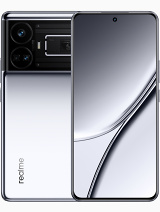
Too close to call: 2 of 5 categories each
Here's exactly where each phone is stronger.
Bigger shape = better phone.
Scores out of 100. How we score
- SpeedTie9595
- Camerarealme GT 5 Pro8091
- VideoNot enough data
- SelfieNot enough data
- BatteryXiaomi Black Shark Gaming9590
- Displayrealme GT 5 Pro9496
- ConnectivityNot enough data
- SecurityNot enough data
- ValueXiaomi Black Shark Gaming8568
- Xiaomi Black Shark Gaming has the bigger battery7,300 mAh vs 5,400 mAh
- realme GT 5 Pro has a smoother screen144 Hz vs 120 Hz
- Xiaomi Black Shark Gaming has the bigger screen8.8" vs 6.78"
- realme GT 5 Pro has more RAM16 GB vs 12 GB
- realme GT 5 Pro has the faster chipSnapdragon 8 Gen 3 vs Snapdragon 8s Gen 3
Why buy each phone
Swipe ⇄Xiaomi Black Shark Gaming and realme GT 5 Pro are evenly matched
It's a close call. Pick the Xiaomi Black Shark Gaming for its bigger battery (7,300 mAh vs 5,400 mAh) and bigger screen (8.8" vs 6.78"), or the realme GT 5 Pro for its smoother screen (144 Hz vs 120 Hz) and more RAM (16 GB vs 12 GB).
Larger battery: 7,300 mAh vs 5,400 mAh · Larger display: 8.8" vs 6.78"
Optical telephoto zoom (1 telephoto lens) · Smoother display: 144 Hz vs 120 Hz
Common questions
Which is better: Xiaomi Black Shark Gaming or realme GT 5 Pro?
It's a close call. Pick the Xiaomi Black Shark Gaming for its bigger battery (7,300 mAh vs 5,400 mAh) and bigger screen (8.8" vs 6.78"), or the realme GT 5 Pro for its smoother screen (144 Hz vs 120 Hz) and more RAM (16 GB vs 12 GB). BeastScore: Xiaomi Black Shark Gaming 90.1/100, realme GT 5 Pro 90.5/100.
What are the main battery and display differences between Xiaomi Black Shark Gaming and realme GT 5 Pro?
Xiaomi Black Shark Gaming has a 8.8-inch display and 7300 mAh battery. realme GT 5 Pro has a 6.78-inch display and 5400 mAh battery.
How do Xiaomi Black Shark Gaming and realme GT 5 Pro compare for speed?
Xiaomi Black Shark Gaming scores 95/100 for performance; realme GT 5 Pro scores 95/100.
Similar Smartphones
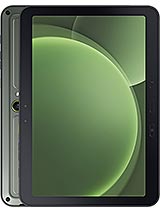




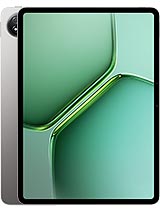


More Smartphones comparisons
realme GT 5 Pro vs Realme GT 8 Pro
realme GT 5 Pro vs GT 7 Pro
realme GT 2 Pro vs realme GT 5 Pro
Xiaomi Black Shark Gaming vs Samsung Galaxy Tab Active5 Pro
realme GT 5 Pro vs Samsung Galaxy Tab Active5 Pro
Xiaomi Black Shark Gaming vs Apple iPhone 18 Pro
realme GT 5 Pro vs Apple iPhone 18 Pro
Xiaomi Black Shark Gaming vs Google Pixel 11 Pro 5G
Gear for the Xiaomi Black Shark Gaming
All Amazon Finds →Related articles
All articles → Flagship Monitor Shootout
Samsung Odyssey Neo G9 57" vs. Odyssey OLED G9 49" vs. ASUS ROG Swift PG49WCD vs. LG UltraGear 45GS96QB: The Definitive Flagship Super Ultrawide & Curved Gaming Monitor Architecture, Dual 4K 7680x2160 vs. Dual QHD QD-OLED, DisplayPort 2.1 Bandwidth (UHBR 13.5/20), 240Hz Refresh Rates, 2,392 Mini-LED Local Dimming Zones vs. Infinite Contrast OLED, KVM Multitasking, and GPU Driveability Shootout (2026)
A comprehensive architectural shootout of the world's most advanced curved super ultrawide monitors. We compare Samsung's 57-inch Dual 4K Quantum Mini-LED titan against 49-inch Gen 2 QD-OLEDs and LG's 45-inch 800R curved WOLED across DisplayPort 2.1 bandwidth tunneling, 240Hz motion clarity, text rendering subpixel matrices, multi-window KVM workflows, and GPU horsepower requirements.
Read →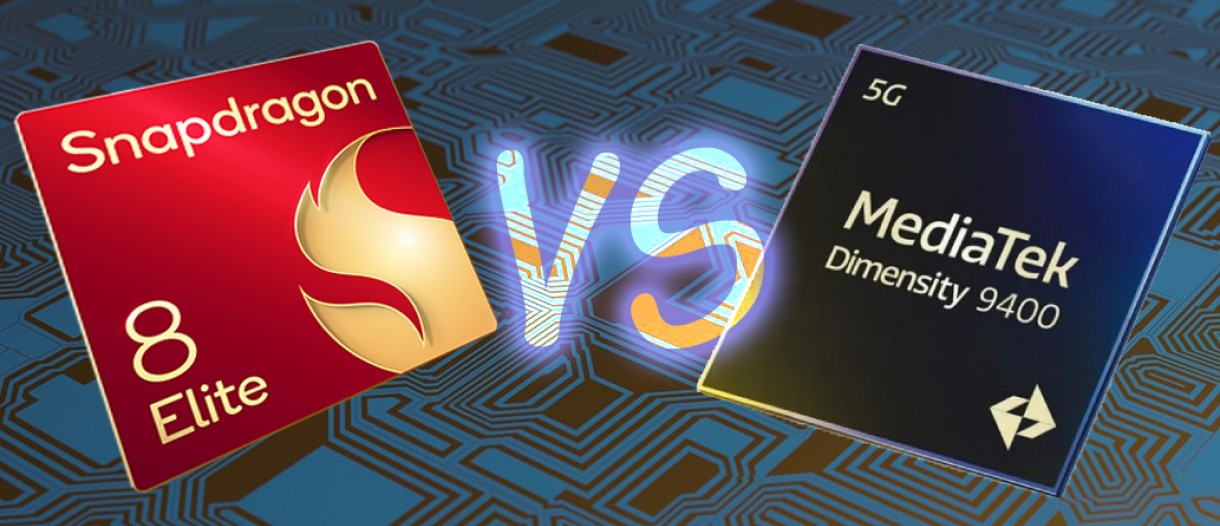 Flagship SoC Architecture
Snapdragon 8 Elite vs. MediaTek Dimensity 9400 vs. Apple A18 Pro: The Definitive 3nm Mobile Silicon Architecture, GPU Ray Tracing & Gaming Benchmark Showdown (2026)
An exhaustive 3nm architectural deep dive comparing Qualcomm custom Oryon CPU, MediaTek All-Big-Core Dimensity 9400, and Apple A18 Pro—covering microarchitecture, Adreno 830 vs Immortalis-G925 ray tracing, NPU compute, thermal throttling, and real-world gaming frame rates.
Read → Flagship WiFi 7 Shootout
TP-Link Deco BE85 vs. ASUS ROG Rapture GT-BE98 Pro vs. Netgear Orbi 970 vs. Amazon eero Max 7: The Definitive Flagship WiFi 7 Mesh & Gaming Router Architecture, 320MHz Channels, 4K-QAM, Multi-Link Operation (MLO), 10Gbps Multi-Gig WAN/LAN, Broadcom vs. Qualcomm Silicon, and Real-World Latency Showdown (2026)
An exhaustive architectural and benchmark breakdown of the top 4 flagship WiFi 7 networking systems—analyzing 320MHz channel bonding, Multi-Link Operation (MLO) aggregation, Broadcom BCM4916 vs. Qualcomm Networking Pro 1220/1620 processors, 10GbE backhaul throughput, and ultra-low jitter VR/gaming performance.
Read →