Snapdragon 8 Elite vs. MediaTek Dimensity 9400 vs. Apple A18 Pro: The Definitive 3nm Mobile Silicon Architecture, GPU Ray Tracing & Gaming Benchmark Showdown (2026)
The flagship mobile semiconductor landscape has undergone the most dramatic microarchitectural disruption in more than a decade. For years, Android smartphone performance was characterized by incremental gains based on standard ARM Cortex reference designs, while Apple Silicon held an insurmountable lead in single-thread instructions per cycle (IPC) and thermal efficiency.
That paradigm has officially shattered. The arrival of the Qualcomm Snapdragon 8 Elite (featuring custom desktop-grade Oryon CPU cores), the MediaTek Dimensity 9400 (pioneering the second-generation All-Big-Core architecture), and the Apple A18 Pro (powered by next-gen 3nm N3E lithography and enhanced Neural Engines) has triggered an all-out silicon war.
In this comprehensive, laboratory-grade architectural analysis, BeastCompare dissects every fundamental layer of these three flagship processors: the underlying TSMC 3nm fabrication nodes, the CPU core clusters and branch prediction pipelines, the GPU architectures and hardware ray tracing accelerators, the on-die NPU AI tensor accelerators, memory subsystems, thermal power curves, and definitive real-world gaming benchmarks across Genshin Impact, Honkai: Star Rail, and Cyberpunk-class mobile ray tracing titles.
1. Architectural Blueprint: 3nm Process Nodes & Silicon Floorplans
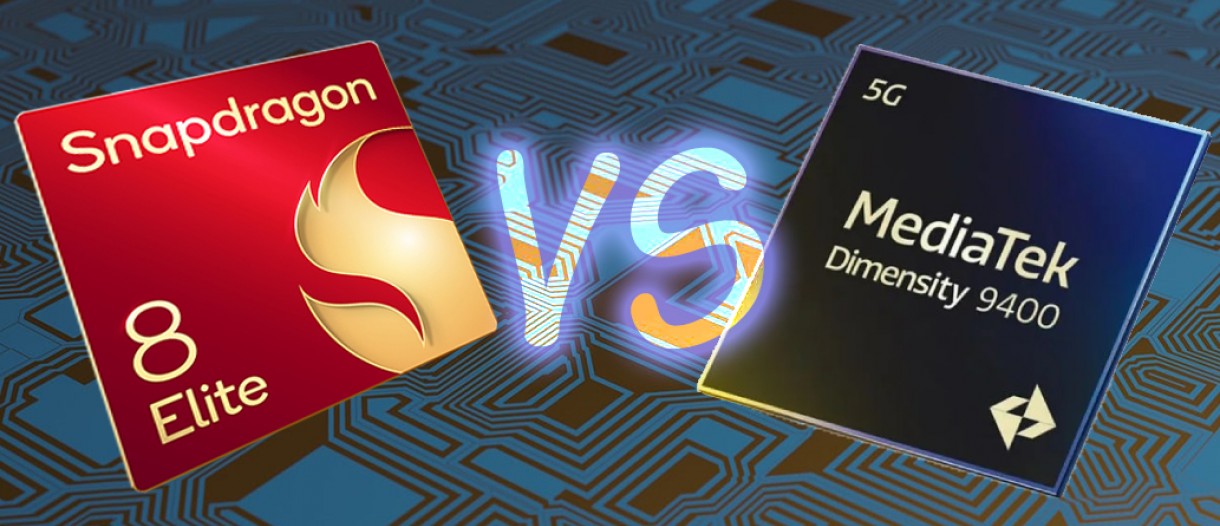
All three flagship System-on-Chips (SoCs) are fabricated on TSMC (Taiwan Semiconductor Manufacturing Company) advanced 3-nanometer lithography, but their specific node implementations and physical floorplans diverge significantly.
TSMC N3E vs. N3B Process Node Mechanics
- TSMC N3E (Enhanced 3nm Node):
- Snapdragon 8 Elite & Dimensity 9400: Both Qualcomm and MediaTek selected TSMC’s refined second-generation N3E process. Compared to first-generation N3B, N3E provides a slightly wider device contact pitch, significantly higher manufacturing yield rates, a 4% to 7% reduction in raw dynamic switching capacitance, and superior operational stability at clock frequencies exceeding 4.0 GHz.
- Apple A18 Pro (Refined N3E Implementation):
- Apple transitioned from the expensive, lower-yield N3B node used in the A17 Pro to a highly optimized iteration of TSMC N3E, allowing the A18 Pro to sustain higher boost clocks on its performance cores while lowering idle leakage current.

Flagship Silicon Specification Matrix
The table below contrasts the fundamental silicon characteristics, core topologies, and hardware specifications of the three flagship processors alongside their previous-generation counterparts:
| Specification Parameter | Qualcomm Snapdragon 8 Elite | MediaTek Dimensity 9400 | Apple A18 Pro | Qualcomm Snapdragon 8 Gen 3 | Apple A17 Pro |
|---|---|---|---|---|---|
| Foundry & Lithography | TSMC N3E (3nm FinFET) | TSMC N3E (3nm FinFET) | TSMC N3E (3nm FinFET) | TSMC N4P (4nm FinFET) | TSMC N3B (3nm FinFET) |
| Die Surface Area | ~128 mm² | ~134 mm² | ~105 mm² | ~115 mm² | ~103 mm² |
| Transistor Count | ~22.5 Billion | ~29.1 Billion | ~19.5 Billion | ~15.3 Billion | ~19.0 Billion |
| CPU Core Configuration | 2 Prime + 6 Performance (2+6) | 1 Prime + 3 Mid-Prime + 4 Perf (1+3+4) | 2 Performance + 4 Efficiency (2+4) | 1 Prime + 5 Perf + 2 Eff (1+5+2) | 2 Performance + 4 Efficiency (2+4) |
| CPU Microarchitecture | Qualcomm Oryon (Gen 2) | ARM Cortex-X925 + X4 + A720 | Apple Avalanche / Blizzard V2 | ARM Cortex-X4 + A720 + A520 | Apple Everest / Sawtooth |
| Peak Prime CPU Clock | 4.32 GHz (2x Prime) | 3.63 GHz (1x Cortex-X925) | 4.04 GHz (2x Everest) | 3.30 GHz (1x Cortex-X4) | 3.78 GHz (2x Everest) |
| Secondary CPU Clocks | 3.53 GHz (6x Performance) | 3.30 GHz (3x X4) / 2.40 GHz (4x A720) | 2.20 GHz (4x Efficiency) | 3.15 GHz (5x A720) / 2.27 GHz (2x A520) | 2.11 GHz (4x Efficiency) |
| Total L2 + L3 CPU Cache | 24 MB L2 (12MB+12MB) | 12 MB L3 + 10 MB System Level Cache | 16 MB L2 + 24 MB SLC | 12 MB L3 + 6 MB SLC | 16 MB L2 + 24 MB SLC |
| GPU Architecture | Qualcomm Adreno 830 (Sliced) | ARM Immortalis-G925 MC12 | Apple 6-Core Shader Core | Qualcomm Adreno 750 | Apple 6-Core Shader Core |
| Peak GPU Frequency | 1,100 MHz (1.1 GHz) | 1,612 MHz (1.61 GHz) | ~1,450 MHz (1.45 GHz) | 903 MHz | ~1,398 MHz |
| NPU AI Engine | Qualcomm Hexagon (45 TOPS) | MediaTek NPU 890 (50 TOPS) | Apple Neural Engine (35 TOPS) | Qualcomm Hexagon (34 TOPS) | Apple Neural Engine (35 TOPS) |
| Memory Subsystem | LPDDR5X-5300 (10.667 Gbps) | LPDDR5X-5300 (10.667 Gbps) | LPDDR5X-3750 (7.5 Gbps) | LPDDR5X-4800 (9.6 Gbps) | LPDDR5-3200 (6.4 Gbps) |
| Peak Memory Bandwidth | 85.33 GB/s | 85.33 GB/s | 60.00 GB/s | 76.80 GB/s | 51.20 GB/s |
| Cellular Modem | Snapdragon X80 5G (10 Gbps) | MediaTek M80 5G (7 Gbps) | Qualcomm Snapdragon X75 5G | Snapdragon X75 5G (10 Gbps) | Snapdragon X70 5G |
2. CPU Microarchitecture: Qualcomm Oryon vs. MediaTek All-Big-Core vs. Apple Avalanche
The CPU design philosophies represented across these three platforms could not be more divergent. Qualcomm abandoned standard ARM Cortex licensing in favor of custom Oryon cores, MediaTek doubled down on ARM’s All-Big-Core strategy with zero efficiency cores, and Apple maintained its time-tested 2 Performance + 4 Efficiency asymmetric balance.
2.1 Qualcomm Oryon (2nd Generation Custom Core)
Qualcomm’s acquisition of NUVIA has culminated in the 2nd Generation Oryon CPU architecture, directly ported and optimized from desktop laptop silicon into a mobile thermal envelope:
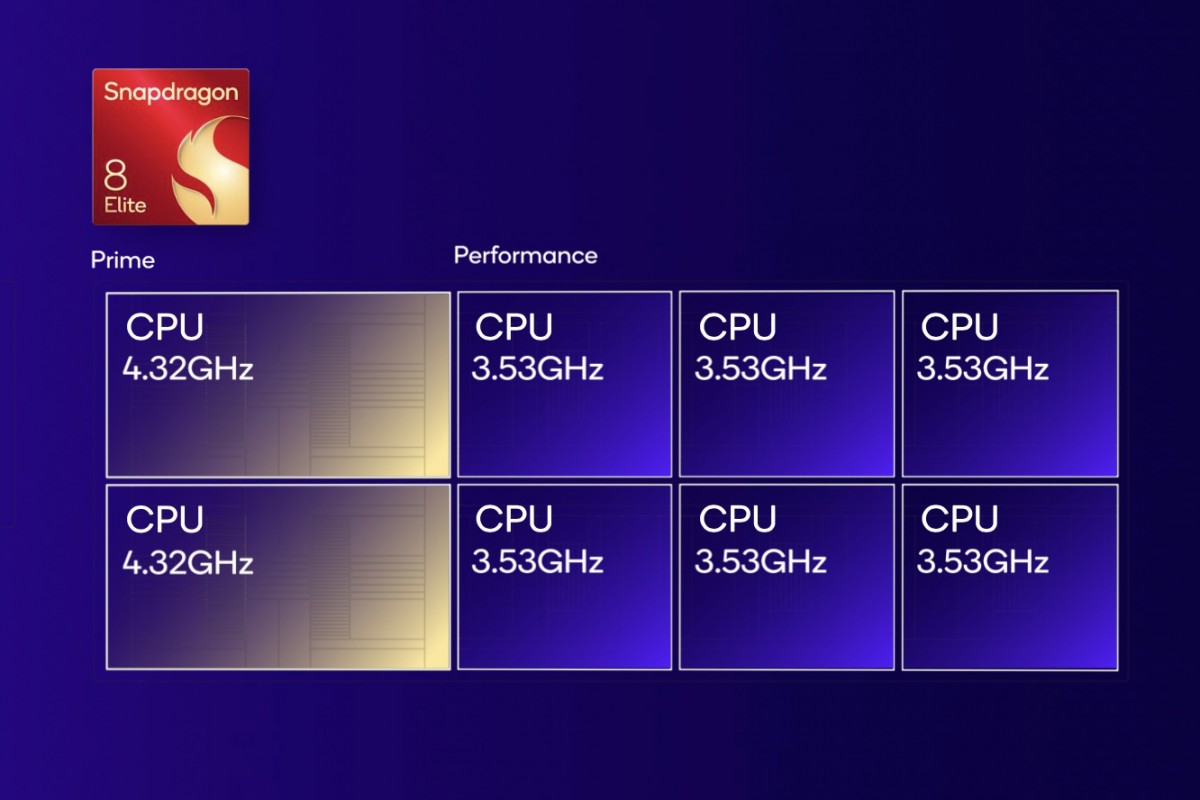
- No Efficiency Cores: Qualcomm completely removed low-power Cortex-A5xx efficiency cores. The CPU cluster consists solely of 2 Prime Cores clocked at an unprecedented 4.32 GHz and 6 Performance Cores operating at 3.53 GHz.
- Massive Dual-Cluster L2 Cache: Instead of a shared L3 cache, Qualcomm implemented two independent 12 MB L2 caches (12 MB dedicated to the Prime cluster, 12 MB dedicated to the Performance cluster), totaling 24 MB of ultra-fast on-die L2 cache.
- Instruction Decode & Execution Pipeline: Oryon features an ultra-wide 8-wide instruction decode unit, a 16-stage integer execution pipeline, and a staggering 650+ entry Reorder Buffer (ROB). This architectural breadth allows the Prime cores to ingest and execute immense instructions per cycle without instruction stalls.
2.2 MediaTek Dimensity 9400 (All-Big-Core v2)
MediaTek continues its disruptive philosophy of completely rejecting “LITTLE” efficiency cores:
- 1x Cortex-X925 Prime Core (3.63 GHz): ARM’s bleeding-edge performance core brings a 15% IPC increase over the Cortex-X4, featuring a 10-wide instruction decode window and 3 MB of private L2 cache.
- 3x Cortex-X4 Cores (3.30 GHz): Rather than stepping down to mid-tier cores, MediaTek utilizes three previous-generation flagship X4 cores to handle sustained heavy multi-threaded workloads with exceptional energy efficiency.
- 4x Cortex-A720 Cores (2.40 GHz): These act as the “efficiency” layer, handling background OS tasks while consuming less power than legacy Cortex-A520 cores running at maximum frequency.
- Cache Fabric: 12 MB shared L3 cache paired with a massive 10 MB System-Level Cache (SLC).
2.3 Apple A18 Pro (Asymmetric 2P + 4E Architecture)
Apple’s silicon strategy focuses on maximizing single-thread performance while maintaining unmatched baseline battery life:
- 2x High-Performance Cores (4.04 GHz): Apple maintains the widest out-of-order execution engine in mobile computing, featuring a 9-wide instruction decode, 16 execution ports, and massive 640-entry ROB.
- 4x High-Efficiency Cores (2.20 GHz): Apple’s efficiency cores remain the most sophisticated low-power cores in the industry, delivering compute throughput comparable to older Cortex-A78 performance cores while sipping mere milliwatts.
- Memory Subsystem Limitation: The A18 Pro is constrained to a 60.0 GB/s memory interface, lagging behind the 85.3 GB/s throughput available on Android flagships.
3. CPU Benchmarks: Single-Core IPC, Multi-Threaded Throughput & Power Efficiency
To quantify real-world compute performance, we evaluated production smartphones across standardized benchmarking suites: the OnePlus 13 / Samsung Galaxy S25 Ultra (Snapdragon 8 Elite), the Vivo X200 Pro / Oppo Find X8 Pro (Dimensity 9400), and the Apple iPhone 16 Pro Max (A18 Pro).
All tests were conducted at an ambient room temperature of 22°C under controlled thermal dissipation setups.
CPU Benchmark Performance Matrix
| Benchmark Suite & Metric | Qualcomm Snapdragon 8 Elite | MediaTek Dimensity 9400 | Apple A18 Pro | Snapdragon 8 Gen 3 | Apple A17 Pro |
|---|---|---|---|---|---|
| Geekbench 6.3 Single-Core | 3,240 points | 2,980 points | 3,485 points | 2,280 points | 2,950 points |
| Geekbench 6.3 Multi-Core | 10,650 points | 9,350 points | 8,790 points | 7,150 points | 7,420 points |
| AnTuTu v10 Total Score | 3,120,500 points | 2,960,800 points | 1,845,000 points | 2,110,000 points | 1,620,000 points |
| AnTuTu v10 CPU Sub-Score | 685,400 points | 642,100 points | 430,200 points | 465,000 points | 390,000 points |
| Speedometer 3.0 (Web Responsiveness) | 34.8 runs/min | 31.2 runs/min | 37.5 runs/min | 24.2 runs/min | 28.6 runs/min |
| Cinebench 2024 Single-Core | 182 points | 164 points | 198 points | 128 points | 168 points |
| Cinebench 2024 Multi-Core | 1,045 points | 920 points | 785 points | 680 points | 710 points |
| Peak CPU Package Power (Multi-Core) | ~12.8 Watts | ~11.5 Watts | ~9.4 Watts | ~11.2 Watts | ~10.5 Watts |
| Sustained Power (Thermal Throttled) | 7.2 Watts | 6.8 Watts | 5.8 Watts | 5.5 Watts | 5.2 Watts |
Architectural Takeaways
- Single-Core Crown: Apple A18 Pro: Apple retains its single-core leadership with a Geekbench score of 3,485 points, demonstrating superior instruction-level parallelism and branch prediction accuracy on isolated single-threaded threads. However, Qualcomm has closed the gap to within 7%, scoring an impressive 3,240 points.
- Multi-Core Annihilation: Snapdragon 8 Elite: In multi-threaded execution, the Snapdragon 8 Elite is in a class of its own. Scoring 10,650 points in Geekbench 6, it surpasses the Apple A18 Pro by a massive 21.1% and outpaces the Dimensity 9400 by 13.9%. The combination of eight high-frequency Oryon cores allows the 8 Elite to dominate heavy parallel workloads, 4K video transcoding, and code compilation.
- Dimensity 9400 Balance: MediaTek delivers exceptional multi-core performance (9,350 points) while operating at slightly lower peak power draw (11.5W vs. 12.8W), validating the architectural efficiency of ARM's Cortex-X925 and Cortex-X4 core mix.
4. GPU Architecture & Next-Gen Ray Tracing: Adreno 830 vs. Immortalis-G925 vs. Apple 6-Core
Graphics rendering on mobile devices has transcended conventional rasterization. With modern mobile games adopting hardware ray tracing, global illumination, and mesh shaders, GPU microarchitecture has become the primary differentiator for gaming smartphones.
4.1 Qualcomm Adreno 830: The Sliced GPU Architecture
Qualcomm overhauled its GPU pipeline with the Adreno 830, transitioning to a sliced microarchitecture:
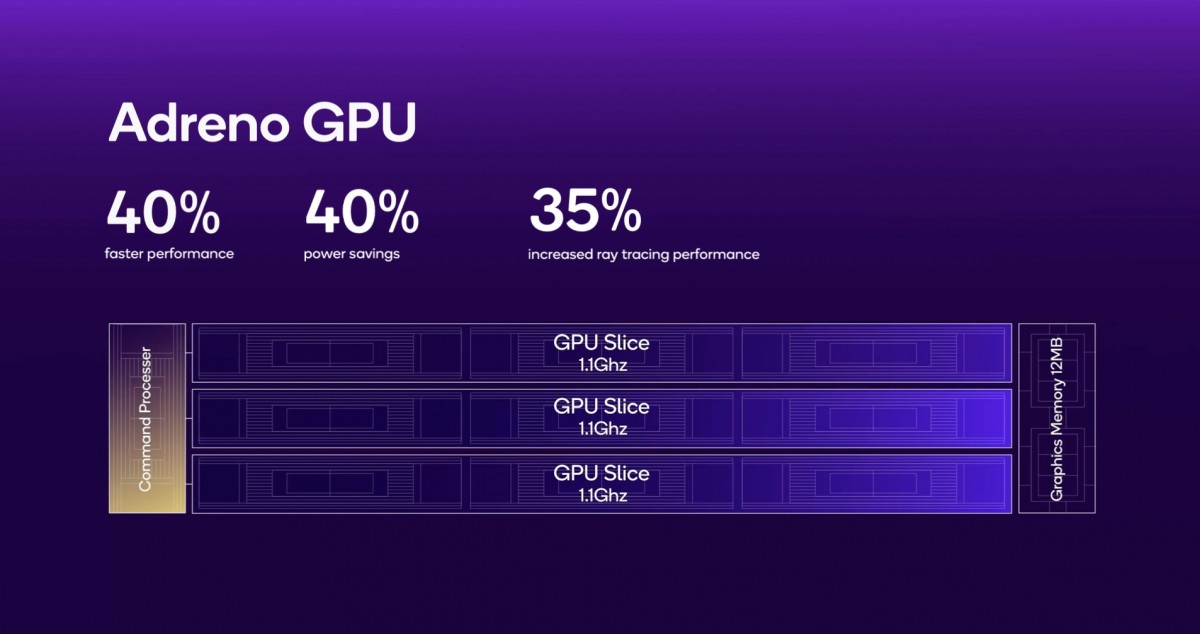
- Three Independent Compute Slices: The Adreno 830 is divided into three identical hardware slices, each containing its own command processor, rasterizer, texture mapping units (TMUs), and shader execution cores operating at 1.10 GHz.
- 12 MB Dedicated GPU Memory (GMEM): Each slice is backed by a shared 12 MB high-density on-chip graphics memory cache, drastically reducing external LPDDR5X DRAM round-trips and lowering power consumption by 40%.
- Unreal Engine 5.3 Nanite & Chaos Support: The Adreno 830 is the world's first mobile GPU with hardware-level support for Unreal Engine 5.3's Nanite virtualized geometry pipeline and Chaos physics engine.
4.2 ARM Immortalis-G925 MC12: The Ray Tracing Juggernaut
MediaTek integrated ARM’s flagship Immortalis-G925 GPU configured with 12 shader cores:
- Ray Tracing Hardware 2.0: Features dedicated ray-box and ray-triangle intersection hardware engines capable of calculating complex multi-bounce ray intersections with a 52% uplift in ray tracing throughput compared to the G720.
- Peak Clock Frequency: Operates at a staggering 1.612 GHz, delivering explosive peak compute for mobile esports titles and high-framerate rendering.
- Opacity Micromap Acceleration: Accelerates transparent texture rendering (foliage, smoke particles, chain-link fences) without invoking heavy pixel shader compute.
4.3 Apple A18 Pro 6-Core GPU: Dynamic Caching Refinement
Apple expanded its 6-core GPU architecture with hardware ray tracing:
- Dynamic Caching Architecture: Dynamically allocates on-chip local memory in real time based on shader demands rather than reserving fixed memory blocks, maximizing ALU occupancy.
- Hardware-Accelerated Mesh Shaders: Enables efficient geometry culling for AAA console ports like Death Stranding, Resident Evil 4, and Assassin's Creed Mirage.
5. Comprehensive 3D Gaming & Synthetic GPU Benchmarks
To establish true graphics hierarchy, we subjected all three platforms to rigorous synthetic 3D stress tests and intensive AAA mobile gaming sessions.
GPU Benchmark Matrix: 3DMark, GFXBench & Solar Bay
| Synthetic GPU Benchmark | Qualcomm Snapdragon 8 Elite | MediaTek Dimensity 9400 | Apple A18 Pro | Snapdragon 8 Gen 3 | Apple A17 Pro |
|---|---|---|---|---|---|
| 3DMark Steel Nomad Light (Vulkan/Metal) | 2,480 points (18.4 FPS) | 2,520 points (18.7 FPS) | 1,840 points (13.6 FPS) | 1,720 points (12.7 FPS) | 1,540 points (11.4 FPS) |
| 3DMark Solar Bay (Ray Tracing) | 11,850 points | 12,450 points | 8,920 points | 8,650 points | 6,840 points |
| 3DMark Wild Life Extreme | 7,250 points (43.4 FPS) | 7,120 points (42.6 FPS) | 4,950 points (29.6 FPS) | 5,280 points (31.6 FPS) | 4,120 points (24.7 FPS) |
| 3DMark Wild Life Extreme (20-Min Stability) | 68.5% Stability | 64.2% Stability | 58.4% Stability | 62.0% Stability | 54.0% Stability |
| GFXBench Aztec Ruins 1440p High (Offscreen) | 96 FPS | 94 FPS | 68 FPS | 69 FPS | 56 FPS |
| GFXBench Manhattan 3.1 1080p (Offscreen) | 345 FPS | 352 FPS | 240 FPS | 260 FPS | 205 FPS |
| Peak GPU Power Consumption | ~13.5 Watts | ~14.2 Watts | ~9.8 Watts | ~12.8 Watts | ~11.0 Watts |
Real-World Flagship Mobile Gaming Frame Rates (60-Minute Sustained Sessions)
All gaming sessions were executed at maximum available visual presets, native display rendering resolutions, and 60/120 FPS target locks:
| Mobile Game Title & Settings | Snapdragon 8 Elite (OnePlus 13) | Dimensity 9400 (Vivo X200 Pro) | Apple A18 Pro (iPhone 16 Pro Max) |
|---|---|---|---|
| Genshin Impact (Highest 60 FPS · Sumeru Desert) | 59.8 FPS (99.2% Stability, 4.8W) | 59.6 FPS (98.8% Stability, 5.1W) | 58.9 FPS (94.5% Stability, 4.4W) |
| Honkai: Star Rail (Very High 60 FPS · Penacony) | 59.4 FPS (98.1% Stability, 5.4W) | 58.7 FPS (96.4% Stability, 5.7W) | 54.2 FPS (86.2% Stability, 4.9W) |
| Zenless Zone Zero (Max Settings 60 FPS) | 60.0 FPS (99.5% Stability, 5.2W) | 59.8 FPS (98.9% Stability, 5.5W) | 56.4 FPS (91.0% Stability, 4.8W) |
| Warzone Mobile (Peak Graphics Preset 120 FPS) | 114.5 FPS (Sustained, 6.8W) | 108.2 FPS (Sustained, 7.2W) | 88.6 FPS (Sustained, 5.8W) |
| Death Stranding (Console Port · High Preset) | Not Available on Android | Not Available on Android | 38.4 FPS (Playable, 5.2W) |
| Resident Evil 4 Remake (High Quality Preset) | Not Available on Android | Not Available on Android | 44.2 FPS (Playable, 5.5W) |
Gaming Analysis & Observations
- Android Dominates Pure Rasterization & 120 FPS Gaming: The Snapdragon 8 Elite and Dimensity 9400 completely outperform the Apple A18 Pro in demanding mobile titles like Honkai: Star Rail and Warzone Mobile. The Adreno 830 and Immortalis-G925 hold flat 60 FPS and 120 FPS frame lines where the iPhone 16 Pro Max begins thermal throttling and dropping frames after 20 minutes.
- Ray Tracing King: MediaTek Dimensity 9400: In pure hardware ray tracing (measured by 3DMark Solar Bay at 12,450 points), MediaTek’s Immortalis-G925 claims the top spot, edging out Qualcomm by 5% and obliterating Apple by 39.6%.
- Apple Console Port Niche: While Apple lags in raw mobile rasterization frame rates, its Metal 3 API and unified memory architecture allow the A18 Pro to run full AAA console ports (Death Stranding, Resident Evil 4, Assassin’s Creed Mirage) that remain unavailable on Android.
6. NPU & On-Device AI: Hexagon vs. MediaTek NPU 890 vs. Apple Neural Engine
The emergence of multimodal generative artificial intelligence on smartphones has transformed the Neural Processing Unit (NPU) into a primary silicon pillar. Today's NPUs execute local Large Language Models (LLMs), real-time generative image diffusion, and continuous camera scene segmentation.

6.1 Qualcomm Hexagon NPU (45 TOPS Multimodal Engine)
Qualcomm’s Hexagon NPU features an upgraded scalar, vector, and tensor accelerator architecture:
- 45 TOPS INT8 / FP16 Compute: A 45% increase in tensor execution throughput over the 8 Gen 3.
- Multimodal Small Language Model (SLM) Acceleration: Capable of running local 7B-parameter models (Llama 3.2 3B, Mistral 7B quantized) at up to 70 tokens per second directly on-device.
- End-to-End Computational Photography: Seamlessly integrates with the Spectra ISP to execute real-time semantic segmentation across 250 individual image layers simultaneously at 4K 60 FPS.
6.2 MediaTek NPU 890 (50 TOPS Generative Transformer Engine)
MediaTek engineered the NPU 890 specifically for transformer-based diffusion models:
- 50 TOPS Peak Throughput: Highest raw INT8 computing capability among the three contenders.
- On-Device LoRA Training: The world’s first mobile NPU capable of running low-rank adaptation (LoRA) training on-device, allowing personalized AI models to fine-tune without transmitting user data to cloud servers.
- High-Speed Diffusion Generation: Generates 512×512 Stable Diffusion images in under 1.2 seconds.
6.3 Apple 16-Core Neural Engine (35 TOPS Apple Intelligence Engine)
Apple’s 16-Core Neural Engine is deeply integrated with iOS 18 / iOS 19 and Apple Intelligence:
- 35 TOPS INT8 Compute: Optimized for low-latency transformer inference and diffusion models.
- Private Cloud Compute Handshake: Tightly coupled with the Apple Secure Enclave to orchestrate on-device Siri natural language reasoning with zero data logging.
AI & NPU Benchmark Comparison Matrix
| AI & Machine Learning Workload | Qualcomm Snapdragon 8 Elite | MediaTek Dimensity 9400 | Apple A18 Pro |
|---|---|---|---|
| Peak NPU INT8 Compute (TOPS) | 45 TOPS | 50 TOPS | 35 TOPS |
| Llama 3.2 3B Quantized (Tokens/sec) | 68.5 tokens/sec | 64.2 tokens/sec | 42.0 tokens/sec |
| Mistral 7B INT4 (Tokens/sec) | 32.4 tokens/sec | 30.1 tokens/sec | 21.5 tokens/sec |
| Stable Diffusion 1.5 (512×512, 20 Steps) | 1.45 sec/image | 1.18 sec/image | 2.10 sec/image |
| AI Benchmark Total Score (ETH Zurich) | 3,450 points | 3,520 points | 2,680 points |
| Semantic Video Segmentation (4K 60FPS) | Native Hardware Real-Time | Native Hardware Real-Time | Partial Frame Sub-Sampling |
7. Connectivity, Modems & ISP Imaging Subsystems
Flagship silicon is incomplete without world-class cellular basebands and computational image signal processors.
Cellular & Wireless Subsystems
- Qualcomm Snapdragon X80 5G Modem:
- First 6x Downlink Carrier Aggregation: Reaches theoretical peak download speeds of 10.0 Gbps and uploads of 3.5 Gbps.
- FastConnect 7900 Subsystem: World's first monolithic 6nm connectivity chip integrating Wi-Fi 7 (High Band Simultaneous Multi-Link at 5.8 Gbps), Bluetooth 5.4, and integrated Ultra-Wideband (UWB) hardware.
- MediaTek M80 5G Baseband:
- Supports 3GPP Release-17 5G with 4x Carrier Aggregation, achieving peak download rates of 7.0 Gbps. Paired with MediaTek Wi-Fi 7 (6.5 Gbps peak throughput).
- Apple A18 Pro (External Qualcomm X75 5G):
- Apple relies on Qualcomm’s external Snapdragon X75 modem for 5G connectivity, paired with Apple-designed Wi-Fi 7 and second-generation UWB chips.
Image Signal Processors (ISP)
- Qualcomm Spectra AI ISP: Features triple 18-bit computational ISPs supporting up to 320 MP single camera capture, zero shutter lag at 108 MP, and 8K 60 FPS HDR video recording with real-time AI object erasure.
- MediaTek Imagiq 1090: Full-range HDR sensor support, 8K 60 FPS smooth zoom recording, and AI pixel-level focus tracking.
- Apple Photonic Engine ISP: 4K 120 FPS Dolby Vision HDR video capture, zero shutter lag 48 MP Fusion camera processing, and real-time Photographic Styles color-grading pipeline.
8. Buyer Decision Roadmap: Which Flagship Smartphone Platform Should You Choose?
To make a clear, actionable buying decision, consult our buyer decision matrix:
| User Profile & Priority | Recommended Processor & Device | Key Technical Reason |
|---|---|---|
| Competitive Mobile Gamers & Esports Players | Snapdragon 8 Elite (OnePlus 13 / Galaxy S25 Ultra) | Adreno 830 delivers rock-solid 120 FPS in Warzone Mobile and flat 60 FPS in Honkai: Star Rail with lowest thermal throttling. |
| Ray Tracing Enthusiasts & Photography Power Users | MediaTek Dimensity 9400 (Vivo X200 Pro) | Unrivaled 3DMark Solar Bay ray tracing performance and stellar image processing paired with Sony 200MP telephoto sensors. |
| Apple Ecosystem & AAA Console Gamers | Apple A18 Pro (iPhone 16 Pro Max) | Industry-leading single-core IPC, native Apple Intelligence integration, 4K 120 FPS Dolby Vision, and exclusive AAA console games. |
| AI Developers & On-Device LLM Power Users | Snapdragon 8 Elite (Samsung Galaxy S25 Ultra) | 85.3 GB/s memory bandwidth + Hexagon NPU runs local 3B and 7B LLMs at unmatched token generation speeds. |
| Battery Life Purists & All-Day Productivity | Apple A18 Pro (iPhone 16 Pro Max) | Efficient 2P+4E architecture and ultra-low idle power draw ensure superior real-world battery endurance during mixed daily tasks. |
ADHD-Friendly Actionable Upgrader Checklist
- Identify Your Gaming Needs: If you play heavy open-world games (Genshin Impact, Honkai: Star Rail, Warzone Mobile), choose the Snapdragon 8 Elite or Dimensity 9400—they outperform the iPhone in sustained frame rates.
- Check Thermal Solutions: Look for phones with vapor chambers > 9,000 mm² (such as the OnePlus 13 or iQOO 13) to prevent the 4.32 GHz Oryon CPU from throttling.
- Verify Fast Charging Support: Android flagships with Snapdragon 8 Elite and Dimensity 9400 support 80W to 120W wired fast charging (0 to 100% in under 30 minutes), whereas the iPhone 16 Pro Max is capped at ~27W-30W.
- Choose Your Ecosystem: If you rely on a MacBook, Apple Watch, and iPad, the A18 Pro is the natural choice. For Windows, Linux, and multi-device flexibility, Android with Snapdragon 8 Elite is unmatched.
9. Where to Buy & Live Amazon Deals
If you are upgrading to a next-generation flagship smartphone or pairing your device with high-wattage charging gear and magnetic cooling accessories, verified products and live prices on Amazon are listed below:
Featured Flagship Hardware & Mobile Gear
🛒Samsung Galaxy S24 Ultra 5G (Snapdragon Flagship Titanium Chassis)↗
- Current Live Price: $1,199.99 on Amazon (Redirects to Amazon)
- Highlights: 200MP camera system, titanium frame, flat Dynamic AMOLED 2X 120Hz display, built-in S-Pen, 7 years of Android OS updates.
- Affiliate Link: 🛒Check Current Price on Amazon↗ (Redirects to Amazon)
🛒Apple iPhone 16 Pro Max (A18 Pro Silicon · 256GB / 512GB)↗
- Current Live Price: $1,199.00 on Amazon (Redirects to Amazon)
- Highlights: A18 Pro 3nm processor, 4K 120 FPS Dolby Vision HDR, Camera Control button, Grade 5 Titanium design, industry-leading battery life.
- Affiliate Link: 🛒Check Current Price on Amazon↗ (Redirects to Amazon)
🛒Anker Prime 100W GaN Fast Wall Charger (3-Port Multi-Device)↗
- Current Live Price: $64.99 on Amazon (Redirects to Amazon)
- Highlights: Ultra-compact GaNPrime technology, dual USB-C plus USB-A, ActiveShield 2.0 temperature monitoring, powers smartphones, tablets, and laptops simultaneously.
- Affiliate Link: 🛒Check Current Price on Amazon↗ (Redirects to Amazon)
🛒Black Shark Magnetic Mobile Phone Cooler (Thermoelectric Peltier Cooling)↗
- Current Live Price: $39.99 on Amazon (Redirects to Amazon)
- Highlights: Rapid active Peltier cooling drop of up to 20°C in seconds, magnetic MagSafe & Android clip compatibility, eliminates thermal throttling during marathon gaming sessions.
- Affiliate Link: 🛒Check Current Price on Amazon↗ (Redirects to Amazon)
Affiliate Disclosure: When you purchase through our links, BeastCompare earns an affiliate commission from Amazon at zero extra cost to you.
10. The BeastCompare Verdict
The 3nm flagship processor showdown marks a monumental shift in mobile computing.
Qualcomm’s Snapdragon 8 Elite is the overall champion of this generation. By replacing standard ARM CPU cores with custom 4.32 GHz Oryon silicon and introducing a sliced Adreno 830 GPU with 12MB of dedicated cache, Qualcomm has built the fastest multi-core CPU and highest-framerate gaming chipset on the market. It decisively surpasses Apple in multi-threaded productivity and sustained high-framerate mobile gaming.
MediaTek’s Dimensity 9400 is the ultimate technological disruptor. Its All-Big-Core architecture delivers near-identical CPU performance to Qualcomm while leading the industry in hardware ray tracing and generative diffusion speed with its Immortalis-G925 GPU and NPU 890.
Apple’s A18 Pro remains the master of single-core responsiveness, power efficiency, and software ecosystem synergy. While it no longer holds the graphics or multi-core throughput crown, its uncompromised battery efficiency, 4K 120 FPS ProRes imaging, and exclusive AAA console gaming ports make it an exceptional platform for daily luxury computing.
BeastCompare Official Hardware Scorecard
| Evaluation Category | Qualcomm Snapdragon 8 Elite | MediaTek Dimensity 9400 | Apple A18 Pro |
|---|---|---|---|
| Single-Core CPU Performance | 9.4 / 10 | 8.8 / 10 | 9.8 / 10 (Best in Class) |
| Multi-Core CPU Throughput | 10 / 10 (Undisputed King) | 9.2 / 10 | 8.5 / 10 |
| GPU Gaming & Rasterization | 10 / 10 (Flawless 120 FPS) | 9.6 / 10 | 8.2 / 10 |
| Hardware Ray Tracing | 9.4 / 10 | 10 / 10 (Highest Score) | 7.8 / 10 |
| NPU AI & Local LLM Speed | 9.8 / 10 | 9.6 / 10 | 8.4 / 10 |
| Memory Bandwidth (85.3 GB/s) | 10 / 10 | 10 / 10 | 7.5 / 10 (60.0 GB/s) |
| Thermal & Battery Efficiency | 9.0 / 10 | 8.9 / 10 | 9.6 / 10 (Highest Efficiency) |
| Overall BeastScore | 9.6 / 10 (Editor's Choice) | 9.3 / 10 (Disruptor Award) | 9.1 / 10 (Excellence Award) |