
OnePlus 10 Pro vs Xiaomi Black Shark Pad 7 Pro: Which One Should You Buy?
Xiaomi Black Shark Pad 7 Pro edges ahead with a BeastScore of 85.3/100 — but the right choice depends on what matters to you.
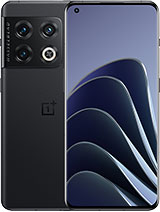
OnePlus 10 Pro
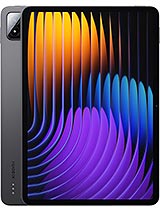
Xiaomi Black Shark Pad 7 Pro
Xiaomi Black Shark Pad 7 Pro wins 3 of 5 categories
Here's exactly where each phone is stronger.
Bigger shape = better phone.
Scores out of 100. How we score
- SpeedOnePlus 10 Pro9079
- CameraOnePlus 10 Pro8580
- VideoNot enough data
- SelfieNot enough data
- BatteryXiaomi Black Shark Pad 7 Pro8895
- DisplayXiaomi Black Shark Pad 7 Pro8694
- ConnectivityNot enough data
- SecurityNot enough data
- ValueXiaomi Black Shark Pad 7 Pro6885
- Xiaomi Black Shark Pad 7 Pro has the bigger battery8,800 mAh vs 5,000 mAh
- Xiaomi Black Shark Pad 7 Pro has the bigger screen11" vs 6.7"
- OnePlus 10 Pro has more RAM12 GB vs 8 GB
- OnePlus 10 Pro has the faster chipSnapdragon 8 Gen 1 vs Helio G100
Why buy each phone
Swipe ⇄Xiaomi Black Shark Pad 7 Pro wins — BeastScore 85.3/100
The Xiaomi Black Shark Pad 7 Pro is the better pick for most people thanks to its bigger battery (8,800 mAh vs 5,000 mAh) and bigger screen (11" vs 6.7"). The OnePlus 10 Pro is worth a look if you prefer its more RAM (12 GB vs 8 GB).
Optical telephoto zoom (1 telephoto lens) · More RAM: 12 GB vs 8 GB
Larger battery: 8,800 mAh vs 5,000 mAh · Larger display: 11" vs 6.7"
Common questions
Which is better: OnePlus 10 Pro or Xiaomi Black Shark Pad 7 Pro?
The Xiaomi Black Shark Pad 7 Pro is the better pick for most people thanks to its bigger battery (8,800 mAh vs 5,000 mAh) and bigger screen (11" vs 6.7"). The OnePlus 10 Pro is worth a look if you prefer its more RAM (12 GB vs 8 GB). BeastScore: OnePlus 10 Pro 85.3/100, Xiaomi Black Shark Pad 7 Pro 85.3/100.
What are the main battery and display differences between OnePlus 10 Pro and Xiaomi Black Shark Pad 7 Pro?
OnePlus 10 Pro has a 6.7-inch display and 5000 mAh battery. Xiaomi Black Shark Pad 7 Pro has a 11-inch display and 8800 mAh battery.
How do OnePlus 10 Pro and Xiaomi Black Shark Pad 7 Pro compare for speed?
OnePlus 10 Pro scores 90/100 for performance; Xiaomi Black Shark Pad 7 Pro scores 79/100.
Similar Smartphones

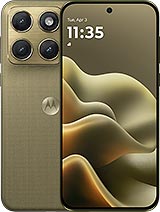
More Smartphones comparisons
OnePlus 9 Pro vs OnePlus 10 Pro
OnePlus 10 Pro vs Galaxy A57 5G
Xiaomi Black Shark Pad 7 Pro vs Galaxy A57 5G
OnePlus 10 Pro vs Apple iPad Air 11 (2024)
Xiaomi Black Shark Pad 7 Pro vs Apple iPad Air 11 (2024)
OnePlus 10 Pro vs Google Pixel 11 Pro XL 5G
Xiaomi Black Shark Pad 7 Pro vs Google Pixel 11 Pro XL 5G
OnePlus 10 Pro vs OnePlus Nord CE5 5G
Gear for the Xiaomi Black Shark Pad 7 Pro
All Amazon Finds →Related articles
All articles → Flagship Showdown
Samsung Galaxy Z Fold6 vs. Google Pixel 9 Pro Fold vs. Honor Magic V3 vs. OnePlus Open: The Definitive Flagship Foldable Architecture, Hinge Engineering, Crease-Free Displays, and Camera Benchmark Showdown (2026)
An exhaustive microarchitectural breakdown, hinge mechanism durability, crease analysis, dual-screen multitasking benchmarks, and periscope camera shootout across the 4 premier book-style foldables of 2026.
Read → Hardware Deep Dive
DJI Osmo Action 5 Pro vs. GoPro HERO 13 Black vs. Insta360 Ace Pro 2 vs. DJI Osmo Pocket 3: The Definitive Flagship Action & Vlogging Camera Architecture, Next-Gen 1/1.3" HDR Sensors, 4nm AI ISP Silicon, 8K30 / 4K120 10-Bit D-Log M, Low-Light Performance, Magnetic Mount Ecosystems, and Real-World Thermal Battery Endurance Showdown (2026)
A 4-way architectural shootout comparing next-gen 1/1.3-inch HDR sensors, 4nm AI silicon, HB-series optical lens mods, 13.5-stop dynamic range, 8K30 capture, 4-hour battery runtimes, and 1.0-inch gimbal vlogging fidelity.
Read →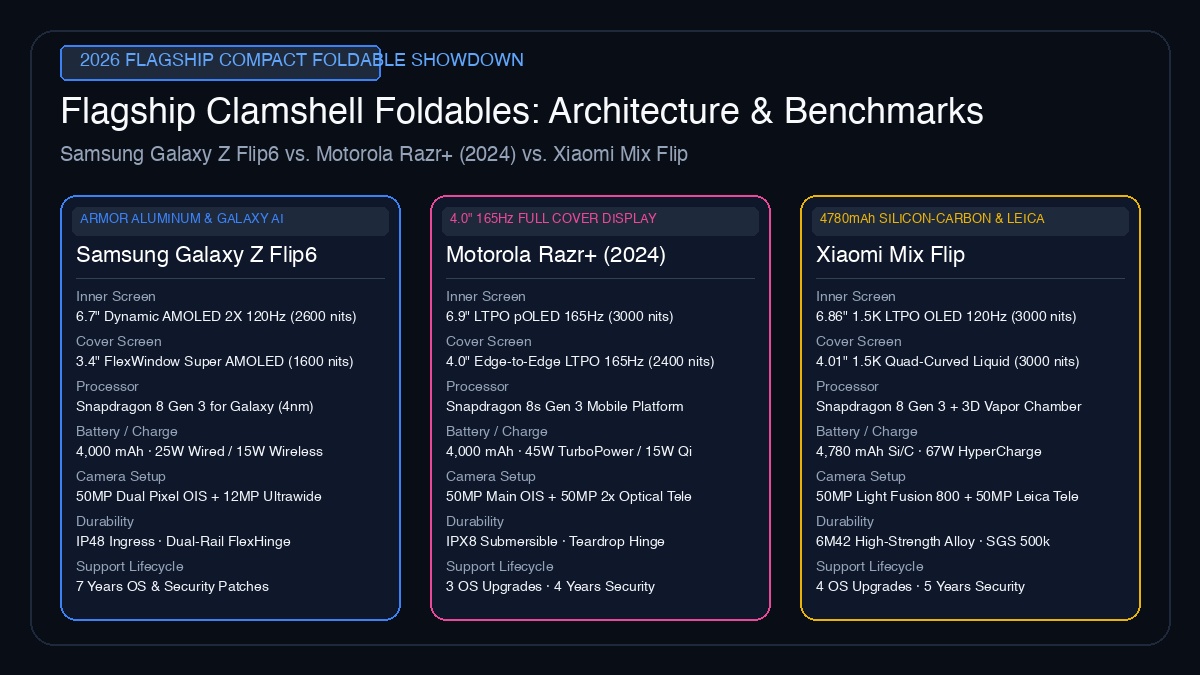 Definitive Foldable Guide 2026
Samsung Galaxy Z Flip6 vs. Motorola Razr+ (2024) vs. Xiaomi Mix Flip: The Definitive Flagship Clamshell Foldable Architecture, Outer Screen Workflows, Armor Aluminum & Titanium Hinges, Silicon-Carbon Batteries, and Dual 50MP Camera Showdown (2026)
A rigorous 2026 engineering and benchmark comparison of the top three clamshell foldables: evaluating Qualcomm Snapdragon 8 Gen 3 for Galaxy vs. 8s Gen 3, teardrop dual-rail hinge mechanics, 1.5K quad-curved vs. 165Hz cover displays, 4,780mAh silicon-carbon battery chemistry, and Leica vs. ProVisual computational photography.
Read →