
OnePlus Ace 6 Ultra 5G vs Redmi K60 Pro: Which One Should You Buy?
OnePlus Ace 6 Ultra 5G edges ahead with a BeastScore of 86.6/100 — but the right choice depends on what matters to you.
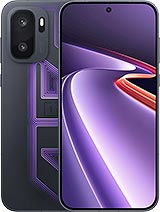
OnePlus Ace 6 Ultra 5G
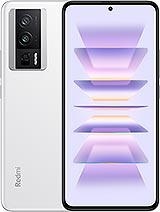
Redmi K60 Pro
OnePlus Ace 6 Ultra 5G wins 3 of 5 categories
Here's exactly where each phone is stronger.
Bigger shape = better phone.
Scores out of 100. How we score
- SpeedRedmi K60 Pro8695
- CameraRedmi K60 Pro8084
- VideoNot enough data
- SelfieNot enough data
- BatteryOnePlus Ace 6 Ultra 5G9590
- DisplayOnePlus Ace 6 Ultra 5G8986
- ConnectivityNot enough data
- SecurityNot enough data
- ValueOnePlus Ace 6 Ultra 5G8568
- OnePlus Ace 6 Ultra 5G has the bigger battery8,600 mAh vs 5,000 mAh
- OnePlus Ace 6 Ultra 5G has the bigger screen6.78" vs 6.67"
- OnePlus Ace 6 Ultra 5G has the faster chipDimensity 9500 vs Qualcomm Snapdragon 8 Gen 2 5G SM8550-AB
Why buy each phone
Swipe ⇄OnePlus Ace 6 Ultra 5G wins — BeastScore 86.6/100
The OnePlus Ace 6 Ultra 5G is the better pick for most people thanks to its bigger battery (8,600 mAh vs 5,000 mAh) and bigger screen (6.78" vs 6.67").
Larger battery: 8,600 mAh vs 5,000 mAh
Reliable all-round performance.
Common questions
Which is better: OnePlus Ace 6 Ultra 5G or Redmi K60 Pro?
The OnePlus Ace 6 Ultra 5G is the better pick for most people thanks to its bigger battery (8,600 mAh vs 5,000 mAh) and bigger screen (6.78" vs 6.67"). BeastScore: OnePlus Ace 6 Ultra 5G 86.6/100, Redmi K60 Pro 86.8/100.
What are the main battery and display differences between OnePlus Ace 6 Ultra 5G and Redmi K60 Pro?
OnePlus Ace 6 Ultra 5G has a 6.78-inch display and 8600 mAh battery. Redmi K60 Pro has a 6.67-inch display and 5000 mAh battery.
How do OnePlus Ace 6 Ultra 5G and Redmi K60 Pro compare for speed?
OnePlus Ace 6 Ultra 5G scores 86/100 for performance; Redmi K60 Pro scores 95/100.
Similar Smartphones

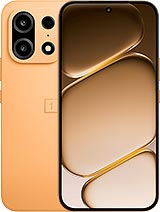
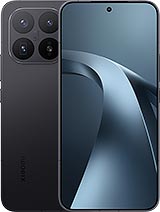
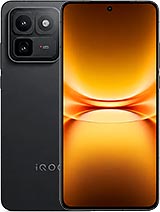


More Smartphones comparisons
OnePlus Ace 5 Ultra 5G vs OnePlus Ace 6 Ultra 5G
OnePlus Ace 6T 5G vs OnePlus Ace 6 Ultra 5G
OnePlus Ace 6 5G vs OnePlus Ace 6 Ultra 5G
Redmi K60 Pro vs Xiaomi Redmi K100 Pro 5G
Redmi K60 Pro vs Xiaomi Redmi K60 Ultra
OnePlus Ace 6 Ultra 5G vs Samsung Galaxy Tab S10 FE+
Redmi K60 Pro vs Samsung Galaxy Tab S10 FE+
OnePlus Ace 6 Ultra 5G vs Apple iPad Air 11 5G (2026)
Gear for the OnePlus Ace 6 Ultra 5G
All Amazon Finds →Related articles
All articles → Copilot+ PC Silicon Deep Dive
Intel Lunar Lake (Core Ultra 200V) vs. AMD Strix Point (Ryzen AI 300) vs. Qualcomm Snapdragon X Elite: The Definitive Copilot+ PC Silicon Architecture, Battery Life, NPU, and x86 vs. ARM Benchmark Showdown (2026)
An exhaustive 3-way architectural breakdown pitting Intel's Memory-on-Package Lunar Lake (Core Ultra 7 258V / 288V), AMD's Zen 5 / RDNA 3.5 Strix Point (Ryzen AI 9 HX 370), and Qualcomm's ARM Oryon Snapdragon X Elite against each other across IPC, multi-threaded efficiency, gaming FPS, local NPU TOPS, and real-world 20+ hour battery life.
Read → Flagship Showdown
Samsung Galaxy Z Fold6 vs. Google Pixel 9 Pro Fold vs. Honor Magic V3 vs. OnePlus Open: The Definitive Flagship Foldable Architecture, Hinge Engineering, Crease-Free Displays, and Camera Benchmark Showdown (2026)
An exhaustive microarchitectural breakdown, hinge mechanism durability, crease analysis, dual-screen multitasking benchmarks, and periscope camera shootout across the 4 premier book-style foldables of 2026.
Read → Flagship Monitor Shootout
Samsung Odyssey Neo G9 57" vs. Odyssey OLED G9 49" vs. ASUS ROG Swift PG49WCD vs. LG UltraGear 45GS96QB: The Definitive Flagship Super Ultrawide & Curved Gaming Monitor Architecture, Dual 4K 7680x2160 vs. Dual QHD QD-OLED, DisplayPort 2.1 Bandwidth (UHBR 13.5/20), 240Hz Refresh Rates, 2,392 Mini-LED Local Dimming Zones vs. Infinite Contrast OLED, KVM Multitasking, and GPU Driveability Shootout (2026)
A comprehensive architectural shootout of the world's most advanced curved super ultrawide monitors. We compare Samsung's 57-inch Dual 4K Quantum Mini-LED titan against 49-inch Gen 2 QD-OLEDs and LG's 45-inch 800R curved WOLED across DisplayPort 2.1 bandwidth tunneling, 240Hz motion clarity, text rendering subpixel matrices, multi-window KVM workflows, and GPU horsepower requirements.
Read →