
POCO F4 vs Xiaomi Black Shark Pad SE: Which One Should You Buy?
Xiaomi Black Shark Pad SE edges ahead with a BeastScore of 82.6/100 — but the right choice depends on what matters to you.
POCO F4

Xiaomi Black Shark Pad SE

Xiaomi Black Shark Pad SE wins 3 of 5 categories
Here's exactly where each phone is stronger.
Bigger shape = better phone.
Scores out of 100. How we score
- SpeedPOCO F48070
- CameraPOCO F48880
- VideoNot enough data
- SelfieNot enough data
- BatteryXiaomi Black Shark Pad SE8095
- DisplayXiaomi Black Shark Pad SE8694
- ConnectivityNot enough data
- SecurityNot enough data
- ValueXiaomi Black Shark Pad SE8085
- Xiaomi Black Shark Pad SE has the bigger battery6,600 mAh vs 4,500 mAh
- Xiaomi Black Shark Pad SE has the bigger screen10.1" vs 6.67"
- POCO F4 has more RAM8 GB vs 6 GB
Why buy each phone
Swipe ⇄Xiaomi Black Shark Pad SE wins — BeastScore 82.6/100
The Xiaomi Black Shark Pad SE is the better pick for most people thanks to its bigger battery (6,600 mAh vs 4,500 mAh) and bigger screen (10.1" vs 6.67"). The POCO F4 is worth a look if you prefer its more RAM (8 GB vs 6 GB).
More RAM: 8 GB vs 6 GB
Larger battery: 6,600 mAh vs 4,500 mAh · Larger display: 10.1" vs 6.67"
Common questions
Which is better: POCO F4 or Xiaomi Black Shark Pad SE?
The Xiaomi Black Shark Pad SE is the better pick for most people thanks to its bigger battery (6,600 mAh vs 4,500 mAh) and bigger screen (10.1" vs 6.67"). The POCO F4 is worth a look if you prefer its more RAM (8 GB vs 6 GB). BeastScore: POCO F4 83.2/100, Xiaomi Black Shark Pad SE 82.6/100.
What are the main battery and display differences between POCO F4 and Xiaomi Black Shark Pad SE?
POCO F4 has a 6.67-inch display and 4500 mAh battery. Xiaomi Black Shark Pad SE has a 10.1-inch display and 6600 mAh battery.
How do POCO F4 and Xiaomi Black Shark Pad SE compare for speed?
POCO F4 scores 80/100 for performance; Xiaomi Black Shark Pad SE scores 70/100.
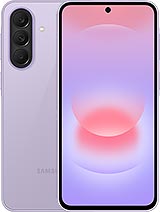
Similar Smartphones







More Smartphones comparisons
POCO F4 vs POCO F6
POCO F3 vs POCO F4
POCO F4 vs Galaxy A37 5G
Xiaomi Black Shark Pad SE vs Galaxy A37 5G
POCO F4 vs Apple iPad mini (2024)
Xiaomi Black Shark Pad SE vs Apple iPad mini (2024)
POCO F4 vs Google Pixel 11 Pro Fold
Xiaomi Black Shark Pad SE vs Google Pixel 10a 5G
Gear for the Xiaomi Black Shark Pad SE
All Amazon Finds →Related articles
All articles → Hardware Deep Dive
DJI Osmo Action 5 Pro vs. GoPro HERO 13 Black vs. Insta360 Ace Pro 2 vs. DJI Osmo Pocket 3: The Definitive Flagship Action & Vlogging Camera Architecture, Next-Gen 1/1.3" HDR Sensors, 4nm AI ISP Silicon, 8K30 / 4K120 10-Bit D-Log M, Low-Light Performance, Magnetic Mount Ecosystems, and Real-World Thermal Battery Endurance Showdown (2026)
A 4-way architectural shootout comparing next-gen 1/1.3-inch HDR sensors, 4nm AI silicon, HB-series optical lens mods, 13.5-stop dynamic range, 8K30 capture, 4-hour battery runtimes, and 1.0-inch gimbal vlogging fidelity.
Read →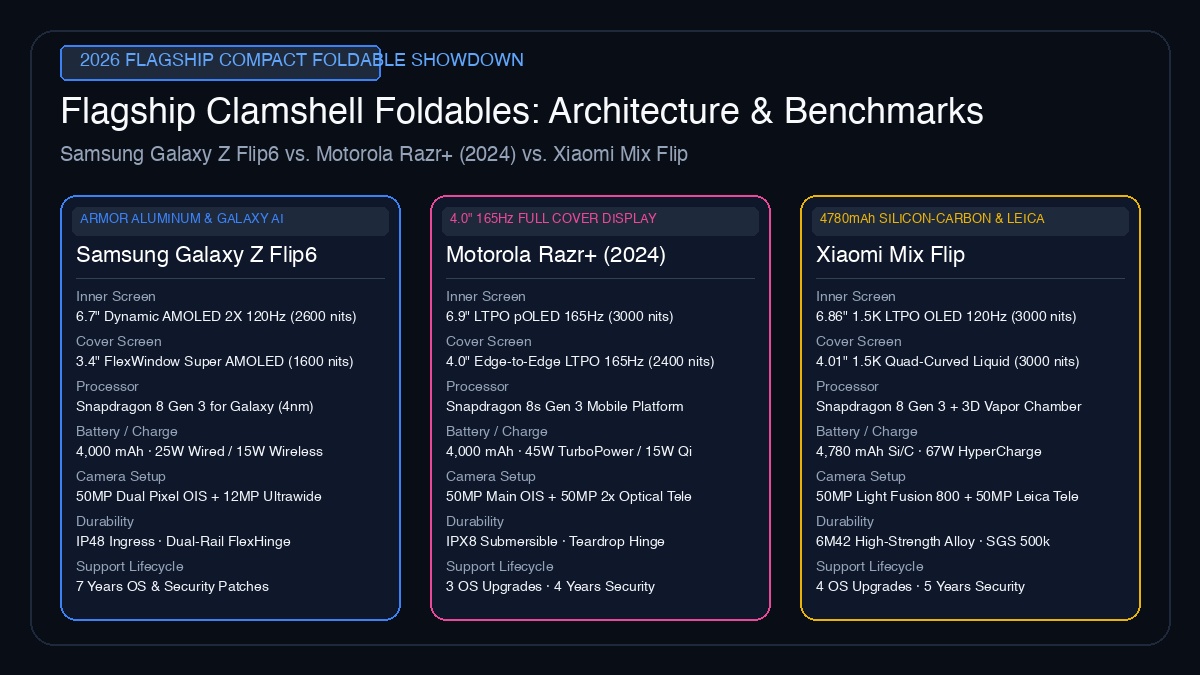 Definitive Foldable Guide 2026
Samsung Galaxy Z Flip6 vs. Motorola Razr+ (2024) vs. Xiaomi Mix Flip: The Definitive Flagship Clamshell Foldable Architecture, Outer Screen Workflows, Armor Aluminum & Titanium Hinges, Silicon-Carbon Batteries, and Dual 50MP Camera Showdown (2026)
A rigorous 2026 engineering and benchmark comparison of the top three clamshell foldables: evaluating Qualcomm Snapdragon 8 Gen 3 for Galaxy vs. 8s Gen 3, teardrop dual-rail hinge mechanics, 1.5K quad-curved vs. 165Hz cover displays, 4,780mAh silicon-carbon battery chemistry, and Leica vs. ProVisual computational photography.
Read → Flagship SSD Shootout
Crucial T705 vs. Samsung 990 PRO vs. WD_BLACK SN850X vs. Kingston FURY Renegade: The Definitive Flagship PCIe 5.0 & Gen 4 NVMe SSD Architecture, Phison E26 vs. Samsung Pascal Silicon, 14,500 MB/s Sequential Throughput, DirectStorage 1.2, Sustained SLC Caching, and Real-World Thermal Throttling Showdown (2026)
We compare and dissect the 2026 flagship NVMe SSD landscape: 12nm Phison PS5026-E26 vs. 8nm Samsung Pascal S4LV008 vs. WD 20-82-20035-B1 controllers, Micron 232-layer vs. Samsung V-NAND V7 TLC, 14,500 MB/s sequential speeds, DirectStorage 1.2 GPU decompression, sustained pSLC write cache endurance, active heatsink thermal dynamics, and real-world gaming IOPS.
Read →