
Best Telescopes for Beginners
Top 10 and What to Skip
Our #1 pick is the Celestron StarSense Explorer DX 130AZ. Saturn’s rings, Jupiter’s moons and the Moon, without wasting money. We compared 10 beginner telescopes on Amazon, from a backpack scope under $100 to smart telescopes, with price bands checked November 10, 2026 and who each one is not for.
How we picked: we shortlist by Amazon Best Seller rank and number of ratings, then compare published specs. We don’t test these products hands-on.
By Jamilur Rahman, Founder & Editor · Updated November 10, 2026
- Owner reviews checked
- Features side by side
- Quick & easy compare
- Smarter purchase

The short answer
The best telescope for beginners is the Celestron StarSense Explorer DX 130AZ. It pairs a 130mm (5-inch) mirror, big enough for Saturn’s rings, Jupiter’s moons, the Moon and bright galaxies, with a phone app that tells you where to point: dock your phone, pick a target and follow the arrows until the bullseye turns green. It suits adults and families who have never found a planet before, and it is the scope the ranking guides name most often as their top pick.
Other buyers should pick differently. The Sky-Watcher Heritage 150 gives the most mirror for about $300 if you are happy to aim by hand. The Celestron NexStar 4SE is the planet pick, a GoTo scope that finds and tracks targets for you, and the Sky-Watcher Flextube 200 is the 8-inch for galaxies and nebulae. Under $100, the Celestron Travel Scope 70 is the honest buy, and the Celestron FirstScope Signature Series Moon is the easy first scope for a young kid. If you want photos on your phone instead of an eyepiece view, the ZWO Seestar S30 Pro and DWARFLAB Dwarf 3 are smart telescopes, but they cost more and the Seestar listing says its S30 Pro is not meant for planets.
Skip the DX 130AZ if you want a scope you can carry in a backpack (it is about 18 lb with a full-height tripod), if nobody in the house has a recent phone (the listing names iOS 18 and Android 12 or newer), or if you want to spend under $250. And skip the common traps: any scope sold on “400x” or “500x” magnification, a thin tripod that shakes at every touch, and equatorial (EQ) mounts such as the Celestron AstroMaster 130EQ unless you are ready to learn polar alignment. Alt-azimuth mounts and Dobsonians just move up, down, left and right.
How we picked: we read the live Amazon listings and spec charts for every scope, then compared them with owner reports and the main astronomy and review-site ranking guides. We checked that each one is sold new by Amazon or the brand’s own store. We do not test hands-on, so we say what the listing says and what owners report. Price bands were checked on November 10, 2026.
Compare them side by side
Everything that matters, in one table. Swipe to see all 10.
| Product | Best Overall Celestron StarSense Explorer DX 130AZ Phone-guided 130mm reflector |  Best Views Per Dollar Sky-Watcher Heritage 150 150mm tabletop Dobsonian |  Best for Planets Celestron NexStar 4SE 4" GoTo Maksutov |  Best for Galaxies and Nebulae Sky-Watcher Flextube 200 8" collapsible Dobsonian |  Best Easy Refractor Celestron Inspire 100AZ 100mm refractor |  Best Phone-Guided Budget Pick Celestron StarSense Explorer LT 80AZ Phone-guided 80mm refractor | 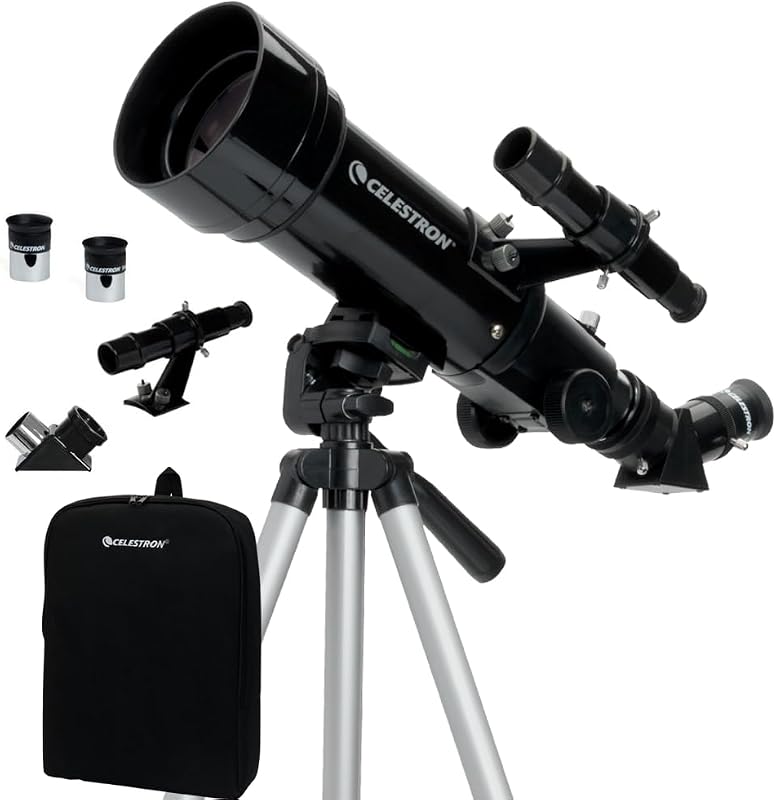 Best Under $100 Celestron Travel Scope 70 70mm portable refractor |  Best Smart Telescope ZWO Seestar S30 Pro Smart telescope, phone-controlled | 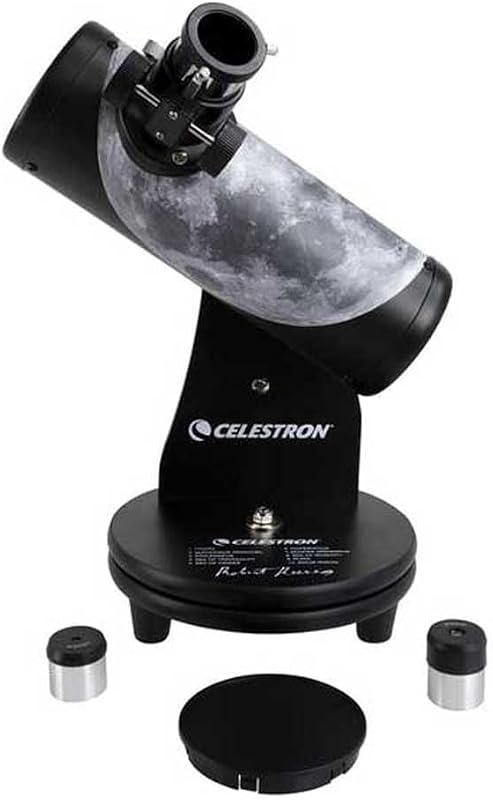 Best for Young Kids Celestron FirstScope Signature Series Moon 76mm tabletop Dobsonian |  Most Portable Smart Telescope DWARFLAB Dwarf 3 Portable smart telescope |
|---|---|---|---|---|---|---|---|---|---|---|
| BeastScore | 94 / 100 | 92 / 100 | 91 / 100 | 90 / 100 | 89 / 100 | 88 / 100 | 87 / 100 | 86 / 100 | 85 / 100 | 84 / 100 |
| Best for | First-time adults and families who want to find planets and galaxies without learning the sky first | Anyone who wants the biggest mirror for about $300 and has a sturdy table to put it on | Planet and Moon fans who want the telescope to find and follow targets for them | Dark-sky observers who want the most light and have room to store a big scope | Families who want a no-maintenance scope for the Moon, planets and daytime views, plus easy phone photos | Families with kids who want phone-guided pointing for about $230 | Budget buyers, travelers and first-timers who want a real brand for under $100 | Beginners who want galaxy and nebula photos on their phone, not an eyepiece view | Young kids and first gifts: no tripod, no setup, just look | Travelers who want a backpack-size smart telescope that also shoots daytime wildlife |
| Typical price (checked November 10, 2026) | $480–$520 | $290–$330 | $630–$670 | $720–$760 | $320–$360 | $220–$250 | $80–$100 | $640–$690 | $60–$80 | $530–$570 |
| Aperture | 130 mm (5") | 150 mm (6") | 102 mm (4") | 200 mm (8") | 100 mm (4") | 80 mm (3.1") | 70 mm (2.8") | 30 mm telephoto lens | 76 mm (3") | 35 mm tele, 3.4 mm wide |
| Type and mount | Newtonian reflector, alt-azimuth | Collapsible tabletop Dobsonian | Maksutov-Cassegrain, GoTo fork mount | Collapsible Dobsonian | Refractor, alt-azimuth | Refractor, alt-azimuth | Refractor, alt-azimuth | Smart alt-azimuth tube (EQ mode supported) | Tabletop Dobsonian | Smart alt-azimuth tube, two cameras |
| How you find things | Phone app arrows (StarSense) | Point by hand, no electronics | GoTo computer, 40,000+ objects | Point by hand, 8x50 finder | Finderscope and pan handle | Phone app arrows (StarSense) | Finderscope and pan handle | Automatic GoTo from the app | Point by hand, no electronics | Automatic GoTo from the app |
| Weight | 18 lb | See listing | 21 lb with tripod | 40 lb assembled | See listing | 9.2 lb | 4.2 lb | 3.64 lb | 3.6 lb | 3 lb |
| Key features |
|
|
|
|
|
|
|
|
|
|
BeastScore here is our overall rating out of 100, based on published specs and Amazon owner reviews. Prices change daily, so tap "View on Amazon" for today's price. We may earn a small commission, at no extra cost to you. Learn more
Why each one made the list
What each pick does best, where it falls short, and the typical Amazon price when we checked.
- 1. Best Overall
Celestron StarSense Explorer DX 130AZ
BeastScore 94 / 100Typically $480–$520 on Amazon (checked November 10, 2026)This scope fixes the biggest beginner problem: not knowing where to point. You dock your phone, pick a target in the free app and follow the arrows until the bullseye turns green. The 130mm (5-inch) mirror gathers enough light for Saturn’s rings, Jupiter’s moons, the Orion Nebula and the Andromeda Galaxy, which 70mm scopes struggle to show. It is the most-named top pick across the ranking guides we read. Skip it if you have no compatible phone (the listing names iOS 18 and Android 12 or newer), want something you can carry in a backpack, or would rather not spend about $500.
Pros- Phone-guided pointing means no star charts to learn
- 130mm mirror shows Saturn’s rings, Jupiter’s moons and bright galaxies
- Tripod, two eyepieces and a red-dot finder in the box
Cons- Needs a recent phone: the listing names iOS 18 or Android 12 and newer
- Reflector mirrors can need an occasional alignment (collimation)
- About 18 lb with a full-height tripod, so not a grab-and-go scope
- 2. Best Views Per Dollar
Sky-Watcher Heritage 150
BeastScore 92 / 100Typically $290–$330 on Amazon (checked November 10, 2026)A Dobsonian is the simplest telescope design: a big mirror in a tube that you swing by hand. The Heritage 150 gives you a 150mm (6-inch) mirror, about a third more light than the 130mm DX 130AZ, for roughly $300. The tube collapses for travel and keeps its mirror alignment, and the base has rubber feet to cut vibration. Nothing needs power, pairing or alignment, so you can be looking in a minute. The trade-off is you aim it yourself. Skip it if you want an app or GoTo to find things for you, or if you have no table or bench to set it on.
Pros- 150mm mirror shows more than any scope near its price
- Nothing to power, pair or align: set it down and look
- Collapsible tube keeps its alignment and packs small
Cons- Tabletop base needs a sturdy table, bench or car hood
- No phone guidance or GoTo, so you learn to find objects yourself
- Hand-pushed mount: you nudge it to follow planets across the sky
- 3. Best for Planets
Celestron NexStar 4SE
BeastScore 91 / 100Typically $630–$670 on Amazon (checked November 10, 2026)The 4SE trades aperture for focal length. Its 1,325 mm Maksutov tube magnifies hard, which is what Saturn, Jupiter and lunar craters want, in a compact package of about 21 lb with the tripod. Pick a target on the hand control and the mount slews to it and tracks it, so a planet stays centered while the whole family takes a turn. Alignment takes minutes. The catch is faint objects: at 4 inches, galaxies and nebulae look dim, and the mount runs on 8 AA batteries or a 12V supply that are not included. Skip it if deep-sky is your goal or you want to spend under $500.
Pros- Long focal length gives big, steady planet and Moon views
- GoTo finds and tracks 40,000+ objects after a three-star alignment
- Compact tube, about 21 lb with the tripod
Cons- Batteries or a power supply are not included (8 AA or 12V)
- Only 4 inches of aperture, so galaxies and nebulae look faint
- Costs far more than manual scopes that gather more light
- 4. Best for Galaxies and Nebulae
Sky-Watcher Flextube 200
BeastScore 90 / 100Typically $720–$760 on Amazon (checked November 10, 2026)Aperture rules deep-sky viewing, and 8 inches is where galaxies and nebulae start to show real structure. The Flextube 200 collapses on three steel struts so it keeps its alignment, and it comes complete with two eyepieces, a finderscope and a 2-inch focuser. It is a strong planet and Moon scope too, with a 1,200 mm focal length. The cost is size: the listing says about 40 lb assembled, and it is the priciest scope here at roughly $740. Skip it for small apartments, for young kids, or if you want a first scope you can grab and go.
Pros- 8 inches gather about 78% more light than a 150mm scope
- Complete kit: two eyepieces, finderscope and 2-inch focuser
- Collapsible tube keeps its alignment and stores smaller
Cons- Heavy and bulky: about 40 lb assembled, per the listing
- Priciest manual scope on this list
- No GoTo or phone help, so you star-hop by hand
- 5. Best Easy Refractor
Celestron Inspire 100AZ
BeastScore 89 / 100Typically $320–$360 on Amazon (checked November 10, 2026)A refractor is a sealed tube with no mirrors to align, and the Inspire 100AZ makes setup about as easy as it gets: pop the tripod open, lock the accessory tray, click the tube on. Its 100mm lens is a good size for the Moon, Saturn’s rings and Jupiter’s moons, and the lens cap doubles as a smartphone adapter for quick Moon photos. Erect-image optics also make it handy for daytime wildlife. Skip it if you want faint galaxies (a 130mm or 200mm mirror shows far more) or phone-guided pointing, because this one is aimed by eye.
Pros- Sealed refractor tube: no mirror alignment
- Built-in phone adapter and a red LED flashlight
- Wide field of view for star clusters and big star fields
Cons- Aimed by eye with a finderscope: no app or GoTo help
- Less light than 130mm and larger mirrors, so faint galaxies look dim
- Short, fast refractors can show color fringing on bright objects
- 6. Best Phone-Guided Budget Pick
Celestron StarSense Explorer LT 80AZ
BeastScore 88 / 100Typically $220–$250 on Amazon (checked November 10, 2026)The LT 80AZ gives you the same phone-guided pointing as the DX 130AZ for less than half the money, in a 9.2 lb refractor that needs no mirror alignment. The 80mm lens shows the Moon, Jupiter’s moons and Saturn’s rings, and the app builds a list of what is up tonight, which keeps kids busy. The limit is light: at 80mm, galaxies and nebulae look faint even under dark skies. Skip it if deep-sky is the goal (the Heritage 150 or DX 130AZ show far more) or if nobody at home has a recent phone, because the app is the whole point.
Pros- Phone-guided pointing for about $230
- Light at 9.2 lb, with a full-height tripod
- Sealed refractor tube needs no mirror alignment
Cons- 80mm of aperture shows galaxies and nebulae faintly
- Needs a compatible phone with enough battery
- Light tripods tend to shake at the 90x eyepiece
- 7. Best Under $100
Celestron Travel Scope 70
BeastScore 87 / 100Typically $80–$100 on Amazon (checked November 10, 2026)Most telescopes under $100 are marketing: huge magnification claims on thin tripods. The Travel Scope 70 is the honest version. You get a 70mm fully coated refractor from a known brand, a 2-year US warranty, a star diagonal and two eyepieces, all in a backpack. Expect the Moon’s craters, Jupiter’s four big moons and a small but clear Saturn with its rings, not galaxies. At about 4 lb it is the easiest scope here to carry. Skip it if you want faint objects or bigger planets, or if you would rather save for the phone-guided LT 80AZ, which costs about $150 more.
Pros- Under $100 from a known brand with a 2-year US warranty
- Whole kit packs into a backpack, about 4 lb
- Works for daytime wildlife and landscapes too
Cons- 70mm gathers little light: Moon and planets, not galaxies
- Light tripod shakes for a moment whenever you touch it
- Planets stay small at the 20x and 40x eyepieces
- 8. Best Smart Telescope
ZWO Seestar S30 Pro
BeastScore 86 / 100Typically $640–$690 on Amazon (checked November 10, 2026)A smart telescope is a different product: there is no eyepiece. You set it down, connect your phone, tap a target and the Seestar finds it, tracks it and stacks images so galaxies, nebulae and the Moon build up on your screen. The S30 Pro is the lighter, smaller Seestar at 3.64 lb, with filters aimed at bright city skies. Two things to know. The listing says it is not intended for planets, so skip it if Saturn is the goal, and it does nothing without a phone or tablet. You are looking at a screen, not at the sky. Skip it for a shared eyepiece view with kids.
Pros- Finds, tracks and stacks images automatically from one app
- Built-in light-pollution filters for city backyards
- Light and compact at 3.64 lb
Cons- Not intended for planets, per the listing
- No eyepiece: galaxies appear as phone images, not through the scope
- Costs more than most manual scopes on this list
- 9. Best for Young Kids
Celestron FirstScope Signature Series Moon
BeastScore 85 / 100Typically $60–$80 on Amazon (checked November 10, 2026)This is the quickest way to get a kid looking at the sky tonight. Drop in an eyepiece and swing the tube by hand: no tripod, no tools. The tube is wrapped in a map of the Moon with 10 labeled features, so kids can find Tycho and the Sea of Tranquility. The 76mm mirror shows craters and a small Saturn, and at about 3.6 lb it is easy to carry. It is not a long-term scope: faint objects look dim, and the 4mm eyepiece is hard to use on a tabletop. Skip it if you want galaxies or have no table to put it on.
Pros- Works out of the box: no tripod, tools or assembly
- Moon-map tube teaches crater names while you look
- Light at about 3.6 lb, with software and an app included
Cons- Needs a steady table, railing or stool to sit on
- Small 76mm mirror: bright Moon and planets only
- High-power 4mm eyepiece is hard to hold steady on a tabletop base
- 10. Most Portable Smart Telescope
DWARFLAB Dwarf 3
BeastScore 84 / 100Typically $530–$570 on Amazon (checked November 10, 2026)The Dwarf 3 is the second smart telescope here, and its pitch is size: about 3 lb, with a telephoto lens and a wide-angle lens in one body. Like the Seestar, it finds targets from an app and shows everything on your phone, with no eyepiece. The wide lens suits the Milky Way and star trails, and the telephoto lens also works on daytime wildlife. It sits in a lower price band than the Seestar S30 Pro. The listing mentions planets, but a 35mm lens keeps them tiny. Skip it if you want to look through an eyepiece, or if you want to show kids Saturn with your own eyes.
Pros- Dual lenses: telephoto for deep space and wildlife, wide for the Milky Way
- About 3 lb, easy to carry in a backpack
- App control with cloud image processing
Cons- No eyepiece: everything shows on your phone
- Small lenses keep planets tiny, even though the listing mentions them
- Needs a phone or tablet and a stable surface to work
All 10 compared, in one look
See every pick on one chart, or tap one to put it head to head with Celestron StarSense Explorer DX 130AZ. Ratings out of 10 are our estimates from published specs and Amazon owner reviews, not hands-on tests. Bigger shape = better.
- View qualitySky-Watcher Flextube 200 · 9.6/10
- Ease of useTie
- PortabilityCelestron Travel Scope 70 · 9.8/10
- ValueTie
- Planets and MoonCelestron NexStar 4SE · 9.2/10
- Galaxies and nebulaeSky-Watcher Flextube 200 · 9.6/10
Which one should you buy?
Find your situation below. That's your pick.
- You want phone-guided pointing and a 130mm mirror in one scope
- You are an adult or a family buying a first telescope and can spend about $500
- You want the most aperture for about $300
- You are happy to aim by hand and have a sturdy table to put it on
- Saturn, Jupiter and the Moon are your main targets
- You want a computer to find and track objects for you
- You want galaxies and nebulae to show real detail
- You have storage room and a car for dark-sky trips
- You want a sealed refractor with no mirror alignment
- You want an easy phone adapter for Moon photos
- You want phone-guided pointing for about $230
- You are buying for kids who like apps
- You want a real brand for under $100
- You want a scope that fits in a backpack for trips
- You want galaxy and nebula photos on your phone, automatically
- You do not need to look through an eyepiece
- You are buying a first scope for a young kid
- You want no tripod, no tools and a Moon map on the tube
- You want the most portable smart telescope on this list
- You also want a daytime wildlife camera
Celestron StarSense Explorer DX 130AZ
A 130mm mirror and phone-guided pointing: the fastest way to see Saturn’s rings and Jupiter’s moons.
- 130mm (5") aperture
- Phone app finds targets
- Tripod and 2 eyepieces included
Quick tips before you buy
In daylight, line up the finderscope on a far-off rooftop. At night, begin with the low-power eyepiece (the bigger mm number) and aim at the Moon. Seeing nothing usually means the finder is off or the high-power eyepiece is in.
The width of the lens or mirror decides how much you see. Useful power tops out near twice the aperture in mm (about 200x on a 100mm scope), so ignore “500x” claims on small scopes.
The StarSense Explorer scopes need a recent phone: the listings name iPhone XR and newer on iOS 18, or Android 12 and newer. The smart telescopes need a phone or tablet too.
Alt-azimuth mounts and Dobsonians move up, down, left and right, which feels natural. Equatorial (EQ) mounts need polar alignment, so skip them unless you want to learn it.
Quick answers
What is the best telescope for beginners to see planets?+
The Celestron NexStar 4SE is our planet pick: its 1,325 mm focal length gives big, steady views of Saturn, Jupiter and the Moon, and GoTo finds them for you. On a smaller budget, the Celestron StarSense Explorer DX 130AZ shows Saturn’s rings and Jupiter’s moons and tells you where to point. Smart telescopes such as the Seestar S30 Pro are not meant for planets.
What is the best telescope for beginners under $100?+
The Celestron Travel Scope 70, in the $80 to $100 band: a 70mm refractor from a known brand with a tripod, two eyepieces, a backpack and a 2-year US warranty. For a young child, the Celestron FirstScope Signature Series Moon is cheaper still and needs no tripod. Both show the Moon, Jupiter’s moons and a small Saturn. Neither shows galaxies well.
What is the best telescope for beginners: adults or kids?+
Adults who want to learn the sky should look at the DX 130AZ or the Heritage 150. Kids and families can start with the StarSense Explorer LT 80AZ, which is phone-guided and about $230, or the FirstScope Signature Series Moon for young kids. Whatever the age, buy the biggest scope the person will actually carry outside.
What magnification do I need to see Saturn’s rings?+
About 30x to 50x shows Saturn as a ringed planet, and around 100x makes the rings clear, so every eyepiece scope here can do it. The planet still looks small. A steady mount and a calm night matter more than extra power, and the practical limit is about twice the aperture in mm.
Is a refractor or a reflector better for beginners?+
Refractors (Inspire 100AZ, LT 80AZ, Travel Scope 70) are sealed tubes with no mirrors to align, and they also work in daytime. Reflectors (DX 130AZ, Heritage 150, Flextube 200) give far more aperture for the money, which is what shows galaxies and nebulae. Pick a refractor for simplicity and a reflector for the biggest view per dollar.
Is a smart telescope worth it for beginners?+
Yes if you want galaxy, nebula and Moon photos on your phone and do not need an eyepiece. The Seestar S30 Pro and DWARFLAB Dwarf 3 find targets, track them and stack images for you. No if you want to see planets with your own eyes (the Seestar listing says its S30 Pro is not meant for them), want a shared eyepiece view for kids, or prefer no screens. They also cost more than most manual scopes here.
Can I do astrophotography with a beginner telescope?+
A little. The Celestron Inspire 100AZ has a phone adapter built into its lens cap, which suits Moon photos. Planet and deep-sky photos from a hand-pushed beginner scope are hard, because objects drift out of view within seconds at high power. A smart telescope does the tracking and stacking for you.
Keep comparing
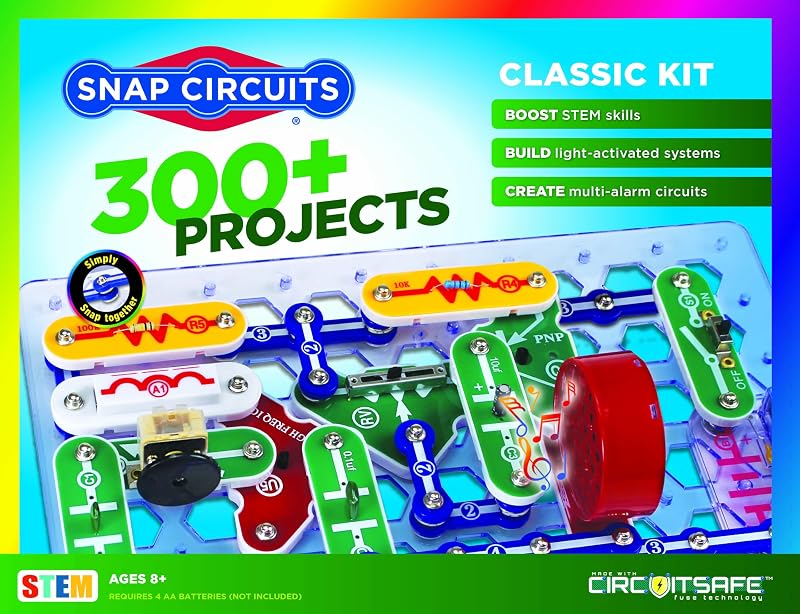 Best STEM Toys 14 Picks by Age, 3 to 12+The right STEM toy for every age, from 3 to 12+.
 Best Drones for Beginners: Top 4 on AmazonEasy to fly, under 250 g and hard to lose. The best first drones compared.
 Best Beginner Mirrorless Cameras: Top 5 on AmazonReady to move past your phone? The best first cameras compared.
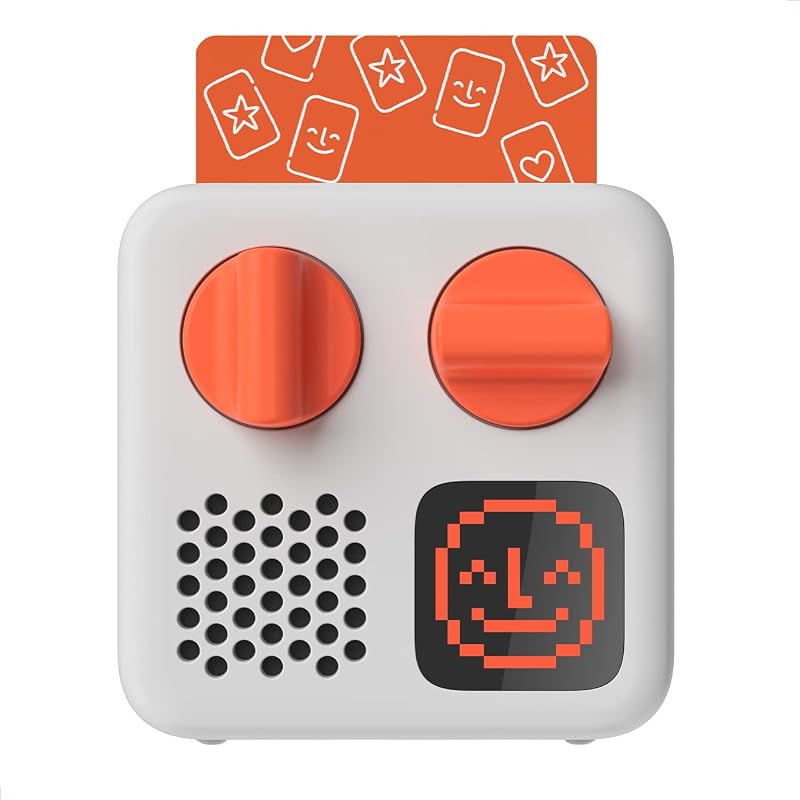 Best Screen-Free Toys for Kids 20 picks by age, from about $7 to $10020 screen-free toys sorted by age, 3 to 12, with who should skip each one.