
RTX 5070 vs RX 9070 XT
Which midrange GPU to buy
Our overall winner is the Sapphire Pulse RX 9070 XT. The GeForce RTX 5070 and Radeon RX 9070 XT sit at similar prices on Amazon right now. We compared memory, upscaling, ray tracing and power, plus the RTX 5070 Ti and RX 9070 on either side.
How we picked: we shortlist by Amazon Best Seller rank and number of ratings, then compare published specs. We don't test these products hands-on.
By Jamilur Rahman, Founder & Editor · Updated October 15, 2026
- Owner reviews checked
- Features side by side
- Quick & easy compare
- Smarter purchase

The short answer
For most people building or upgrading a 1440p gaming PC, the Radeon RX 9070 XT is the better buy. It has 16GB of VRAM to the RTX 5070’s 12GB, and independent reviews generally put it clearly ahead of the 5070 in raw frame rates. With AMD’s FSR 4 AI upscaling it also closed most of the image-quality gap with Nvidia. On Amazon right now the two cards sell in a similar price band, so the extra memory and speed come at little or no cost. We use the Sapphire Pulse RX 9070 XT and the PNY RTX 5070 Epic-X as the two head-to-head cards.
The RTX 5070 still makes sense in a few cases. Nvidia’s DLSS 4 with Multi Frame Generation is supported in more games, ray tracing and path tracing run better on GeForce, and the card draws less power, so it fits smaller cases and older power supplies. If you have more to spend, the MSI RTX 5070 Ti Ventus 3X adds 16GB of faster GDDR7 and is the safer pick for 4K. If you want to spend less, the PowerColor Hellhound RX 9070 keeps the 16GB and costs less than either main card.
Don’t buy the RX 9070 XT if your PC has a small power supply or a compact case: it needs more power and is a big card. And don’t buy the RTX 5070 if you plan to keep it for many years at high texture settings, because 12GB is already tight in some new games.
How we picked: we compared spec sheets, Amazon listings and what owners report, then weighed the results of widely published independent benchmarks. We don’t run our own lab tests. Prices on graphics cards move a lot, so check the current price before you buy. Listings checked October 2026.
Compare them side by side
Everything that matters, in one table. Swipe to see all 4.
| Product | Best Overall Sapphire Pulse RX 9070 XT AMD Radeon RX 9070 XT, 16GB |  Best for DLSS & Efficiency PNY RTX 5070 Epic-X RGB OC Nvidia GeForce RTX 5070, 12GB | 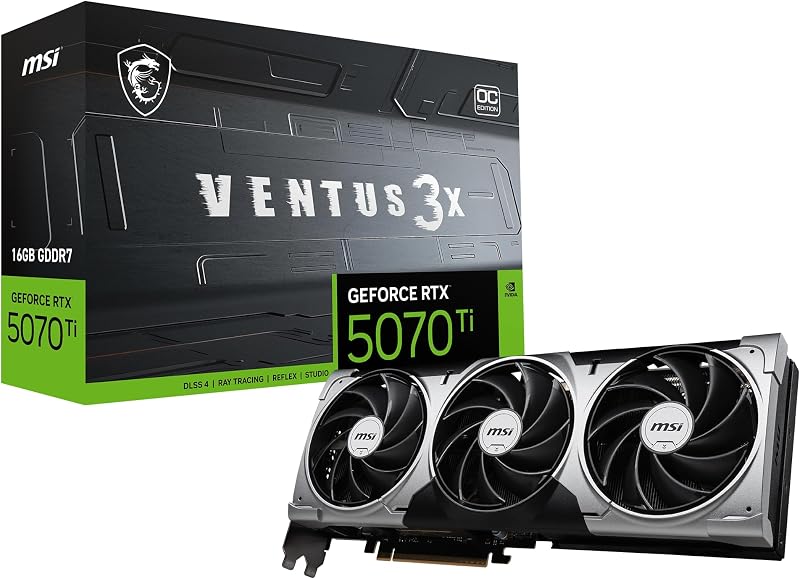 Best Step-Up MSI RTX 5070 Ti Ventus 3X OC Nvidia GeForce RTX 5070 Ti, 16GB |  Best Value 16GB PowerColor Hellhound RX 9070 AMD Radeon RX 9070, 16GB |
|---|---|---|---|---|
| BeastScore | 92 / 100 | 88 / 100 | 90 / 100 | 87 / 100 |
| Best for | 1440p high refresh, with room for 4K | DLSS games, small cases and quieter builds | 4K gaming and heavy ray tracing | 1440p on a tighter budget |
| Typical price (checked October 15, 2026) | $840–$900 | $830–$880 | $1,150–$1,250 | $700–$740 |
| GPU | RDNA 4, 64 compute units | Blackwell | Blackwell, 2497 MHz boost | RDNA 4 |
| Memory | 16GB GDDR6, 256-bit | 12GB GDDR7 | 16GB GDDR7, 256-bit | 16GB GDDR6 |
| Upscaling | FSR 4 (AI) | DLSS 4 with Multi Frame Generation | DLSS 4 with Multi Frame Generation | FSR 4 (AI) |
| Power | See listing (AMD rates the 9070 XT at about 304W) | See listing (Nvidia rates the 5070 at about 250W) | See listing (Nvidia rates the 5070 Ti at about 300W) | 2 x 8-pin, 700W PSU recommended |
| Key features |
|
|
|
|
BeastScore here is our overall rating out of 100, based on published specs and Amazon owner reviews. Prices change daily, so tap "View on Amazon" for today's price. We may earn a small commission, at no extra cost to you. Learn more
Why each one made the list
What each pick does best, where it falls short, and the typical Amazon price when we checked.
- 1. Best Overall
Sapphire Pulse RX 9070 XT
BeastScore 92 / 100Typically $840–$900 on Amazon (checked October 15, 2026)The Pulse is Sapphire’s no-frills RX 9070 XT, and that is the point: you get the full chip without paying for RGB. The listing confirms 64 compute units on AMD’s RDNA 4 and 16GB of GDDR6 on a 256-bit bus, which gives it more memory and more bandwidth than the RTX 5070. Independent reviews generally show the 9070 XT well ahead of the 5070 in raw frame rates. FSR 4 uses AI upscaling, a big step up from older FSR, though fewer games support it than DLSS. It is the most-reviewed 9070 XT on Amazon. The downsides are higher power draw and weaker path tracing.
Pros- 16GB of VRAM, 4GB more than the RTX 5070
- Faster than the 5070 in most games on paper and in reviews
- Simple Sapphire design at a fair price for a 9070 XT
Cons- Draws noticeably more power than the RTX 5070
- Ray and path tracing trail Nvidia
- FSR 4 is in fewer games than DLSS 4
- 2. Best for DLSS & Efficiency
PNY RTX 5070 Epic-X RGB OC
BeastScore 88 / 100Typically $830–$880 on Amazon (checked October 15, 2026)The RTX 5070’s case rests on Nvidia’s software. DLSS 4 with Multi Frame Generation can multiply frame rates in supported games, and DLSS is in far more titles than FSR 4. Ray tracing runs better too. PNY’s Epic-X version adds triple 90mm fans with a Stealth Mode that stops them at idle, an open backplate and RGB, and the listing says it is SFF-Ready, so it fits smaller cases than most 9070 XT cards. It also draws less power. The weak spot is memory: 12GB of GDDR7 can run out at high textures in new games, and raw speed trails the 9070 XT.
Pros- DLSS 4 and Multi Frame Generation in a wide game library
- Lower power draw and an SFF-Ready size
- Fans stop at idle for a silent desktop
Cons- Only 12GB of VRAM, tight for some 2026 games
- Slower than the 9070 XT in raw frame rates
- Costs about the same as the faster AMD card right now
- 3. Best Step-Up
MSI RTX 5070 Ti Ventus 3X OC
BeastScore 90 / 100Typically $1,150–$1,250 on Amazon (checked October 15, 2026)If neither main card feels like enough, the RTX 5070 Ti is the real upgrade. It fixes the 5070’s biggest weakness with 16GB of GDDR7 on a 256-bit bus, and independent reviews put it at or ahead of the RX 9070 XT in most games, with a clear lead in ray tracing. You keep DLSS 4 and Multi Frame Generation. MSI’s Ventus 3X is the plain, practical version: TORX Fan 5.0, a nickel-plated copper baseplate, a 2497 MHz boost clock and an SFF-Ready size by the listing. The obvious problem is price, which sits a few hundred dollars above both the 5070 and the 9070 XT.
Pros- 16GB of fast GDDR7 for 4K and long-term use
- Strongest ray tracing and DLSS 4 here
- Simple, compact MSI design
Cons- Costs much more than the RX 9070 XT for a modest gain in raster
- Needs a bigger power supply than the 5070
- No RGB or premium cooler at this price
- 4. Best Value 16GB
PowerColor Hellhound RX 9070
BeastScore 87 / 100Typically $700–$740 on Amazon (checked October 15, 2026)The non-XT RX 9070 is the quiet bargain of this matchup. It uses the same RDNA 4 design and keeps the full 16GB of GDDR6, so it avoids the RTX 5070’s memory squeeze, yet it costs over $100 less than either main card right now. Independent reviews generally put the RX 9070 roughly level with or slightly ahead of the RTX 5070 in raw frame rates, while drawing less power than the XT. PowerColor’s Hellhound has a 327 mm card, two 8-pin plugs and a recommended 700W power supply, per the listing. Ray tracing is its weakest area, and FSR 4 support is still growing.
Pros- 16GB of VRAM at the lowest price here
- Close to RTX 5070 speed in raw frame rates
- Lower power than the RX 9070 XT
Cons- Ray tracing is the weakest of the four
- Long 327 mm card needs case clearance
- Fewer upscaling games than DLSS
All 4 compared, in one look
See every pick on one chart, or tap one to put it head to head with Sapphire Pulse RX 9070 XT. Ratings out of 10 are our estimates from published specs and Amazon owner reviews, not hands-on tests. Bigger shape = better.
- Raw speedMSI RTX 5070 Ti Ventus 3X OC · 9.6/10
- Ray tracingMSI RTX 5070 Ti Ventus 3X OC · 9.4/10
- UpscalingTie
- VRAMTie
- EfficiencyPNY RTX 5070 Epic-X RGB OC · 9.2/10
- ValueSapphire Pulse RX 9070 XT · 9.2/10
Who wins where
The winner of each category, based on published specs and Amazon owner reviews. Pick the rounds that matter to you.
- Round 1
Raw gaming speed
Sapphire Pulse RX 9070 XT winsIndependent benchmarks generally put the RX 9070 XT clearly ahead of the RTX 5070 without upscaling, and close to the more expensive RTX 5070 Ti. At 1440p high settings that gap is easy to notice in frame rates.
- Round 2
VRAM and future-proofing
Sapphire Pulse RX 9070 XT winsThe 9070 XT has 16GB on a 256-bit bus; the RTX 5070 has 12GB. Some new games already use more than 12GB at max textures, so the AMD card should age better.
- Round 3
Upscaling and frame generation
PNY RTX 5070 Epic-X RGB OC winsDLSS 4 with Multi Frame Generation is in far more games than FSR 4, and Nvidia’s image quality is still the reference. FSR 4 is a big jump for AMD, but game support is smaller.
- Round 4
Ray tracing
PNY RTX 5070 Epic-X RGB OC winsGeForce cards hold a lead in heavy ray tracing and path tracing. AMD narrowed the gap with RDNA 4, but in the most demanding RT games the 5070 can match or beat the 9070 XT.
- Round 5
Power and size
PNY RTX 5070 Epic-X RGB OC winsNvidia rates the RTX 5070 at about 250W versus about 304W for the 9070 XT. The PNY card is listed as SFF-Ready, so it suits small cases and existing power supplies better.
Which one should you buy?
Find your situation below. That's your pick.
- You want the most frames per dollar at 1440p
- You want 16GB of VRAM for future games
- Your power supply has headroom
- Your favorite games support DLSS 4
- You care about ray tracing
- You have a small case or power supply
- You game at 4K
- You want 16GB and the best ray tracing
- Budget is not the main concern
- You want 16GB for less
- RTX 5070 speed is enough for you
- You don’t care much about ray tracing
Sapphire Pulse RX 9070 XT
More VRAM and more speed than the RTX 5070 at a similar price right now.
- 16GB GDDR6
- FSR 4 AI upscaling
- Faster raster than the 5070
Quick tips before you buy
Plan on a quality 650W unit for the RTX 5070 and about 750W for the RX 9070 XT. Check the card’s listing for its plugs.
Many 9070 XT and 5070 Ti cards are over 300 mm long and nearly three slots thick. Compare the card length to your case spec.
These cards are built for 1440p high refresh. Pair them with a 1440p 144Hz to 240Hz screen to see the difference.
Open-air coolers need fresh air. At least two intake fans keep clocks high and fans quiet.
Quick answers
Is the RX 9070 XT better than the RTX 5070?+
For most gamers, yes. It is faster in raw frame rates and has 16GB of VRAM instead of 12GB. The RTX 5070 is better at ray tracing, uses less power and has DLSS 4 in more games.
Is 12GB of VRAM enough in 2026?+
It is fine for 1440p at high settings in most games, but a few new releases already go past 12GB at maximum textures. If you keep cards for several years, 16GB is the safer choice.
Is the RX 9070 XT close to the RTX 5070 Ti?+
In raw performance, independent reviews put the two close in many games. The 5070 Ti pulls ahead in ray tracing and with DLSS, and it costs more on Amazon right now.
Is FSR 4 as good as DLSS 4?+
FSR 4 is a big improvement because it now uses AI, and in supported games the image quality is close. DLSS 4 still has much wider game support and adds Multi Frame Generation.
What power supply do I need for the RX 9070 XT?+
AMD and its partners generally recommend about 750W for the 9070 XT. The RTX 5070 is happy on a good 650W unit. Always check the exact card listing, as factory-overclocked models can need more.
Should I buy the RX 9070 instead of the 9070 XT?+
Yes if your budget is tight. The RX 9070 keeps the 16GB of VRAM and is close to the RTX 5070 in speed for less money. The XT is the better value if the price gap is small.
Keep comparing
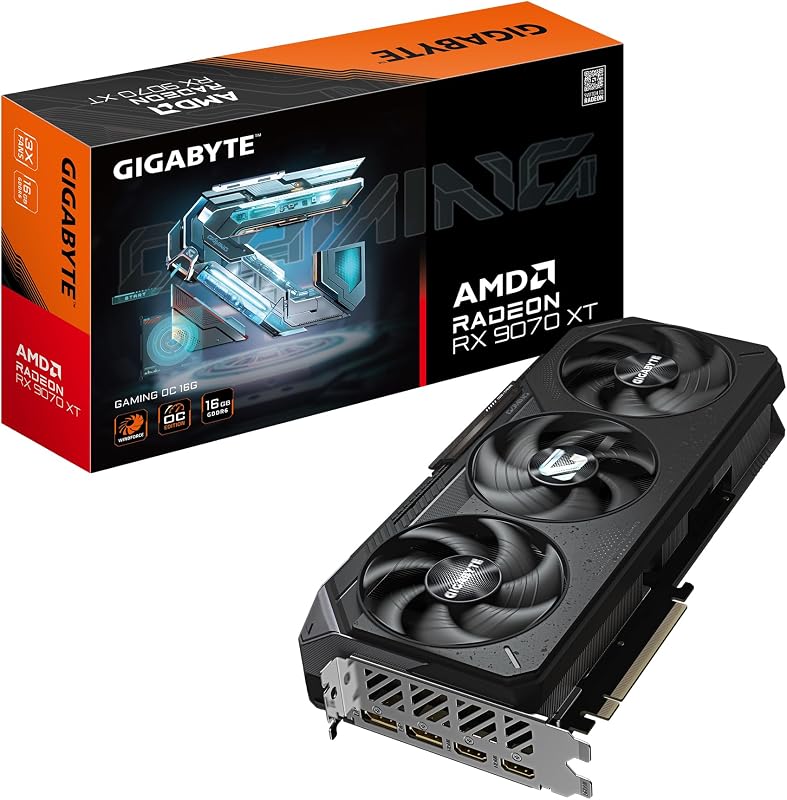 Best Graphics Cards: Top 5 on AmazonRTX 50 or Radeon RX 9000? The best GPUs for 1440p and 4K compared.
 Best CPUs for Gaming: Top 5 on AmazonMore frames, smoother lows. The best gaming processors compared.
 Best Prebuilt Gaming PCs: Top 5 on AmazonSkip the build. Plug in and play.
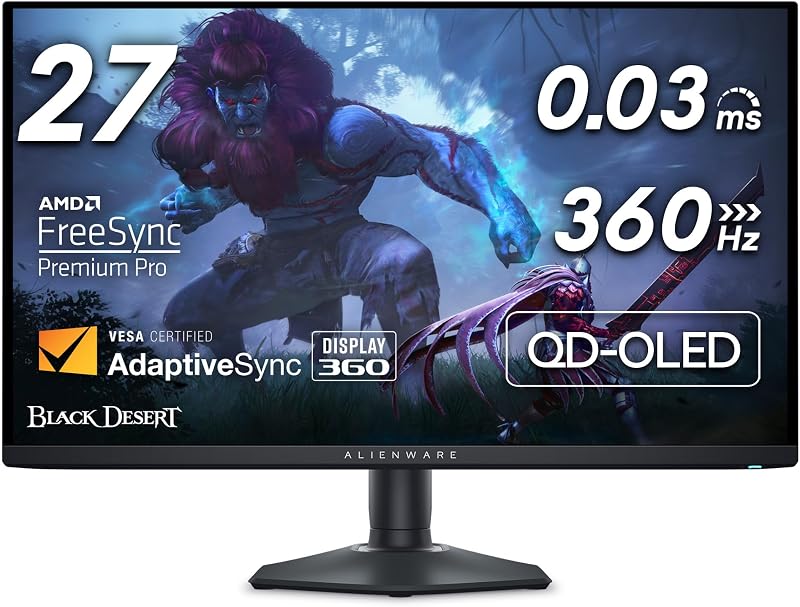 Best Gaming Monitors: Top 5 on AmazonHigh refresh, deep blacks, zero blur. The best gaming monitors compared.