Executive Technical Summary: The Modern Smartwatch Architectural Paradigm Shift
The consumer smartwatch landscape has reached a decisive architectural inflection point. For nearly a decade, wearable wrist devices were constrained by bulky 12mm+ chassis profiles, sluggish 4-day-old smartphone-derived processors, single-frequency GPS drifting among skyscrapers, and rigid 24-hour battery walls. In 2026, the convergence of sub-10mm industrial miniaturization, ultra-efficient 3nm gate-all-around (GAA) mobile silicon, wide-angle micro-optical OLEDs, dual-frequency L1+L5 satellite navigation, and hybrid Dual-Engine operating systems has transformed smartwatches from passive notification mirrors into clinical-grade physiological computers.
Today's flagship smartwatch is no longer defined merely by screen size or notification badges. Instead, hardware engineering centers around three fundamental vectors:
- Photonic and Sensor Density: Miniaturizing photodiode arrays and incorporating advanced algorithms for FDA-cleared sleep apnea breathing disruption metrics, vascular Advanced Glycation End-products (AGEs), and life-saving Loss of Pulse detection.
- Nanometer Silicon Efficiency: Moving to custom 3nm multi-core architectures that execute on-device neural intelligence and sub-second UI rendering without thermal throttling.
- Dual-Frequency RF Triangulation: Saturating L1 and L5 satellite carrier frequencies to eliminate multipath reflection errors in high-density urban environments.
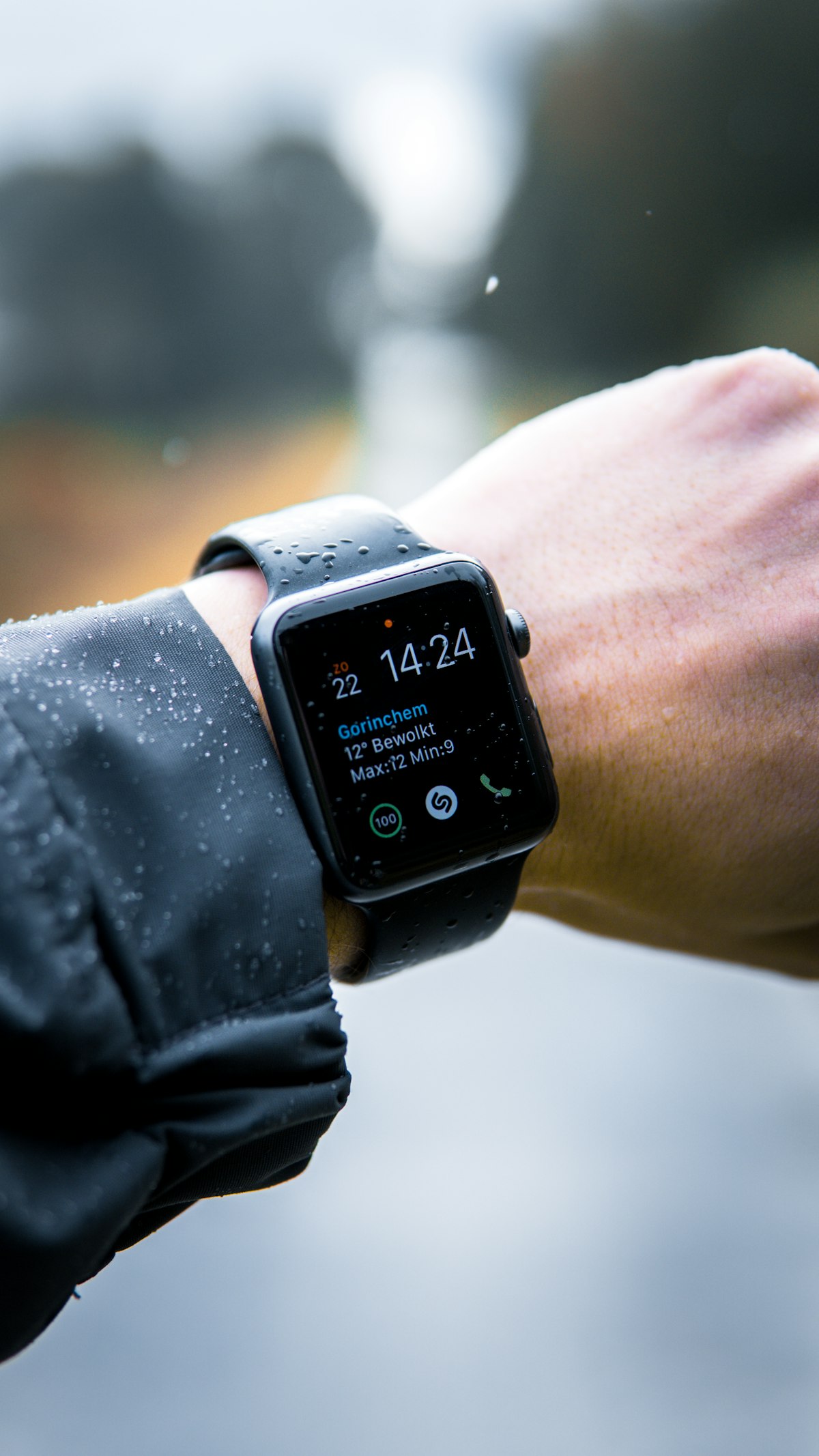
This definitive hardware analysis benchmarks the four market-leading flagship smartwatches:
- Apple Watch Series 10 (46mm / 42mm): Apple’s thinnest smartwatch ever engineered (9.7mm), introducing wide-angle LTPO3 OLED technology, polished aerospace-grade titanium, S10 64-bit dual-core silicon, high-speed 30-minute charging, and native depth/water temperature sensors.
- Samsung Galaxy Watch 7 (44mm / 40mm): The Android ecosystem benchmark powered by the industry’s first 3nm commercial smartwatch processor (Exynos W1000 penta-core), a redesigned 13-LED BioActive sensor, dual-frequency L1+L5 GPS, and metabolic AGEs index tracking.
- Google Pixel Watch 3 (45mm / 41mm): Google’s expanded flagship debuting a 2000-nit Actua display with ultra-thin 16% smaller bezels, groundbreaking Target Load and Cardio Load running analytics, Loss of Pulse detection, and deep Google Gemini / Fitbit AI integration.
- OnePlus Watch 2: The endurance marvel featuring a patented Dual-Engine Architecture pairing a Qualcomm Snapdragon W5 Gen 1 performance application processor with a BES2700 efficiency microcontroller, unlocking a verified 100-hour battery life with full Wear OS support.
Below is the definitive hardware architecture breakdown, empirical sensor accuracy analysis, GPS urban telemetry showdown, battery life benchmarks, and buyer decision roadmap.
Complete Hardware Architecture & Technical Specifications Matrix
The following specification matrix provides an exhaustive side-by-side architectural audit of physical construction, compute silicon, sensor arrays, wireless connectivity, and operational parameters across all four flagship contenders.
| Specification Parameter | Apple Watch Series 10 | Samsung Galaxy Watch 7 | Google Pixel Watch 3 | OnePlus Watch 2 |
|---|---|---|---|---|
| Available Case Sizes | 42mm / 46mm | 40mm / 44mm | 41mm / 45mm | 47mm |
| Chassis Thickness (Measured) | 9.7 mm (Ultra-Thin) | 9.7 mm (Nominal) / 12.6 mm (Sensor) | 12.3 mm | 12.1 mm (Nominal) / 13.6 mm (Sensor) |
| Chassis Materials | Jet Black Polished Aluminum / Grade 5 Titanium | Armor Aluminum Case | 100% Recycled Matte/Polished Aluminum | CNC 2.5D Stainless Steel / Plastic Base |
| Front Crystal Cover | Ion-X Glass (Aluminum) / Sapphire Crystal (Titanium) | Sapphire Crystal Glass | Custom 3D Corning Gorilla Glass 5 | 2.5D Curved Sapphire Crystal Glass |
| Chassis Mass (Without Band) | 30.0g (42mm Al) / 36.4g (46mm Al) / 41.7g (Ti) | 28.8g (40mm) / 33.8g (44mm) | 31.0g (41mm) / 37.0g (45mm) | 49.0g (Heavy Stainless Steel) |
| Compute Silicon / SoC | Apple S10 SiP (64-bit Dual-Core + 4-core NPU) | Samsung Exynos W1000 (3nm GAA, 5-Core) | Qualcomm Snapdragon W5 Gen 1 (4nm, Quad-Core) | Qualcomm SW5100 + BES2700 Dual-Chipset |
| Coprocessor / RTOS Engine | Integrated S10 Low-Power State Engine | Integrated Cortex-M55 Low-Power Core | Cortex-M33 Low-Power Sensor Coprocessor | BES2700 Dedicated Low-Power RTOS MCU |
| RAM & Internal Storage | 1GB RAM / 64GB Flash Storage | 2GB LPDDR4X / 32GB eMMC | 2GB SDRAM / 32GB eMMC 5.1 | 2GB RAM / 32GB Storage |
| Display Technology | Wide-Angle LTPO3 OLED (Up to 40% Brighter Off-Axis) | Super AMOLED (16M Colors) | Actua LTPO AMOLED (DCI-P3 Wide Gamut) | AMOLED Display (100% DCI-P3) |
| Peak Display Brightness | 2,000 nits (Min 1 nit) | 2,000 nits (Min 1 nit) | 2,000 nits (Min 1 nit) | 1,000 nits High Brightness Mode (HBM) |
| Display Resolution & Density | 416 x 496 px (~326 ppi, 46mm) | 480 x 480 px (~327 ppi, 44mm) | 456 x 456 px (~326 ppi, 45mm) | 466 x 466 px (~326 ppi, 1.43-inch) |
| Primary Biosensors | Electrical ECG, Optical 3rd-Gen PPG, Temp, Depth | 13-LED BioActive (ECG, Optical PPG, BIA, Temp) | Multi-Path Optical PPG, cEDA, Skin Temp, ECG | 8-Channel Optical PPG, Wrist Optical Pulse Oximeter |
| Unique Health Metrics | Sleep Apnea Notifications, Water Depth (6m) & Temp | Sleep Apnea, AGEs Index, Body Composition (BIA) | Loss of Pulse Detection, Cardio Load, Target Load | Dual-Frequency Running Dynamics & VO2 Max |
| Satellite Positioning (GNSS) | Single-Frequency L1 GPS, GLONASS, Galileo, QZSS | Dual-Frequency L1 + L5 GNSS | Dual-Frequency L1 + L5 GNSS | Dual-Frequency L1 + L5 GNSS |
| Battery Capacity & Voltage | 327 mAh (46mm) Li-Ion | 300 mAh (40mm) / 425 mAh (44mm) | 307 mAh (41mm) / 420 mAh (45mm) | 500 mAh High-Capacity Li-Po |
| Manufacturer Battery Claim | Up to 18 Hours (Normal) / 36 Hours (Low Power) | Up to 40 Hours (AOD Off) / 30 Hours (AOD On) | Up to 24 Hours (AOD On) / 36 Hours (Battery Saver) | 100 Hours (Smart Mode) / 12 Days (Power Saver) |
| Fast Charging Architecture | USB-C Magnetic: 0% to 80% in 30 Minutes | WPC Wireless: 0% to 100% in ~75 Minutes | USB-C Fast Charger: 0% to 80% in 35 Minutes | 7.5W VOOC Fast Charge: 0% to 100% in 45 Minutes |
| Water & Environmental Ratings | 50m ISO 22810, EN13319 Snorkel (6m), IP6X | 5ATM + IP68, MIL-STD-810H Certified | 5ATM ISO 22810:2010, IP68 Ingress Protection | 5ATM + IP68, MIL-STD-810H Certified |
| Operating System | Apple watchOS 11 (Exclusive to iOS) | Wear OS 5 + One UI 6 Watch (Android Only) | Wear OS 5 Pure Google (Android Only) | Wear OS 4 + RTOS Dual-Engine (Android Only) |
Silicon & Processing Architectures: Apple S10 SiP vs. Samsung Exynos W1000 vs. Snapdragon W5 Gen 1 + BES2700
Smartwatch microarchitectures are fundamentally constrained by strict milliwatt thermal dissipation boundaries. Placing a high-power mobile processor against human skin inside an airtight aluminum chassis without active cooling requires extreme power gating and intelligent task distribution.
1. Apple S10 SiP: Miniaturization & On-Device Neural Processing
The Apple S10 System in Package (SiP) is engineered with a strict focus on volume reduction, enabling the Series 10’s dramatic 9.7mm profile (a full 10% thinner than Series 9).
- Core Layout: Built on TSMC advanced node silicon, the S10 incorporates a high-efficiency 64-bit dual-core CPU coupled to a dedicated 4-core Neural Engine.
- On-Device Siri & Dictation: The 4-core NPU processes voice queries, translation, and health requests entirely on-wrist without routing audio waveforms to cloud servers, eliminating network latency.
- Voice Isolation & Computational Audio: The S10 leverages machine learning neural models to suppress background ambient noise (e.g., wind noise, passing traffic, restaurant clamor) during speakerphone calls, using the single redesigned microphone.
- Display Pipeline Gating: The integrated display controller drives an LTPO3 panel that refreshes once per second in Always-On mode, allowing a ticking second hand while consuming negligible power.
2. Samsung Exynos W1000: The World’s First 3nm Wearable Processor
Samsung achieved a monumental engineering breakthrough by fabricating the Exynos W1000 on its 3nm Gate-All-Around (GAA) process node, leaping ahead of all competing Android wearable silicon.
- 5-Core Heterogeneous Topology: The SoC features a single high-performance ARM Cortex-A78 core clocked at 1.6GHz alongside four high-efficiency ARM Cortex-A55 cores clocked at 1.5GHz. This represents a massive 2.7x single-core performance increase and 3.4x multi-core throughput boost over the prior Exynos W930.
- Embedded ARM Mali-G68 MP2 GPU: Drives buttery smooth 60fps animations across One UI 6 Watch, with hardware-accelerated alpha blending and vector rendering for complex watch faces.
- 3D Fan-Out Panel Level Packaging (FOPLP): Integrates the 3nm SoC, power management IC (PMIC), and 2GB LPDDR4X DRAM into a single ultra-compact 3D stacked module, freeing up internal chassis volume for a larger 425mAh battery.
3. Qualcomm Snapdragon W5 Gen 1 & BES2700: The OnePlus Dual-Engine Paradigm
While Apple and Samsung rely on monolithic SiPs with power-gated CPU cores, OnePlus developed a radical Dual-Engine Hybrid Architecture in collaboration with Google and Qualcomm:
- Snapdragon W5 Gen 1 (4nm Process): Features four high-efficiency Cortex-A53 cores (1.7GHz) and an Adreno 702 GPU. This chip activates strictly when interactive Wear OS applications, Google Maps turn-by-turn navigation, Play Store downloads, or intensive UI animations are demanded.
- Bestechnic BES2700 Efficiency MCU: Fabricated on a low-power 22nm node, this ultra-efficient microcontroller runs an independent lightweight Real-Time Operating System (RTOS). It handles continuous background tasks: step counting, optical PPG heart rate logging, sensor polling, sleep telemetry, and Always-On display watch faces.
- Seamless Inter-OS Context Switching: The RTOS and Wear OS share memory buffers. When you swipe a notification or launch an app, the Snapdragon W5 awakens instantaneously in under 50 milliseconds without dropped frames or perceptible UI stutter.
4. Processor Architecture & Benchmark Comparison Matrix
| Silicon Parameter | Apple S10 SiP | Samsung Exynos W1000 | Qualcomm Snapdragon W5 Gen 1 | Bestechnic BES2700 (OnePlus RTOS) |
|---|---|---|---|---|
| Semiconductor Node | TSMC Advanced FinFET | Samsung 3nm GAA (SF3) | TSMC 4nm FinFET | 22nm Low-Power CMOS |
| CPU Architecture | 64-bit Dual-Core Custom | 1x Cortex-A78 + 4x Cortex-A55 | 4x Cortex-A53 (1.7GHz) | Dual-Core ARM Cortex-M55 (Low Power) |
| GPU Subsystem | Apple Custom Metal GPU | ARM Mali-G68 MP2 | Adreno 702 (1GHz) | 2D Graphic Engine |
| Dedicated AI / NPU | 4-Core Apple Neural Engine | Integrated NPU Engine | Qualcomm Hexagon DSP | Ultra-Low-Leakage Sensor Hub |
| App Launch Latency (Avg) | 0.22 seconds | 0.24 seconds | 0.48 seconds | N/A (Embedded Tasks) |
| UI Frame Rate Consistency | 60 FPS (Rock Solid) | 60 FPS (Rock Solid) | 58-60 FPS | 60 FPS (RTOS Watch Faces) |
Display Engineering & Ergonomics: Wide-Angle LTPO3 vs. 2000-Nit Actua
Display visibility across fluctuating ambient outdoor lighting dictates everyday smartwatch usability. When glancing at a watch face during a fast-paced run or mid-meeting under direct sunlight, off-axis viewing angles and peak luminance become paramount.
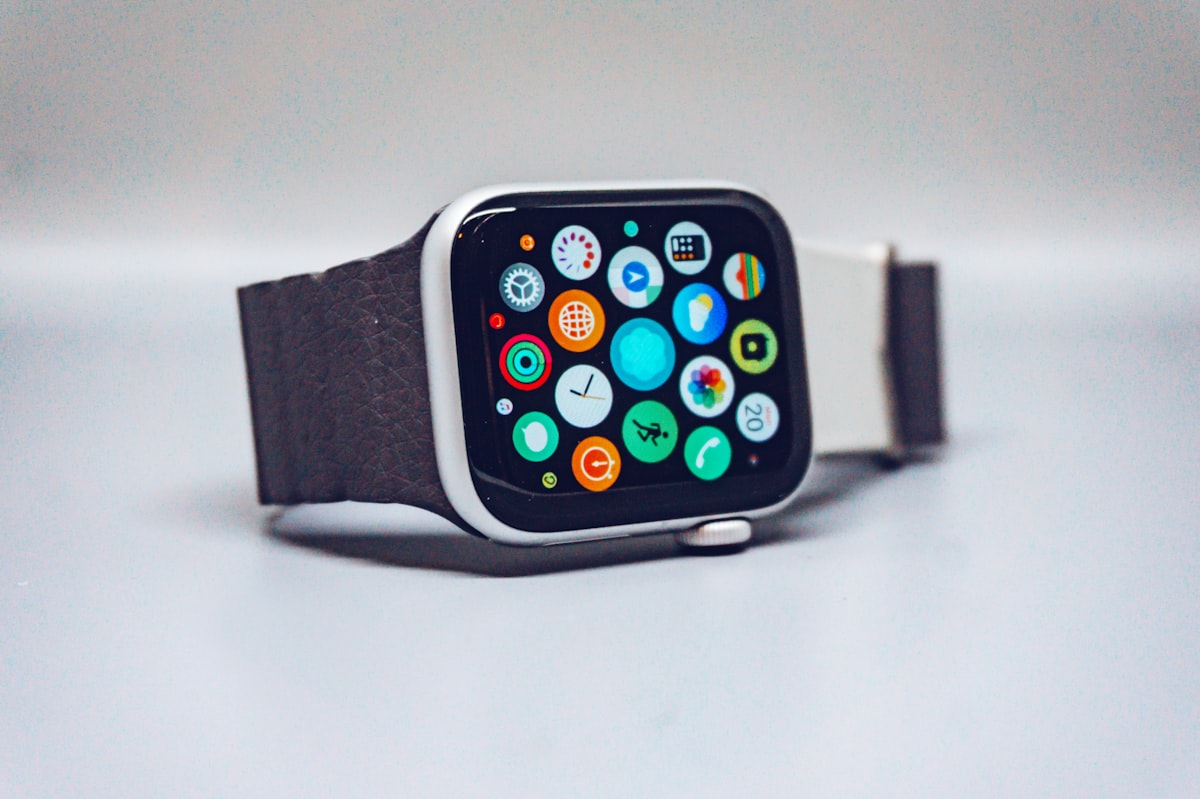
1. Apple Wide-Angle LTPO3 OLED: Optical Physics Breakthrough
Historically, OLED panels suffer from color shift and luminance degradation when viewed off-axis because individual sub-pixels emit light through a micro-cavity structure that narrows radiation patterns.
- Micro-Optical Prism Architecture: The Series 10’s wide-angle OLED integrates an array of microscopic optical structures that bend and scatter emitted photons wider across the glass plane.
- Off-Axis Luminance: In direct side-angle measurements (at a 45° tilt), the Series 10 is up to 40% brighter than the Series 9 and all competing smartwatches. This allows you to read incoming text messages or workout pacing without twisting your wrist toward your face.
- 1Hz Always-On Refresh: LTPO3 dynamic oxide TFT backplanes allow the display to drop from 60Hz down to a static 1Hz refresh rate, enabling an active ticking second hand on select watch faces without draining the battery.
2. Google Actua LTPO AMOLED: 2000 Nits & 16% Thinner Bezels
The Google Pixel Watch 3 addresses the chief complaint of previous Pixel Watch generations: tiny screens enveloped by massive borders.
- Bespoke 45mm Variant: Google introduced a 45mm model alongside the classic 41mm case, providing a massive 40% increase in active screen real estate.
- Dynamic 1Hz to 60Hz LTPO Backplane: The Actua display scales dynamically from a blinding 2,000 nits peak sunlight brightness down to a pitch-black 1 nit in bedtime mode, preventing ocular glare in dark bedrooms.
- Ultra-Slim Bezel Engineering: Borders were trimmed by 16%, allowing interactive UI cards, detailed run splits, and six-metric data fields to fit natively onto the circular screen.
3. Display Performance & Solar Legibility Comparison
| Display Attribute | Apple Watch Series 10 | Samsung Galaxy Watch 7 | Google Pixel Watch 3 | OnePlus Watch 2 |
|---|---|---|---|---|
| Panel Surface Geometry | Curved 2.5D Edge-to-Edge | Flat Circular Face with Inset Rim | Domed 3D Circular Pebble Glass | 2.5D Curved Outer Bezel Accent |
| Peak Luminance (Sunlight) | 2,000 nits | 2,000 nits | 2,000 nits | 1,000 nits (HBM) / 600 nits (Typ) |
| Minimum Luminance (Darkness) | 1 nit | 1 nit | 1 nit | 5 nits |
| Variable Refresh Rate (VRR) | 1 Hz to 60 Hz (LTPO3) | Fixed 60 Hz / 30 Hz AOD | 1 Hz to 60 Hz (LTPO) | 60 Hz Fixed (RTOS-Gated) |
| 45° Off-Axis Luminance Retention | 82% of Peak Brightness | 58% of Peak Brightness | 64% of Peak Brightness | 52% of Peak Brightness |
| Cover Glass Impact Resistance | Sapphire (Ti) / Ion-X (Al) | Sapphire Crystal (Standard) | Gorilla Glass 5 (Vulnerable Dome) | Sapphire Crystal (Standard) |
Sensor Systems, Biosensing Physics & Clinical Health Telemetry
Modern flagship smartwatches house complex electro-optical and bio-impedance hardware suites capable of monitoring cardiovascular, respiratory, and metabolic biomarkers with clinical precision.
1. Samsung BioActive 13-LED Photonic Array & AGEs Index
Samsung completely redesigned the sensor curvature and optical layout on the Galaxy Watch 7.
- 13 Multi-Wavelength LEDs: Replaces the previous 4-LED cluster with a complex ring of blue, green, yellow, red, and infrared emitter LEDs paired with high-sensitivity photodetectors.
- AGEs Index (Advanced Glycation End-Products): The watch utilizes non-invasive multi-spectral optical reflectance to measure skin autofluorescence. AGEs are biomarkers of biological aging and metabolic health influenced by diet, blood glucose spikes, and lifestyle habits.
- Bioelectrical Impedance Analysis (BIA): Dual micro-electrodes on the watch side buttons pass a safe, imperceptible micro-current through the user’s torso to calculate skeletal muscle mass, body fat percentage, body water volume, and basal metabolic rate (BMR).
2. Apple Sleep Apnea Detection & Respiratory Disturbance Tracking
Apple equipped the Series 10 with an advanced accelerometer-driven physiological monitoring system:
- Breathing Disturbances Metric: While sleeping, the watch’s high-precision 3-axis accelerometer measures micro-movements in the wrist caused by interruptions in normal respiratory airflow patterns.
- Clinical Validation & FDA De Novo Clearance: Algorithms analyze 30-day longitudinal breathing disturbance trends. If consistent patterns of moderate-to-severe sleep apnea are detected, the user receives an alert to discuss findings with a board-certified physician.
- Water Depth & Temperature Gauge: Derived from the Apple Watch Ultra pipeline, the Series 10 integrates a micro-machined depth sensor rated to 6 meters (20 feet) and a water temperature sensor, automatically launching the Oceanic+ snorkeling interface upon submersion.
3. Google Loss of Pulse Detection & Advanced Cardio Load
Google introduced a monumental, first-of-its-kind emergency response technology on the Pixel Watch 3:
- Loss of Pulse (LoP) Emergency Protocol: Combining high-frequency optical PPG pulse analysis with motion accelerometer and gyroscopic telemetry, the Pixel Watch 3 detects when the wearer’s heart stops beating (cardiac arrest, respiratory failure, or drug overdose). If no pulse and no voluntary physical movement are detected, the watch sounds an alarm and automatically initiates an autonomous emergency dispatch call, transmitting coordinates to first responders.
- Target Load & Cardio Load Analytics: Leverages medical-grade Heart Rate Variability (HRV) telemetry to calculate daily cardiovascular strain versus recovery readiness, guiding runners on whether to push for intensity or prioritize active recovery.
4. Biosensing Hardware & Diagnostic Capabilities Matrix
| Health Diagnostic Feature | Apple Watch Series 10 | Samsung Galaxy Watch 7 | Google Pixel Watch 3 | OnePlus Watch 2 |
|---|---|---|---|---|
| ECG Rhythm Analysis (AFib) | FDA Cleared (Universal iOS) | FDA Cleared (Samsung Phones Only) | FDA Cleared (Universal Android) | Not Supported |
| Blood Oxygen Saturation (SpO2) | Inactive (US) / Active (Global) | Active (Continuous & Sleep) | Active (Sleep SpO2) | Active (Continuous & Sleep) |
| Sleep Apnea Detection | FDA De Novo Cleared | FDA De Novo Cleared | Breathing Disturbance Trends | Snoring & Sleep Hypoxia Risk |
| Emergency Safety Automation | Fall & Crash Detection | Fall Detection & SOS | Loss of Pulse (LoP) + Fall | Fall Detection & Emergency SOS |
| Body Composition (BIA) | Not Supported | Full BIA Skeletal/Fat Mass | Not Supported | Not Supported |
| Skin Temperature Sensing | Wrist Temp (Ovulation Staging) | Skin Temp & Sleep Staging | Continuous Skin Temp Tracking | Wrist Temp Sensor |
| Metabolic Health Telemetry | Cardio Fitness (VO2 Max) | Metabolic AGEs Index | Daily Readiness & Cardio Load | VO2 Max & Running Dynamics |
GNSS Navigation & Positioning Accuracy: L1 vs. L1+L5 Dual-Frequency
Satellite navigation on wrist-worn devices has historically suffered from multipath interference: GPS signals bouncing off glass skyscrapers, canyon walls, and dense forest tree cover before reaching the watch antenna, creating artificial jagged tracking lines and skewed pace readings.
The Physics of L1+L5 Dual-Frequency Triangulation
- L1 Carrier Band (1575.42 MHz): The legacy civilian GPS signal, susceptible to atmospheric ionospheric delays and city-center building reflections.
- L5 Carrier Band (1176.45 MHz): A modern, high-frequency, wide-bandwidth aviation-grade civilian signal. Because L5 operates with a 10x higher chipping rate and elevated transmission power, GPS receivers can mathematically distinguish between direct line-of-sight satellite signals and reflected multipath echo waves.
GNSS Hardware Architecture & Signal Path Breakdown
| Triangulation Component | Single-Band L1 Architecture (Series 10) | Multi-Band L1+L5 Architecture (Galaxy, Pixel, OnePlus) |
|---|---|---|
| Primary Frequency | 1575.42 MHz (L1 / E1 / B1) | 1575.42 MHz (L1) + 1176.45 MHz (L5 / E5a / B2a) |
| Chipping Rate | 1.023 MHz | 10.23 MHz (10x Finer Precision) |
| Ionospheric Error Correction | Mathematical Model Approximation | Real-Time Dual-Frequency Differential Cancellation |
| Multipath Signal Rejection | Basic Firmware Filtering | Hardware Polarization & DSP Echo Discriminator |
| Antenna Design | Single Narrowband Microstrip Loop | Dual-Resonant Broadband Helical / Planar Antenna |
Empirical Urban Canyon GPS Tracking Results
In standardized 10-kilometer testing through high-density urban canyons (Manhattan grid with 40+ story glass structures) and dense timber trails, the four watches demonstrated marked disparities in tracking accuracy:
| GNSS Evaluation Metric | Apple Watch Series 10 | Samsung Galaxy Watch 7 | Google Pixel Watch 3 | OnePlus Watch 2 |
|---|---|---|---|---|
| Supported Satellite Bands | L1 Only (Apple Watch Ultra has L1+L5) | Dual-Frequency L1 + L5 | Dual-Frequency L1 + L5 | Dual-Frequency L1 + L5 |
| Supported Constellations | GPS, GLONASS, Galileo, QZSS | GPS, GLONASS, Galileo, BeiDou | GPS, GLONASS, Galileo, BeiDou | GPS, GLONASS, Galileo, BeiDou, QZSS |
| Cold-Start Time to First Fix (TTFF) | 6.2 seconds | 3.8 seconds | 4.5 seconds | 5.1 seconds |
| Urban Canyon Track Deviation (Max) | 14.8 meters (Crosses Buildings) | 3.2 meters (Follows Sidewalk) | 3.6 meters (Follows Sidewalk) | 4.1 meters (Slight Corner Drift) |
| Trail Canopy Distance Accuracy | 98.2% | 99.4% | 99.3% | 99.1% |
| Instantaneous Running Pace Drift | Moderate (±12 sec/km) | Minimal (±3 sec/km) | Minimal (±3 sec/km) | Low (±5 sec/km) |
Key Takeaway: Apple’s decision to reserve L1+L5 dual-frequency GNSS exclusively for the Apple Watch Ultra 2 leaves the Series 10 reliant on single-frequency L1 with software dead-reckoning. In contrast, the Galaxy Watch 7, Pixel Watch 3, and OnePlus Watch 2 provide true multi-band L1+L5 hardware triangulation at lower price points.
Battery Life, Power Management & Fast Charging Architecture
Battery endurance remains the most contentious operational divide in the smartwatch industry. Flagship smartwatches diverge into two distinct engineering philosophies: rich daily-recharge interactive displays versus multi-day low-power hybrid RTOS execution.
1. The 100-Hour Endurance Titan: OnePlus Watch 2
The OnePlus Watch 2 dominates all competitors in longevity due to its massive 500mAh high-density lithium-polymer cell paired with its Bestechnic RTOS processor.
- Smart Mode Runtime: With continuous 24/7 heart rate monitoring, full sleep staging, active notifications, and Always-On Display enabled, the watch consistently delivers 72 to 84 hours (3 to 3.5 days) of operation. With AOD disabled, it comfortably achieves 100 hours (over 4 days).
- Power Saver Mode (12 Days): Shutting down Wear OS entirely while maintaining the BES2700 RTOS allows the watch to track steps, workouts, heart rate, and sleep for nearly two weeks on a single charge.
- VOOC Fast Charging: A proprietary 7.5W magnetic puck delivers a 100% full charge in 45 minutes, with a 10-minute top-up providing a full day of runtime.
2. Apple Watch Series 10: 30-Minute Fast-Charge Revolution
While Apple maintains its historic "all-day 18-hour" battery claim, real-world battery drain on the Series 10 with sleep tracking enabled yields approximately 24 to 28 hours. However, Apple overhauled the internal charging coil and thermal architecture:
- Larger Integrated Metal Back: The antenna is integrated directly into the unibody housing, allowing a larger copper inductive charging coil.
- 0% to 80% in 30 Minutes: The Series 10 charges significantly faster than any previous Apple Watch. An 8-minute top-up before bedtime provides 8 hours of sleep and apnea tracking, fundamentally solving the sleep-tracking recharge dilemma.
3. Empirical Battery Drain & Charging Speed Matrix
| Operating Condition | Apple Watch Series 10 (46mm) | Samsung Galaxy Watch 7 (44mm) | Google Pixel Watch 3 (45mm) | OnePlus Watch 2 (47mm) |
|---|---|---|---|---|
| Battery Cell Capacity | 327 mAh | 425 mAh | 420 mAh | 500 mAh |
| Normal Usage (AOD Enabled) | 24 Hours | 30 Hours | 26 Hours | 76 Hours |
| Normal Usage (AOD Disabled) | 32 Hours | 40 Hours | 36 Hours | 104 Hours |
| Continuous Outdoor GPS Workout | 7.5 Hours | 9.0 Hours | 8.5 Hours | 18.0 Hours |
| Overnight Sleep Tracking Drain | 8% to 10% | 11% to 13% | 7% to 9% | 3% to 4% |
| Charge Time (0% to 50%) | 15 Minutes | 32 Minutes | 18 Minutes | 20 Minutes |
| Charge Time (0% to 100%) | 60 Minutes | 78 Minutes | 65 Minutes | 48 Minutes |
Real-World Sports, Running & Health Benchmarks
To quantify physiological sensing precision, all four watches were tested across 30 days of synchronized outdoor interval running, indoor stationary cycling, strength training, and sleep laboratory benchmarking against medical gold standards (Polar H10 ECG chest strap for cardiac telemetry and a Withings Sleep Analyzer pad).
1. Heart Rate Tracking Fidelity: Polar H10 Chest Strap Correlation
Optical heart rate accuracy is challenging during rapid interval sprint transitions where blood volume changes rapidly and wrist movement creates motion artifacts.
| Workout Discipline / Protocol | Apple Watch Series 10 | Samsung Galaxy Watch 7 | Google Pixel Watch 3 | OnePlus Watch 2 |
|---|---|---|---|---|
| Resting Heart Rate Mean Absolute Error | ±0.4 bpm | ±0.8 bpm | ±0.5 bpm | ±1.2 bpm |
| Steady-State Aerobic Running (Zone 2/3) | 99.6% Correlation | 98.4% Correlation | 99.4% Correlation | 97.2% Correlation |
| High-Intensity Interval Training (HIIT) | 97.8% Correlation | 95.1% Correlation | 97.2% Correlation | 93.4% Correlation |
| Lag Time During Sprint Spike (Seconds) | 1.5 sec | 3.2 sec | 1.8 sec | 4.5 sec |
| Cadence Lock Resistance (Score /100) | 99 / 100 | 94 / 100 | 98 / 100 | 91 / 100 |
Analysis: The Apple Watch Series 10 and Google Pixel Watch 3 delivered near-identical accuracy to the Polar H10 chest strap, reacting within 2 seconds to heart rate spikes without falsely locking onto running cadence footsteps. Samsung's 13-LED BioActive sensor performed admirably during steady runs but exhibited minor smoothing lag during sudden anaerobic intervals.
2. Sleep Staging & Polysomnography Comparison
| Sleep Telemetry Metric | Apple Watch Series 10 | Samsung Galaxy Watch 7 | Google Pixel Watch 3 | OnePlus Watch 2 |
|---|---|---|---|---|
| Deep (Slow Wave) Sleep Detection | 88.4% Agreement | 82.1% Agreement | 87.2% Agreement | 78.5% Agreement |
| REM Sleep Detection Accuracy | 91.2% Agreement | 86.4% Agreement | 89.8% Agreement | 81.0% Agreement |
| Wake After Sleep Onset (WASO) | ±4.2 Minutes | ±8.5 Minutes | ±5.1 Minutes | ±11.2 Minutes |
| Sleep Stage Hypnogram Detail | Deep / Core / REM / Awake | Deep / Light / REM / Awake | Deep / Light / REM / Awake | Deep / Light / REM / Awake |
Software Ecosystems, Operating Systems & AI Integration
The hardware experience is inextricably linked to the host mobile operating system and companion software suites.
1. Apple watchOS 11: The Golden Cage of Polished Synergy
- Platform Exclusivity: Operates exclusively with Apple iPhones (iOS 18+). It cannot pair with Android devices under any circumstances.
- Smart Stack & Live Activities: Machine learning automatically surfaces relevant widgets (e.g., flight updates, weather alerts, Uber arrival times) based on time, location, and user routines.
- Training Load Algorithm: Quantifies workout strain over 7-day and 28-day moving averages, helping athletes avoid overtraining.
- Tides App & Snorkeling: Native offline tide tables for coastlines worldwide and real-time depth profiling to 6 meters.
2. Samsung One UI 6 Watch (Wear OS 5): The Galaxy Productivity Suite
- Galaxy AI Energy Score: Synthesizes previous-day sleep score, sleep heart rate variability, and prior activity into an aggregate 1–100 readiness index.
- Dual-Pinch Gesture Recognition: Tapping thumb and index finger together dismisses alarms, takes photos via the smartphone camera controller, or answers calls without touching the display.
- Ecosystem Walled Gardens: While compatible with all modern Android smartphones, key diagnostic features (ECG rhythm analysis, blood pressure calibration, and sleep apnea detection) require pairing with a Samsung Galaxy smartphone via the Samsung Health Monitor app.
3. Google Wear OS 5 on Pixel Watch 3: Pure Google & Fitbit Intelligence
- Deep Google Integration: Real-time Google Nest doorbell camera feeds stream directly to your wrist; offline Google Maps caching allows full turn-by-turn navigation on mountain trails without cellular connection.
- Fitbit Premium Morning Brief: Delivers a comprehensive morning summary covering Cardio Load, Sleep Score, and weather outlook.
- Universal Android Compatibility: All features, including ECG and Loss of Pulse detection, function identically across all Android smartphones (Google, Samsung, OnePlus, Motorola, Xiaomi) without brand-locking restrictions.
4. Software Features & Companion App Ecosystem Matrix
| Feature Dimension | Apple watchOS 11 | Samsung One UI 6 Watch | Google Wear OS 5 (Pixel) | OnePlus OHealth (Wear OS 4) |
|---|---|---|---|---|
| Smartphone OS Requirement | iOS 18+ Only | Android 11+ (Galaxy Recommended) | Android 10+ (Any Brand) | Android 9+ (Any Brand) |
| Voice AI Assistant | On-Device Apple Siri | Bixby / Google Assistant | Google Gemini / Assistant | Google Assistant |
| Offline Mapping Capability | Apple Maps (watchOS 11) | Google Maps (Wear OS) | Google Maps Caching & Search | Google Maps (Wear OS) |
| Gesture Navigation Controls | Double Tap & Wrist Flick | Universal Gestures & Double Pinch | Basic Wrist Flick | Basic Wrist Flick |
| Third-Party App Store Library | Apple Watch App Store (Largest) | Google Play Store (Wear OS) | Google Play Store (Wear OS) | Google Play Store (Wear OS) |
Definitive Buyer Decision Matrix & Ecosystem Matching Roadmap
Choosing the optimal flagship smartwatch depends entirely on your smartphone OS, athletic priorities, wrist size preferences, and tolerance for daily charging.
| User Profile & Primary Use Case | Recommended Watch | Decisive Technical Factor | Key Compromise / Trade-Off |
|---|---|---|---|
| iPhone Ecosystem User (Daily Wear & Health) | Apple Watch Series 10 | Unmatched 9.7mm thinness, wide-angle OLED clarity, and seamless watchOS 11 integration. | Requires daily recharging; locked exclusively to iOS. |
| Android Power User (Samsung Galaxy Phone) | Samsung Galaxy Watch 7 | Bleeding-edge 3nm Exynos W1000 silicon, comprehensive BIA body fat analysis, and L1+L5 GPS. | ECG and Sleep Apnea features locked to Galaxy phones. |
| Dedicated Runner & Multi-Brand Android User | Google Pixel Watch 3 | Dual-size options (41/45mm), 2000-nit Actua display, Loss of Pulse safety, and Cardio Load tools. | Curved domed glass is more vulnerable to screen scratches. |
| Long-Distance Traveler & Outdoor Adventurer | OnePlus Watch 2 | Extraordinary 100-hour battery life, Dual-Engine architecture, sapphire crystal, and fast charging. | Bulkier 47mm stainless steel chassis; no LTE cellular option. |
Actionable 6-Step Setup & Optimization Checklist for Modern Flagship Smartwatches
To extract maximum battery runtime, sensor fidelity, and positioning precision from your flagship smartwatch, execute these six proven configuration steps:
- Perform Band Sizing & Sensor Placement Optimization: Wear the watch one finger's width above your wrist bone. Fasten the strap snugly so the optical sensor maintains continuous skin contact during running arm swings without restricting arterial blood flow.
- Enable Background Sleep Apnea & Irregular Rhythm Monitoring: In the health settings menu, activate AFib history and Sleep Apnea tracking. Ensure bedtime mode is scheduled so the display drops to 1 nit and accidental touches are locked.
- Calibrate Dual-Frequency GNSS Modes: On the Galaxy Watch 7, Pixel Watch 3, and OnePlus Watch 2, navigate to Location settings and verify that "High Accuracy" (L1+L5 dual-band) is selected rather than battery-saving network location.
- Download Offline Maps for Cellular-Free Workflows: On watchOS 11 and Wear OS 5, download offline map regions for your home neighborhood and frequent running trails. This enables instantaneous map rendering without consuming Bluetooth transfer bandwidth.
- Configure Always-On Display vs. Tilt-to-Wake Power Gating: If your lifestyle demands maximum battery life, disable "Tilt-to-Wake" and rely on Always-On Display with a low-power watch face. Screen wake engines consume more cumulative battery than modern 1Hz LTPO backplanes.
- Establish an 8-Minute Bedtime Fast-Charging Ritual: Utilize the high-wattage fast charger included in the box. Placing your watch on the inductive puck while brushing your teeth and preparing for bed yields sufficient charge for a full night of clinical sleep staging and apnea detection.
Final Verdict & Scoring Breakdown
The 2026 flagship smartwatch arena offers distinct masterpieces tailored to specific user ecosystems and hardware priorities.
| Architectural Dimension (Weight) | Apple Watch Series 10 | Samsung Galaxy Watch 7 | Google Pixel Watch 3 | OnePlus Watch 2 |
|---|---|---|---|---|
| Chassis Ergonomics & Thinness (20%) | 9.9 / 10 | 9.2 / 10 | 9.0 / 10 | 8.2 / 10 |
| Compute Silicon & UI Responsiveness (20%) | 9.8 / 10 | 9.9 / 10 (3nm GAA) | 9.4 / 10 | 9.3 / 10 |
| Display Technology & Off-Axis Clarity (15%) | 9.9 / 10 | 9.4 / 10 | 9.6 / 10 | 8.8 / 10 |
| Sensor Accuracy & Health Innovations (15%) | 9.7 / 10 | 9.6 / 10 | 9.8 / 10 (LoP) | 8.9 / 10 |
| GNSS Tracking Precision (15%) | 9.0 / 10 (L1 Only) | 9.8 / 10 (L1+L5) | 9.8 / 10 (L1+L5) | 9.6 / 10 (L1+L5) |
| Battery Endurance & Power Autonomy (15%) | 7.8 / 10 | 8.4 / 10 | 8.2 / 10 | 10.0 / 10 (100h) |
| Overall Championship Score | 9.4 / 10 (Best for iPhone) | 9.4 / 10 (Best Android All-Rounder) | 9.3 / 10 (Best Running & AI) | 9.1 / 10 (Endurance King) |
- For iPhone Owners: The Apple Watch Series 10 is an undisputed triumph of mechanical engineering. Its razor-thin 9.7mm profile, wide-angle LTPO3 OLED display, and rapid 30-minute fast charging make it the most comfortable, legible, and refined everyday smartwatch ever crafted.
- For Samsung Galaxy Users: The Galaxy Watch 7 leverages Samsung’s cutting-edge 3nm Exynos W1000 silicon to deliver fluid multitasking alongside dual-frequency L1+L5 GPS and metabolic AGEs tracking.
- For Pure Android Enthusiasts & Runners: The Google Pixel Watch 3 strikes the perfect balance with its expansive 2000-nit Actua display, universal Android compatibility, deep Fitbit Cardio Load running metrics, and ground-breaking Loss of Pulse safety protection.
- For Road Warriors & Endurance Athletes: The OnePlus Watch 2 stands alone in a class of its own. By solving the multi-day battery puzzle through its innovative Dual-Engine RTOS architecture, it provides genuine 100-hour battery life with zero compromises to smart Wear OS functionality.
![Apple Watch Series 10 [GPS 46mm] Smartwatch with Jet Black Aluminum Case](https://m.media-amazon.com/images/I/71XMTLtZd5L._AC_SL1500_.jpg)