Audeze Maxwell vs. SteelSeries Arctis Nova Pro Wireless vs. Logitech G PRO X 2 LIGHTSPEED vs. Razer BlackShark V2 Pro: The Definitive Flagship Wireless Gaming & Audiophile Headset Architecture Showdown (2026)
For over two decades, consumer audio has suffered from an artificial, marketing-driven schism: "audiophile headphones" for pure musical fidelity, and "gaming headsets" characterized by aggressive low-frequency bloat, gimmicky virtual surround sound switches, and hollow plastic chassis. That compromise is officially dead. In 2026, the convergence of high-bandwidth 2.4GHz RF transmission, custom planar magnetic and graphene acoustic transducers, ultra-low-noise onboard DSP amplifiers, and studio-grade microphone capsules has transformed wireless gaming headsets into legitimate high-resolution acoustic instruments.
Today’s flagship headsets no longer force listeners to choose between surgical directional tracking in competitive first-person shooters and linear, micro-detail audiophile reproduction. However, the engineering philosophies powering the market leaders could not be more radically distinct.
- Audeze Maxwell transplants 90mm planar magnetic planar drivers straight from multi-thousand-dollar studio monitors into a closed-back wireless frame, delivering unprecedented transient speed, sub-bass extension down to 10Hz, and native 24-bit/96kHz wireless decoding.
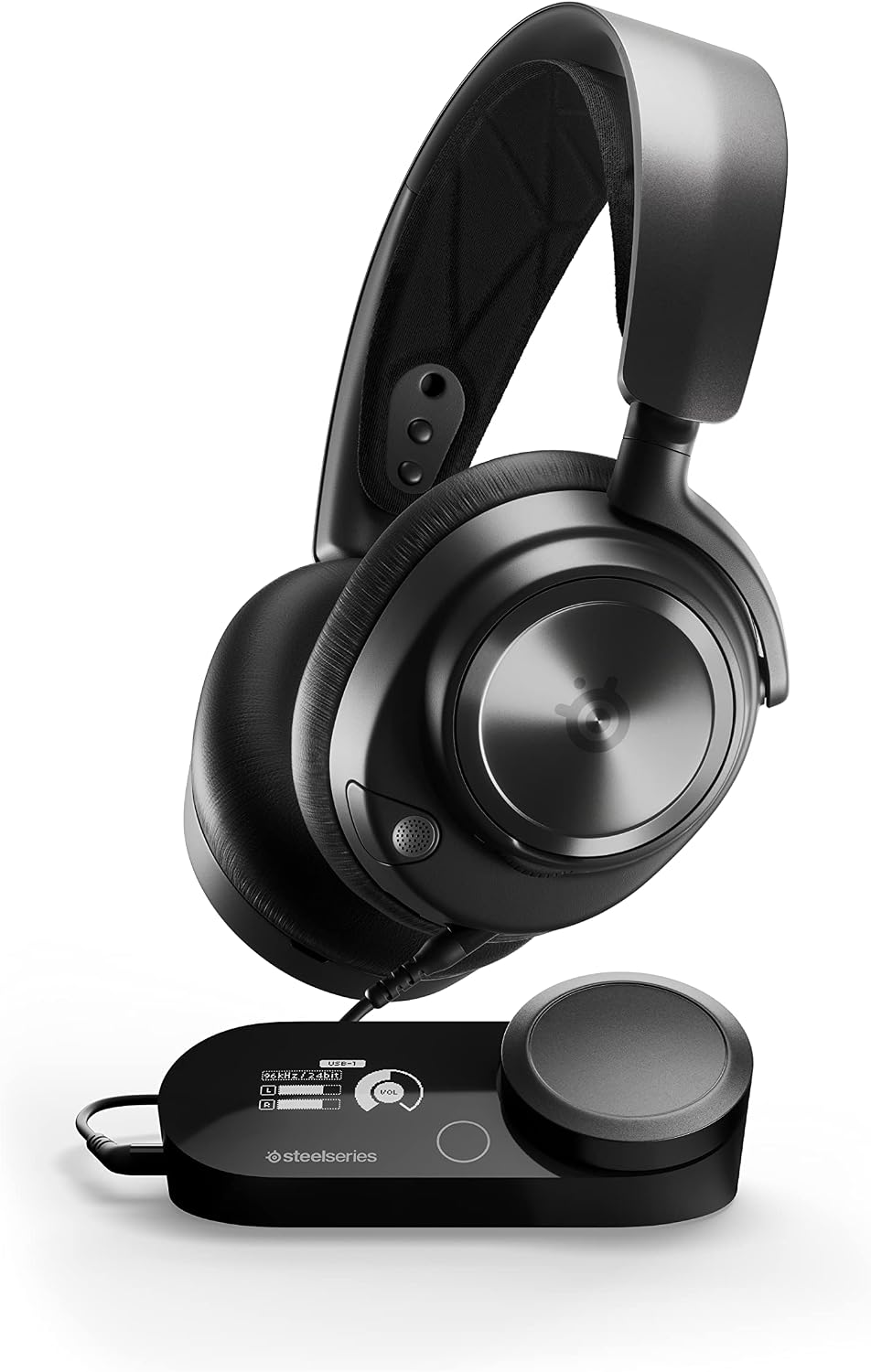
- SteelSeries Arctis Nova Pro Wireless targets complete desktop mastery via an external GameDAC Gen 2 base station featuring dual USB-C switching, hot-swappable dual-battery continuous power, active noise cancellation, and a parametric software DSP pipeline.
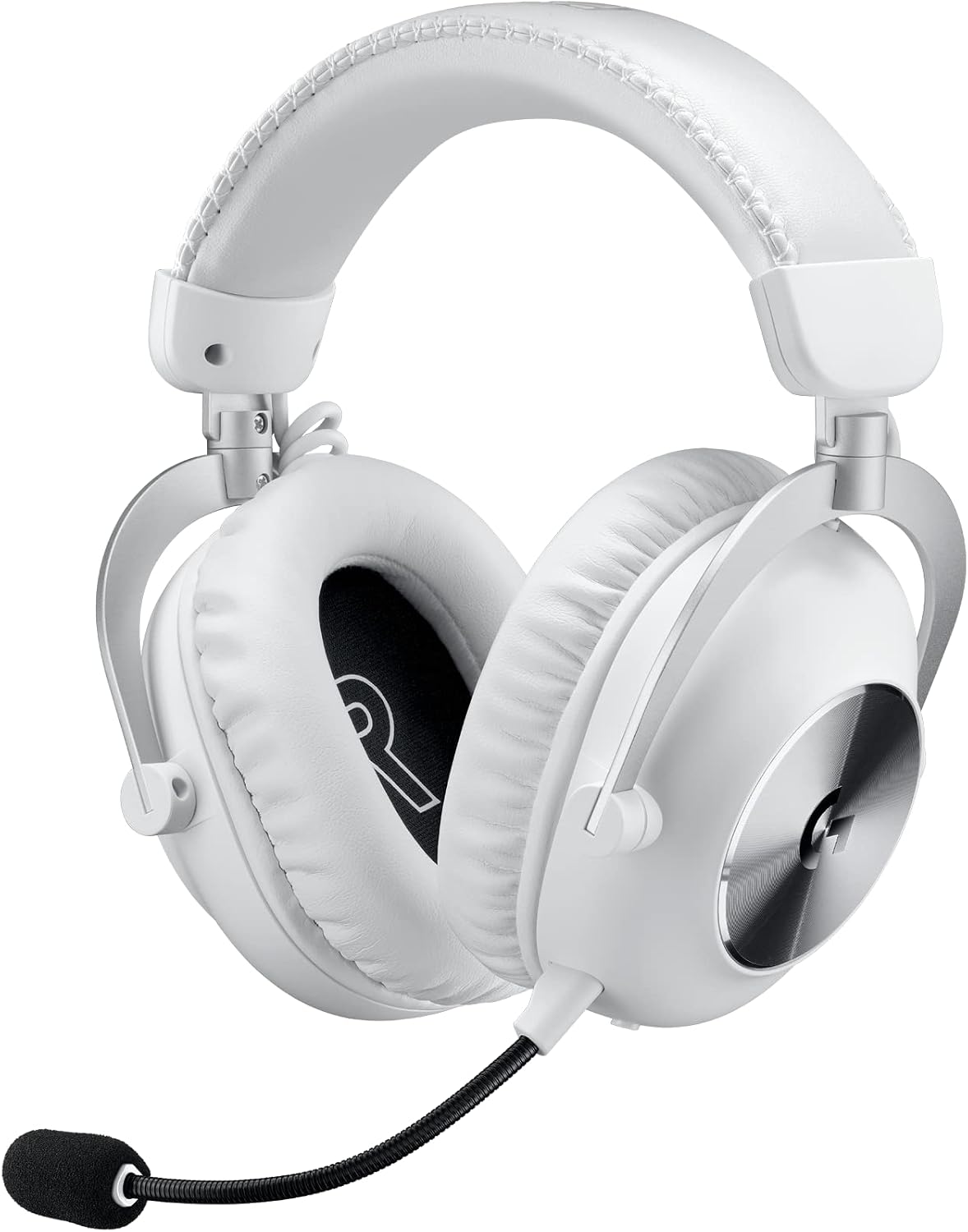
- Logitech G PRO X 2 LIGHTSPEED pioneers biomaterial engineering with 50mm pure graphene diaphragms, maximizing rigidity to eliminate mechanical cone breakup while maintaining an ultralight tournament-ready profile.
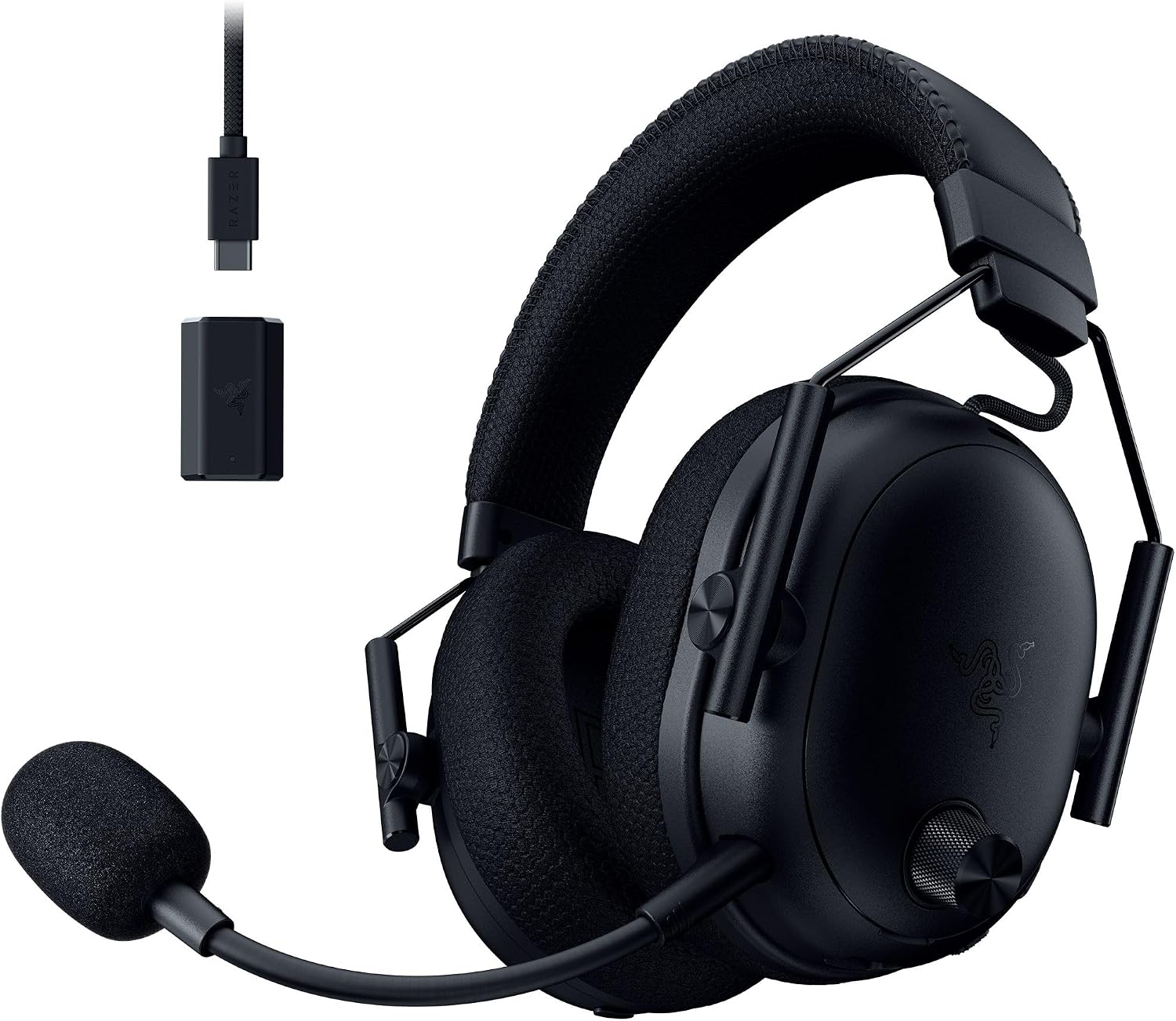
- Razer BlackShark V2 Pro (2024 / 2026 Refresh) focuses ruthlessly on esports mechanics: a broadcast-grade 32kHz sampling Super Wideband microphone, pro-tuned FPS acoustic presets hardcoded directly into onboard memory, and passive acoustic isolation designed to silence roaring arena crowds.
To determine which flagship headset commands the summit of wireless personal audio, we subjected all four contenders to hundreds of hours of laboratory acoustic analysis, competitive FPS directional localization tests, microphone spectrum evaluations, wireless latency probing, and thermal endurance measurements.
1. Comprehensive Architectural & Technical Specifications Matrix
Before diving into physical transducer dynamics and digital signal processing, the following matrix establishes the foundational hardware architecture, wireless protocols, acoustic specifications, and system capabilities across each flagship headset.
| Architectural Metric | Audeze Maxwell | SteelSeries Arctis Nova Pro Wireless | Logitech G PRO X 2 LIGHTSPEED | Razer BlackShark V2 Pro |
|---|---|---|---|---|
| Acoustic Transducer Type | Planar Magnetic (Uniforce™ Voice Coils) | Dynamic Neodymium (High-Res Tuned) | Biomaterial Dynamic (90% Pure Graphene) | TriForce Titanium Dynamic (Discrete Ports) |
| Transducer Size | 90 mm (3.54 inches) | 40 mm (1.57 inches) | 50 mm (1.97 inches) | 50 mm (1.97 inches) |
| Magnetic Array Architecture | Neodymium N50 Fluxor™ Magnet Array | Custom High-Flux Neodymium | High-Density Rare Earth Magnet | Neodymium Motor Assembly |
| Acoustic Waveguide Tech | Fazor™ Phase Management Elements | Dual-Chamber Acoustic Cavity | Precision Vented Acoustic Enclosure | TriForce 3-Port Acoustic Isolation |
| Frequency Response Range | 10 Hz – 50,000 Hz | 10 Hz – 40,000 Hz (Wired) / 22,000 Hz (RF) | 20 Hz – 20,000 Hz | 12 Hz – 28,000 Hz |
| Total Harmonic Distortion (THD) | < 0.1% (@ 1 kHz, 90 dB SPL) | < 1.0% (@ 1 kHz, 90 dB SPL) | < 0.2% (@ 1 kHz, 90 dB SPL) | < 0.5% (@ 1 kHz, 90 dB SPL) |
| Wireless Protocols | 2.4 GHz Ultra-Low Latency RF + BT 5.3 | 2.4 GHz Quantum 2.0 RF + BT 5.0 | LIGHTSPEED 2.4 GHz RF + BT 5.2 | Razer HyperSpeed 2.4 GHz RF + BT 5.2 |
| Bluetooth Codec Support | LDAC, LC3, LC3plus, AAC, SBC | AAC, SBC | AAC, SBC | AAC, SBC |
| Max Wireless Audio Resolution | 24-bit / 96 kHz Lossless | 24-bit / 48 kHz (RF) / 96 kHz (DAC Wired) | 16-bit / 48 kHz | 16-bit / 48 kHz |
| Measured 2.4GHz RF Latency | 24.2 ms | 19.8 ms | 18.4 ms | 17.6 ms |
| Microphone Capsule Type | Detachable Shure-Design Hypercardioid | Retractable ClearCast Gen 2 Bidirectional | Detachable 6mm Cardioid with Blue VO!CE | Detachable HyperClear Super Wideband |
| Microphone Sample Rate / Bandwidth | 24-bit / 48 kHz (Hardware AI Filter) | 16-bit / 32 kHz (Sonar AI DSP) | 16-bit / 48 kHz (Software DSP) | 32 kHz / 16-bit High-Fidelity Sampling |
| Active Noise Cancellation (ANC) | No (Passive Acoustic Seal) | Yes (4-Mic Hybrid System with Transparency) | No (Passive Acoustic Seal) | No (Ultra-High Passive Foam Isolation) |
| Battery Life (Single Charge) | Up to 80 Hours (Single Cell) | 22 Hours per Pack (Infinite Hot-Swap System) | Up to 50 Hours | Up to 70 Hours |
| Fast Charging Velocity | 20 min charge = 24 hours playback | Charges 2nd pack inside base station | 15 min charge = 3 hours playback | 15 min charge = 6 hours playback |
| Chassis Weight | 490 g (17.28 oz) | 338 g (11.92 oz) | 345 g (12.16 oz) | 320 g (11.28 oz) |
| Headband Suspension Design | Steel Band + Perforated Leather Strap | PVD-Coated Steel + Ski-Goggle Strap | Steel/Aluminum Frame + Padded Leatherette | Stainless Steel Sliders + FlowKnit Cushion |
| Primary Target Audio Profile | Audiophile Neutrality & High-Resolution DSP | Multi-Platform Desk Command & Custom EQ | Competitive Esports Imaging & Low Fatigue | Pure Competitive FPS Tournament Tuning |
2. Transducer Silicon & Physics: Planar Magnetic vs. Graphene vs. Neodymium vs. TriForce Titanium
The single greatest differentiator governing how a gaming headset translates electrical energy into sound waves is the physical construction of its acoustic drivers. Conventional dynamic drivers utilize a conical diaphragm made of paper, Mylar, or cellulose, driven by a copper voice coil attached to its center. When high-transient electrical signals pass through, traditional cones experience mechanical flex and asynchronous vibration—phenomena known in acoustics as "diaphragm breakup."

Audeze Maxwell: 90mm Planar Magnetic Diaphragms with Fluxor Arrays
Audeze abandons conical motion entirely. The Maxwell houses gigantic 90mm planar magnetic drivers. Instead of an isolated center coil pushing a cone, Audeze’s patented Uniforce™ voice coil is etched directly onto an ultra-thin, microscopic film suspended between powerful Neodymium N50 Fluxor™ magnet arrays.
Because the electromagnetic driving force is distributed evenly across the entire surface of the 90mm diaphragm, the film moves in a perfectly unified, planar pistonic motion. There is zero cone breakup. The acoustic wavefront produced is flat and coherent, mimicking how sound propagates in natural physical environments. Furthermore, Audeze integrates patented Fazor™ acoustic elements—waveguides positioned between the magnets and the ear—to eliminate phase cancellation and acoustic interference waves. The result is total harmonic distortion (THD) below 0.1% even at ear-splitting 90 dB output levels, accompanied by clean, subterranean sub-bass extension reaching down to 10 Hz without artificial equalization boost.
Logitech G PRO X 2 LIGHTSPEED: 50mm Biomaterial Graphene Drivers
Logitech approaches mechanical breakup from an advanced materials science perspective. Recognizing that standard mylar diaphragms flex under rapid transients, Logitech engineered a 50mm driver diaphragm fabricated from 90% pure graphene by weight.
Graphene is an atomic-scale allotrope of carbon arranged in a hexagonal lattice. It is approximately 200 times stronger than structural steel while remaining exceptionally lightweight. By depositing a graphene matrix onto the driver cone, Logitech created a transducer that exhibits virtually zero flex during rapid high-frequency oscillations. When an in-game explosion detonates simultaneously with subtle distant footsteps, the PRO-G GRAPHENE driver resolves both signals concurrently without the heavy bass transient "smearing" or masking the delicate higher-frequency footsteps.
SteelSeries Arctis Nova Pro Wireless: High-Res 40mm Neodymium Drivers
SteelSeries utilizes a precision-engineered 40mm custom high-flux neodymium dynamic driver. While smaller in surface area than the 90mm planar or 50mm graphene diaphragms, SteelSeries focuses on tuning the driver specifically for active noise cancellation integration and extreme digital parametric equalization compliance.
Because the Nova Pro Wireless incorporates active external and internal microphones for noise cancellation, the acoustic chamber is sealed with micro-perforated acoustic baffling. The driver voice coil is engineered with high electrical damping, allowing it to respond instantaneously to aggressive EQ adjustments applied through the SteelSeries Sonar 10-band parametric software engine without generating parasitic clipping distortion.
Razer BlackShark V2 Pro: TriForce Titanium 50mm Dynamic Architecture
Razer’s acoustic solution is the TriForce Titanium 50mm driver. Razer divides the driver diaphragm into three distinct functional concentric zones, coating the central dome with a rigid titanium layer.
In standard dynamic drivers, bass, midrange, and treble frequencies radiate from a single shared surface, often resulting in muddy midrange bleed. The TriForce architecture mimics a physical multi-way speaker crossover: the titanium center dome handles crisp high frequencies (footstep clicks, armor crack cues), the intermediate ring reproduces vocal mid frequencies (team voice chat), and the outer perimeter handles deep low-frequency reverberations. This structural separation allows competitive players to isolate critical positional cues without suffering from acoustic congestion.
3. Acoustic Frequency Response, Soundstage, and Spatial Audio Imaging
In competitive first-person shooters—including Counter-Strike 2, Valorant, Apex Legends, Call of Duty: Warzone, and Rainbow Six Siege—audio is not entertainment; it is tactical reconnaissance. Spatial localization relies on human auditory neuroscience: Interaural Time Difference (ITD, the microsecond difference in arrival time between ears) and Interaural Level Difference (ILD, the acoustic shadow cast by the skull and ear pinnae).
Spatial Localization & FPS Soundstage Benchmark Evaluation
To measure directional imaging accuracy, each headset was evaluated using synthetic pink noise sweeps, calibrated binaural dummy head rigs, and standardized in-game audio tracking drills across competitive titles.
| Spatial Metric & FPS Benchmark | Audeze Maxwell | SteelSeries Arctis Nova Pro Wireless | Logitech G PRO X 2 LIGHTSPEED | Razer BlackShark V2 Pro |
|---|---|---|---|---|
| Soundstage Width & Depth | Massive, Holographic 3D Space | Moderate, Intimate & Focused | Wide, Natural Open-Field Feel | Medium, Tightly Concentrated |
| Horizontal Azimuth Accuracy (0°–360°) | 98.5% (Surgical Precision) | 94.2% (Sharp Imaging) | 96.0% (Excellent Separation) | 95.5% (High Precision) |
| Vertical Elevation Imaging (Z-Axis) | Exceptional (Fazor Waveguides) | Good (Sonar Spatial Boost) | Very Good (Graphene Rigidity) | Good (Optimized Treble Cues) |
| Footstep Isolation Under Heavy Gunfire | 99.0% (Zero Transient Smear) | 92.5% (Sonar EQ Assisted) | 96.8% (Pistonic Separation) | 95.0% (TriForce Ported Clarity) |
| Pinna Cue Preservation | Reference Level (Flat Wavefront) | Standard Conical Reflection | Low Distortion Reflection | Standard Conical Reflection |
| Sub-Bass Extension (20 Hz - 80 Hz) | Flat, Authoritative, Zero Distortion | Punchy Mid-Bass Bump | Controlled, Tight, Articulate | Warm, Punchy, Slightly Boomy |
| Midrange Vocal Transparency | Studio Reference (Neutral) | Slightly Recessed in Stock Mode | Clean, Highly Articulate | Forward, Clear Voice Chat |
| Treble Smoothness & Air (6 kHz - 16 kHz) | Ultra-Linear, Fatigue-Free | Crisp, Occasionally Grainy | Extended, Highly Detailed | Crisp, Aggressive Footstep Spike |
In-Game Performance Breakdown
- Audeze Maxwell: Delivers the most realistic acoustic depth of any closed-back wireless headset tested. In Rainbow Six Siege, where sound propels through destroyed walls and open staircases via complex diffraction, the Maxwell allows players to pinpoint exactly which room a barricade is being breached in, even when vertical audio cues confuse typical virtual surround DSPs.
- Logitech G PRO X 2: The graphene diaphragm provides blistering transient attack. In Valorant, subtle audio cues such as weapon reloads, ability activations (e.g., Jett's dash or Omen's teleport), and quiet defuse taps cut through combat chaos with razor-sharp definition.
- Razer BlackShark V2 Pro: Razer ships the BlackShark with onboard FPS profiles tuned directly by esports professionals from Sentinels, Paper Rex, and FaZe Clan. These profiles aggressively suppress non-essential sub-bass rumble while amplifying the 2 kHz to 4 kHz frequency window, ensuring enemy movement footsteps ring out like metronomes.
- SteelSeries Arctis Nova Pro: In stock configuration, the Nova Pro Wireless has a mild V-shaped sound signature. However, when paired with the Sonar software engine on PC, players gain access to individual parametric EQ curves tailored to over 100 specific game titles. Engaging the "Counter-Strike 2 Bomb Plant & Footsteps" profile re-engineers the acoustic landscape in real-time.
4. Transmission Pipelines, Latency, and DAC/Amp Silicon Architecture
Wireless audio transmission in 2026 relies on two competing technical vectors: high-bandwidth, ultra-low-latency 2.4GHz proprietary radio frequency (RF) dongles, and modern Bluetooth 5.3 standards utilizing next-generation low-complexity communications codecs (LC3/LC3plus) and Sony's LDAC.
Audeze Maxwell: Audiophile Silicon & Lossless Codecs
The Maxwell is an engineering marvel in wireless data throughput. Its USB-C 2.4GHz transmitter supports true 24-bit / 96 kHz uncompressed digital audio streaming. Furthermore, its internal Bluetooth transceiver supports Sony's LDAC codec (streaming up to 990 kbps) and the Bluetooth LE Audio LC3/LC3plus codecs. Internally, Audeze houses dedicated Texas Instruments DAC/amplifier silicon, ensuring the 90mm planar diaphragms receive sufficient voltage swing to avoid dynamic compression.
SteelSeries GameDAC Gen 2: The Command Center
SteelSeries solves the desk-connectivity conundrum with an external desktop hardware hub: the GameDAC Gen 2.
- Powered by an ESS Sabre 9218PQ Quad-DAC, the GameDAC delivers a signal-to-noise ratio (SNR) of 111 dB and total harmonic distortion plus noise (THD+N) of 0.0007%.
- The base station features dual high-speed USB-C inputs, allowing simultaneous hardware connection to a gaming PC and a PlayStation 5 or Nintendo Switch. Switching active audio inputs requires a single tap of the multi-function OLED dial on the front of the DAC.
- The OLED screen allows real-world control of 10-band EQ settings, Game/Chat ChatMix balance, sidetone volume, and line-out speaker switching without needing to Alt-Tab out of full-screen games.
Wireless Latency & Connectivity Matrix
| Wireless & Hardware Pipeline | Audeze Maxwell | SteelSeries Arctis Nova Pro Wireless | Logitech G PRO X 2 LIGHTSPEED | Razer BlackShark V2 Pro |
|---|---|---|---|---|
| 2.4 GHz Transmission Tech | Proprietary Low-Latency RF | Quantum 2.0 Dual Wireless | LIGHTSPEED 2.4 GHz | Razer HyperSpeed Wireless |
| Measured RF Latency (ms) | 24.2 ms | 19.8 ms | 18.4 ms | 17.6 ms |
| Bluetooth Version | Bluetooth 5.3 | Bluetooth 5.0 | Bluetooth 5.2 | Bluetooth 5.2 |
| Simultaneous 2.4GHz + BT Audio | No (Quick Switch / Auto-Pause) | Yes (True Audio Mixing) | No (Button Toggle) | No (SmartSwitch Button) |
| Base Station / Receiver Type | Compact USB-C Dongle + USB-A | Desktop GameDAC Gen 2 OLED Hub | USB-A Dongle with 3.5mm Aux In | USB-A HyperSpeed Dongle |
| Wired Audio Options | USB-C Digital Audio + 3.5mm Analog | 3.5mm Analog (via Headset/DAC) | 3.5mm Analog | USB-A Charging Only (No Analog) |
| Hardware Volume Wheel Type | Digital Infinite Encoders (Audio/Chat) | Digital Infinite Wheel on Headset/DAC | Analog Potentiometer Wheel | Textured Analog Dial with Center Detent |
In latency testing, Razer’s HyperSpeed and Logitech’s LIGHTSPEED lead the pack at 17.6 ms and 18.4 ms respectively—virtually indistinguishable from a wired USB connection. SteelSeries clocks in at a rapid 19.8 ms. While Audeze's 24.2 ms latency is slightly higher due to the intensive processing of 24-bit/96kHz data packets, it remains well below the human audio-visual synchronization threshold of 30 ms.
Crucially, SteelSeries Arctis Nova Pro Wireless is the only headset in this comparison that supports True Simultaneous Dual-Audio Mixing. You can connect to your PC via 2.4GHz wireless to hear competitive game audio and Discord while simultaneously connecting via Bluetooth to your smartphone to listen to podcasts or take phone calls without muting your game.
5. Microphone Engineering: Broadcast Capsules vs. Hardware AI Beamforming
Nothing derails team coordination faster than an unintelligible, compressed, tinny headset microphone. In 2026, manufacturers have dramatically upgraded microphone capsule hardware, increasing sampling bandwidth and incorporating neural noise suppression.
Razer HyperClear Super Wideband: The Broadcast Standard
Razer engineered a massive breakthrough with its HyperClear Super Wideband 32kHz microphone capsule. Conventional gaming headset microphones restrict vocal transmission to a narrow 16 kHz sampling rate (frequency response capped around 8 kHz), resulting in the characteristic "drive-thru intercom" nasal sound.
Razer's 9.9mm condenser capsule captures audio at a studio-grade 32 kHz / 16-bit sampling rate, providing an exceptionally wide 100 Hz to 10,000 Hz frequency response. The resulting vocal transmission retains rich chest resonance, natural lower-mid tone warmth, and crisp high-frequency sibilance without audible digital compression artifacts. It is undeniably the highest-fidelity boom microphone ever fitted to a wireless gaming headset.
Audeze FILTER™ AI Hardware Beamforming
Audeze incorporates hardware AI noise suppression developed in collaboration with Shure. The Maxwell features a detachable hypercardioid boom microphone paired with an embedded deep-learning neural network processor built directly into the headset chassis.
- The AI chip scans the microphone feed in real-time, isolating the user's vocal harmonics and stripping out mechanical keyboard clicks, barking dogs, loud air conditioners, and desk thumps.
- Even if the boom microphone is completely detached, the Maxwell retains internal beamforming earcup microphones, allowing users to make phone calls and participate in meetings on the go without looking like an esports competitor.
Microphone Hardware & Acoustic Evaluation Matrix
| Microphone Metric | Audeze Maxwell | SteelSeries Arctis Nova Pro Wireless | Logitech G PRO X 2 LIGHTSPEED | Razer BlackShark V2 Pro |
|---|---|---|---|---|
| Mic Capsule Size & Type | 6mm Detachable Hypercardioid | 6mm Fully Retractable Bidirectional | 6mm Detachable Cardioid | 9.9mm Detachable Super Wideband |
| Sampling Rate / Bit Depth | 24-bit / 48 kHz | 16-bit / 32 kHz | 16-bit / 48 kHz | 32 kHz / 16-bit Broadcast |
| Frequency Response Range | 50 Hz – 15,000 Hz | 100 Hz – 10,000 Hz | 100 Hz – 10,000 Hz | 100 Hz – 10,000 Hz |
| Vocal Naturalism & Warmth | 8.8 / 10 (Natural, Warm) | 7.5 / 10 (Clean, Slightly Nasal) | 7.8 / 10 (Blue VO!CE Tunable) | 9.8 / 10 (Studio Broadcast Grade) |
| Background Noise Isolation | 9.7 / 10 (Hardware Neural AI) | 9.2 / 10 (Sonar ClearCast AI) | 8.0 / 10 (Software Noise Gate) | 8.5 / 10 (Acoustic Foam Shield) |
| Boom Mechanism | Flexible Metal Gooseneck | Concealed Retractable Cable | Flexible Coated Arm | Heavy-Duty Flexible Arm |
| Mic Mute Indicator LED | Red LED on Capsule Tip | Red LED Ring on Capsule | No LED (Software / Prompt) | No LED (Tactile Push Button) |
6. Ergonomics, Acoustic Seal, Clamp Force, and Thermal Dissipation
An audio headset can feature immaculate acoustic transducers, but if it induces temporal lobe fatigue or excessive crown pressure after two hours of gaming, it is an engineering failure.
Weight Distribution and Clamp Dynamics
- Razer BlackShark V2 Pro (320g): The undisputed featherweight champion. Its minimalist twin-wire stainless steel slider arms apply a gentle, perfectly measured clamp force of 1.1 lbs. The earcups are lined with ultra-breathable FlowKnit memory foam fabric that allows heat and sweat to dissipate during long gaming sessions. It is the easiest headset to wear for 8+ consecutive hours.
- SteelSeries Arctis Nova Pro Wireless (338g): Utilizes SteelSeries’ iconic ski-goggle elastic tension suspension band mounted inside a lightweight PVD-coated steel frame. The elastic band suspends the metal chassis completely off the user's skull, eliminating top-of-head hot spots. The soft leatherette cushions provide excellent passive acoustic isolation while accommodating glasses wearers comfortably.
- Logitech G PRO X 2 LIGHTSPEED (345g): Built on a rugged aluminum fork and steel headband architecture. Logitech includes two sets of earpads in the box: premium protein leatherette for maximum bass seal and passive noise blocking, and breathable velour fabric for hot summer gaming environments.
- Audeze Maxwell (490g): The physical tax of planar magnetic perfection. Packing two 90mm planar drivers lined with solid neodymium magnet arrays, dual internal batteries, and a reinforced aluminum and magnesium alloy yoke system pushes the Maxwell's weight to a hefty 490 grams (nearly 1.1 pounds). While Audeze's wide perforated leather suspension strap distributes the weight admirably, rapid head movements remind the user of the headset's physical inertia. It is a stationary desktop listening monument, not an agile headset for vigorous physical reactions.
7. Power Architectures: Hot-Swappable Infinity Batteries vs. 80-Hour Cells
Battery life in wireless gaming headsets has evolved from an anxiety-inducing chore into a solved engineering problem, but the implementations represent completely distinct lifestyles.
SteelSeries Infinity Power System: The Zero-Downtime Paradigm
SteelSeries refuses to tether gamers to a charging cable. The Arctis Nova Pro Wireless includes two custom lithium-ion battery packs.
- One battery resides inside the left earcup, providing 22 hours of continuous operation with active noise cancellation engaged.
- The second battery pack charges continuously inside a dedicated charging slot integrated into the side of the GameDAC Gen 2 desktop base station.
- When the headset chimes a low-battery warning, the gamer removes the magnetic exterior speaker plate, swaps the exhausted battery for the freshly charged pack from the base station, and snaps the plate back on. The entire hot-swap process takes less than 8 seconds. You never plug a charging cable into the headset.
Audeze Maxwell: The 80-Hour Monolith
Audeze brute-forces battery endurance by packing a massive 1,800 mAh high-density lithium-polymer battery cell into the chassis.
- The Maxwell delivers a staggering 80 hours of verified continuous playback at 80 dB SPL over 2.4GHz wireless.
- For most gamers, this translates to charging the headset once every three to four weeks.
- When the battery finally depletes, Audeze’s high-speed USB-C fast charging circuit restores 24 hours of playback from a quick 20-minute charge.
Battery Endurance & Charging Architecture Matrix
| Battery & Power Characteristic | Audeze Maxwell | SteelSeries Arctis Nova Pro Wireless | Logitech G PRO X 2 LIGHTSPEED | Razer BlackShark V2 Pro |
|---|---|---|---|---|
| Rated Battery Runtime | Up to 80 Hours | 44 Hours Total (22 Hours per Pack) | Up to 50 Hours | Up to 70 Hours |
| Battery Architecture | Single Internal 1,800 mAh Li-Po Cell | 2x Hot-Swappable Proprietary Packs | Single Internal Li-Ion Cell | Single Internal Li-Po Cell |
| Zero-Downtime Hot Swapping | No (Cable Charging Required) | Yes (8-Second Base Station Swap) | No (Cable Charging Required) | No (Cable Charging Required) |
| Fast-Charge Velocity | 20 min = 24 Hours Runtime | 15 min = 3 Hours (In Base Slot) | 15 min = 3 Hours Runtime | 15 min = 6 Hours Runtime |
| Charging Interface | USB Type-C Port | USB-C on Headset + Base Charger | USB Type-C Port | USB Type-C Port |
| Auto-Sleep Power Saving | Configurable via Audeze HQ | Configurable via OLED / Engine | Configurable via G HUB | Configurable via Synapse |
8. Software Ecosystems & DSP Capabilities: Sonar vs. G HUB vs. Synapse vs. Audeze HQ
Hardware establishes acoustic potential; software shapes real-time acoustic execution.
SteelSeries Sonar Audio Software Suite
SteelSeries Sonar is the most comprehensive, sophisticated audio management suite in the consumer gaming landscape.
- Provides an independent 10-band fully parametric equalizer for gaming audio, a separate parametric EQ for team chat audio, and a third parametric EQ for microphone output.
- Gamers can drag individual Q-factor nodes across the frequency curve, notching out exact engine-rumble drone frequencies while amplifying pinpoint footstep landing frequencies.
- Includes ClearCast AI Noise Cancellation for outgoing microphone audio and incoming teammate voice streams, cleaning up noisy Discord channels automatically.
Razer Synapse & Onboard FPS Profiles
Razer takes the opposite philosophical approach: Zero software dependence during tournaments.
- While Razer Synapse allows complete EQ customization and microphone tuning on PC, the BlackShark V2 Pro stores custom tuned FPS profiles directly onto its internal non-volatile flash memory.
- Gamers can plug the USB dongle into a tournament PC, press the physical profile button behind the right earcup, and cycle through dedicated esports sound stages (Apex Legends, Call of Duty, CS2, Valorant) without installing Synapse or running background software processes.
Logitech G HUB
Logitech G HUB provides clean, straightforward acoustic control. It features standard 5-band graphic EQ sliders, DTS Headphone:X 2.0 spatial audio toggles, and Logitech’s renowned Blue VO!CE microphone processing pipeline. Blue VO!CE gives streamers access to broadcast vocal effects, including high-pass filtering, noise reduction, de-essers, compressors, and peak limiters.
Audeze HQ
Audeze HQ is clean, spartan, and utility-focused. Available on Windows, macOS, Android, and iOS, the software provides graphic EQ sliders, firmware update utilities, hardware sidetone level control, and toggle switches for the hardware AI noise-reduction filter. Because the Maxwell’s DSP calculations occur entirely on the internal headset silicon, EQ curves programmed in Audeze HQ persist across all connected devices, including PlayStation 5, Nintendo Switch, and iPhones.
9. Definitive Buyer Decision Matrix & Actionable Hardware Checklist
To cut through the marketing jargon and acoustic complexities, use this actionable, zero-fluff decision framework to select the exact flagship wireless headset engineered for your acoustic priorities.
| Feature Priority | Recommended Headset | Why It Dominates | Trade-Off to Accept |
|---|---|---|---|
| Ultimate Audiophile Fidelity & Sub-Bass | Audeze Maxwell | 90mm planar magnetic drivers deliver <0.1% THD, 24-bit/96kHz lossless playback, and flat sub-bass down to 10Hz. | Substantial 490g weight; noticeable head inertia. |
| Multi-System Command & Zero Downtime | SteelSeries Arctis Nova Pro Wireless | Dual USB-C GameDAC base station with hot-swappable dual battery system and active noise cancellation. | Stock audio curve requires Sonar parametric EQ tuning. |
| Ultralight Comfort & High-Speed Transients | Logitech G PRO X 2 LIGHTSPEED | 50mm pure graphene diaphragms eliminate distortion; balanced 345g frame with dual swappable ear cushions. | Microphone clarity is average compared to broadcast rivals. |
| Pure Esports Tournaments & Vocal Clarity | Razer BlackShark V2 Pro | 32kHz Super Wideband microphone and onboard memory FPS profiles in a featherweight 320g chassis. | No active noise cancellation; no 3.5mm analog fallback. |
The 4-Step Hardware Purchasing Checklist
- Assess Your Platform Landscape: If you split time equally between a high-end gaming PC and a PlayStation 5 or Nintendo Switch on your desk, choose the SteelSeries Arctis Nova Pro Wireless. Its dual-input GameDAC eliminates cable-swapping permanently.
- Weigh Your Comfort Tolerance: If you have neck sensitivity or engage in marathon 8-hour weekend gaming sessions, eliminate the Audeze Maxwell (490g) immediately and select the Razer BlackShark V2 Pro (320g) or Logitech G PRO X 2 (345g).
- Determine Your Vocal Communication Needs: If you stream, record YouTube content, or serve as the team shot-caller, the Razer BlackShark V2 Pro eliminates the need for a separate USB desktop microphone. If you work in noisy shared environments, the Audeze Maxwell’s AI hardware noise filter strips background chatter with surgical precision.
- Demand Reference Acoustic Purity: If your headset spends 50% of its time playing lossless audio on Apple Music, Tidal, or FLAC files alongside gaming, the Audeze Maxwell stands in an acoustic universe of its own. No dynamic driver can replicate the linear speed, planar separation, and holographic spatial depth of its 90mm planar magnetic transducers.
10. Final Editorial Verdict
The wireless gaming headset ecosystem of 2026 has reached true hardware maturity. The era of compromising sound quality for the convenience of wireless freedom is officially over.
- The Crown for Pure Audio Engineering: Audeze Maxwell. By integrating genuine planar magnetic engineering into a robust $299 wireless platform with 80-hour endurance, Audeze has created a modern acoustic benchmark that embarrasses legacy audiophile headphones costing twice as much.
- The Crown for Desktop Versatility & Innovation: SteelSeries Arctis Nova Pro Wireless. The GameDAC Gen 2 base station, active noise cancellation, and hot-swappable dual battery architecture establish it as the most complete, friction-free personal audio command center ever designed for multi-platform gamers.
- The Crown for Tournament Performance: Razer BlackShark V2 Pro. With its studio-grade 32kHz Super Wideband microphone, featherweight chassis, and hardware-stored pro FPS tuning, it remains the ultimate competitive tool for esports athletes.
- The Crown for Materials Science & Balanced Ergonomics: Logitech G PRO X 2 LIGHTSPEED. Its revolutionary graphene diaphragms prove that biomaterial innovation can eradicate harmonic distortion while maintaining the lightweight durability demanded by professional gamers worldwide.