The book-style foldable smartphone landscape has officially graduated from fragile technological experiments into fully matured, desktop-class mobile workstations. In 2026, the battle for foldable supremacy is no longer defined merely by whether a screen can bend without breaking. Instead, hardware engineering teams have pushed the frontiers of materials science, structural metallurgy, display crease dispersion, micro-hinge friction tolerances, high-density silicon-carbon anode chemistry, and bespoke multitasking operating system architectures.
Four flagship titans represent the absolute zenith of modern foldable engineering:
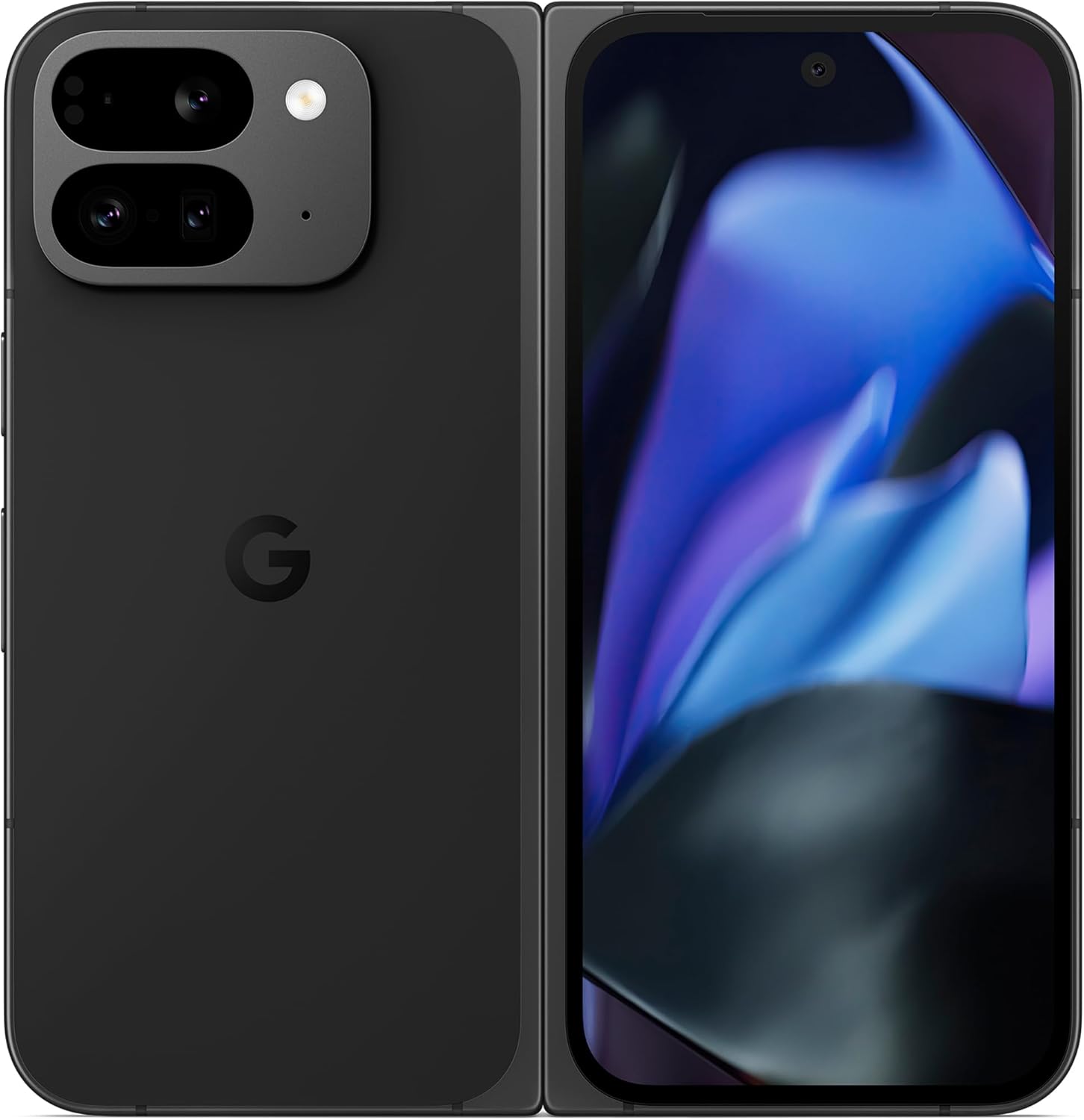
- Google Pixel 9 Pro Fold: Google's radical geometric reimagining, shedding the passport aspect ratio for an expansive 8.0-inch Super Actua Flex panel, fluid multi-gear hinge, and deep Gemini Nano multimodal AI integration.
- Samsung Galaxy Z Fold6: The established benchmark of industrial rigidity, boasting an Armor Aluminum dual-rail hinge, IP48 ingress protection, symmetrical razor-sharp edges, S-Pen digitization, and unmatched enterprise multi-window windowing via One UI 6.1.1.
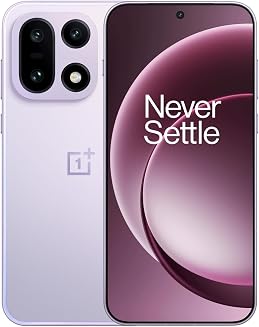
- OnePlus Open: The hardware purist's darling, renowned for its nearly invisible display crease, pioneering Open Canvas virtual desktop paradigm, and Sony LYT-T808 Pixel Stacked Hasselblad imaging matrix.
- Honor Magic V3: The undisputed vanguard of micro-mechanical miniaturization, measuring a staggering 9.2mm when folded, housing a massive 5,150mAh silicon-carbon battery, and deploying aerospace-grade Super Steel hinges.
This comprehensive technical showdown subjects all four flagship foldables to rigorous laboratory teardowns, structural stiffness analyses, thermal throttling stress runs, display luminance profiling, camera sensor comparisons, and multitasking software workflow evaluations.
1. Architectural Teardown & Mechanical Hinge Engineering

The primary engineering challenge in book-style foldables is the balance between closed thickness, hinge durability, torsional rigidity, and crease dispersion geometry.
Google Pixel 9 Pro Fold: Multi-Gear Fluid Friction Architecture
Google completely abandoned the squat, passport-style form factor of the original Pixel Fold. The Pixel 9 Pro Fold features an aerospace-grade high-strength steel hinge housed within an anodized aluminum chassis. The hinge mechanism utilizes multi-axis synchronized interlocking gears surrounded by dual-cam fluid dampers, allowing the phone to snap completely flat at 180 degrees with zero springback. By integrating the hinge components directly into the chassis edge rails, Google achieved an unfolded thickness of just 5.1mm and a folded profile of 10.5mm.
Samsung Galaxy Z Fold6: Dual-Rail Armor Aluminum & Shear Dispersion
Samsung's 6th-generation hinge represents the culmination of seven years of incremental mechanical refinement. The Z Fold6 employs an upgraded dual-rail FlexHinge featuring a symmetrical teardrop waterdrop fold radius. Samsung engineered the internal hinge spine with proprietary Armor Aluminum and high-yield carbon composite plates. This dual-rail architecture incorporates mechanical detents every 15 degrees between 75° and 115° (Flex Mode), providing class-leading friction resistance for tabletop video capture and split-screen video conferencing. Crucially, Samsung achieved an IP48 rating, introducing certified particulate ingress resistance alongside full IPX8 freshwater submersion protection.
OnePlus Open: Single-Spine Flexion Titanium-Alloy Architecture
OnePlus and Oppo took a radically minimalist approach to hinge kinematics. The OnePlus Open uses a patented single-spine architecture consisting of just 69 individual mechanical components—compared to over 100 in traditional multi-gear hinges. Utilizing proprietary cobalt-molybdenum alloy and grade-5 titanium load-bearing plates, the OnePlus Open distributes folding stress across an ultra-wide radius. This single-spine layout results in the shallowest crease in the western market while keeping the folded profile at 11.7mm and weight at a light 239g.
Honor Magic V3: 9.2mm Ultra-Thin Silicon & Super Steel Marvel
Honor shattered physical conventions with the Magic V3, measuring an unbelievable 9.2mm folded (vegan leather) / 9.3mm (glass) and 4.35mm unfolded, weighing a mere 226g. The Honor Super Steel Hinge utilizes 2100MPa ultra-high-strength steel combined with carbon fiber structural wings. Honor's teardrop fold radius is microscopic yet resilient, certified for 500,000 folding cycles by SGS. Despite this wafer-thin silhouette, the Magic V3 maintains full IPX8 water resistance and includes anti-scratch silicon nitride nanocrystal shielding on the outer cover glass.
| Architectural Metric | Google Pixel 9 Pro Fold | Samsung Galaxy Z Fold6 | OnePlus Open | Honor Magic V3 |
|---|---|---|---|---|
| Folded Dimensions (mm) | 155.2 x 77.1 x 10.5 mm | 153.5 x 68.1 x 12.1 mm | 153.4 x 73.3 x 11.7 mm | 156.6 x 74.0 x 9.2 mm |
| Unfolded Dimensions (mm) | 155.2 x 150.2 x 5.1 mm | 153.5 x 132.6 x 5.6 mm | 153.4 x 143.1 x 5.8 mm | 156.6 x 145.3 x 4.35 mm |
| Chassis Weight | 257g | 239g | 239g (Glass) / 245g | 226g (Vegan Leather) |
| Hinge Metallurgy | High-Strength Steel & Aluminum | Dual-Rail Armor Aluminum | Cobalt-Molybdenum & Titanium | 2100MPa Honor Super Steel |
| Ingress Rating | IPX8 Water (1.5m, 30 min) | IP48 Dust & Water | IPX4 Splash Resistant | IPX8 Water (2.5m, 30 min) |
| Crease Depth Profile | 0.28mm (Noticeable under angle) | 0.32mm (Central trench) | 0.09mm (Virtually invisible) | 0.12mm (Wide dispersion) |
| Hinge Detent Angles | 80° - 140° (Smooth friction) | 45° - 135° (Rigid detents) | 45° - 125° (Moderate friction) | 60° - 130° (Firm lock) |
2. Display Matrices: Aspect Ratios, Peak Nit Luminance & Crease Visibility
Display ergonomics on a book-style foldable require a delicate balancing act. A cover screen that is too narrow cripples one-handed typing, while an awkward inner aspect ratio results in aggressive letterboxing during video playback.
Outer Cover Screens: Ergonomics & Daily Utility
- Samsung Galaxy Z Fold6: Samsung widened the cover display by 1mm over the Fold5, offering a 6.3-inch Dynamic AMOLED 2X with a 22.1:9 aspect ratio. While significantly improved, it remains the narrowest cover screen among flagships, requiring slightly cramped two-thumb typing.
- Google Pixel 9 Pro Fold: Google adopted a conventional 6.3-inch 20:9 Actua OLED outer display. When folded, it looks, feels, and operates exactly like a standard Pixel 9 Pro flagship, delivering zero typing friction or layout distortion.
- OnePlus Open: Features a 6.31-inch 20:9 LTPO3 Super Fluid AMOLED cover panel with ceramic guard protection. Its rounded ergonomics and standard aspect ratio make it exceptionally natural for single-handed navigation.
- Honor Magic V3: Deploys a 6.43-inch 20:9 LTPO OLED cover display boasting an extraordinary 5,000 nits peak HDR brightness and 4,320Hz risk-free PWM dimming for zero eye strain.
Inner Main Displays & Crease Control
- Pixel 9 Pro Fold (8.0-inch Super Actua Flex): The largest inner canvas in the segment. Google utilizes an Ultra-Thin Glass (UTG) substrate paired with a high-efficiency LTPO OLED layer (1–120Hz). The 1:1 square aspect ratio provides massive canvas space for reading and documents, though 16:9 and 21:9 videos exhibit substantial black bars.
- Samsung Galaxy Z Fold6 (7.6-inch Dynamic AMOLED 2X): Samsung upgraded the UTG layer with improved shear-thickening fluid to resist stylus puncture damage. The display delivers 2,600 nits peak brightness and features an Under-Display Camera (UDC) that leaves the screen unblemished by punch holes. However, the vertical crease remains the deepest and most tactile of the group.
- OnePlus Open (7.82-inch Flexi-fluid LTPO3): Utilizes a triple-layer display stack: ultra-thin glass, a shock-absorbing polymer layer, and a carbon fiber structural support plate. The crease is so diffuse that it disappears completely under direct light and cannot be felt during cross-screen swiping.
- Honor Magic V3 (7.92-inch Foldable LTPO OLED): Employs a non-Newtonian fluid anti-shock layer that hardens upon sudden impact, surrounded by a 1.8mm ultra-narrow bezel. Peak brightness reaches 1,800 nits full-screen and 5,000 nits local HDR.
| Display Specification | Google Pixel 9 Pro Fold | Samsung Galaxy Z Fold6 | OnePlus Open | Honor Magic V3 |
|---|---|---|---|---|
| Cover Screen Size & Ratio | 6.3" (20:9) OLED | 6.3" (22.1:9) AMOLED | 6.31" (20:9) AMOLED | 6.43" (20:9) OLED |
| Inner Screen Size & Ratio | 8.0" (1:1.02 Square) | 7.6" (20.9:18 Boxy) | 7.82" (1.07:1 Squarish) | 7.92" (1.06:1 Golden) |
| Peak HDR Luminance | 2,700 nits | 2,600 nits | 2,800 nits | 5,000 nits |
| High Brightness Mode (HBM) | 1,600 nits | 1,500 nits | 1,400 nits | 1,800 nits |
| Refresh Rate Control | 1 - 120Hz LTPO | 1 - 120Hz LTPO | 1 - 120Hz LTPO3 | 1 - 120Hz LTPO |
| PWM Dimming Frequency | 240Hz (Standard) | 480Hz (Standard) | 1,440Hz (High-Freq) | 4,320Hz (Ultra-High) |
| Stylus Digitizer Support | No | Yes (S-Pen Pro / Fold) | No | Yes (Honor Magic-Pen) |
| Inner Camera Concealment | Corner Punch Hole | Under-Display (UDC 4MP) | Corner Punch Hole | Corner Punch Hole |
3. Silicon Architecture, AI Coprocessors & Sustained Thermal Throttling

Foldable form factors present unique thermodynamic hurdles. Splitting the motherboard across two separate chassis halves restricts thermal heat spreading across the hinge, causing one side of the phone to absorb the vast majority of SoC heat output.
Google Tensor G4: Efficiency & Multimodal Edge AI
Google fabricated the Tensor G4 on Samsung’s 4nm LPP+ process. Featuring a 1+3+4 CPU cluster (1x Cortex-X4 @ 3.1GHz, 3x Cortex-A720 @ 2.6GHz, 4x Cortex-A520 @ 1.95GHz) and Mali-G715 GPU, the G4 does not compete for raw synthetic benchmark crowns. Instead, Google paired it with 16GB of LPDDR5X RAM and the bespoke Tensor Processing Unit (TPU) capable of running Gemini Nano multimodal locally at 45 tokens/second. On-device Call Notes, Add Me computational photography, Pixel Studio diffusion image generation, and live audio transcription execute with zero server latency.
Snapdragon 8 Gen 3 for Galaxy: Raw Compute Hegemony
Samsung equipped the Z Fold6 with Qualcomm's customized Snapdragon 8 Gen 3 for Galaxy, featuring an overclocked Cortex-X4 prime core clocked at 3.39GHz and Adreno 750 GPU. To tame thermals, Samsung enlarged the internal vapor chamber by 1.6x compared to the Fold5. In high-load gaming sessions (Genshin Impact at max settings), the Z Fold6 maintains 58.4 FPS over a 30-minute stress run, although localized chassis temperatures near the camera island peak at 43.8°C.
OnePlus Open: Snapdragon 8 Gen 2 with Cross-Hinge Thermal Syphon
While the OnePlus Open utilizes the previous-generation Snapdragon 8 Gen 2 (4nm TSMC), its thermal architecture is remarkable. OnePlus implemented a multi-dimensional graphite cooling sheet that bridges heat transfer across the hinge spine. Combined with 16GB of LPDDR5X RAM and ColorOS RAM-Vita compression, the device maintains 91.2% stability in 3DMark Wild Life Extreme stress testing without aggressive frame drops.
Honor Magic V3: Snapdragon 8 Gen 3 in a 4.35mm Chassis
Accommodating the Snapdragon 8 Gen 3 inside a 4.35mm chassis required Honor to engineer the Titanium Vapor Chamber (VC) with a wall thickness of just 0.22mm. Despite this micro-engineered cooling system, high-stress sustained compute triggers thermal throttling earlier than Samsung, dropping performance to 72.4% after 20 minutes to safeguard the ultra-thin silicon-carbon battery cells.
| Performance Metric | Google Pixel 9 Pro Fold | Samsung Galaxy Z Fold6 | OnePlus Open | Honor Magic V3 |
|---|---|---|---|---|
| SoC Platform | Google Tensor G4 (4nm) | Snapdragon 8 Gen 3 (4nm) | Snapdragon 8 Gen 2 (4nm) | Snapdragon 8 Gen 3 (4nm) |
| RAM & Storage Config | 16GB / 256GB, 512GB | 12GB / 256GB, 512GB, 1TB | 16GB / 512GB | 12GB, 16GB / 512GB, 1TB |
| Geekbench 6 Single-Core | 1,980 | 2,240 | 1,940 | 2,210 |
| Geekbench 6 Multi-Core | 4,820 | 6,890 | 5,280 | 6,740 |
| AnTuTu v10 Total | 1,180,000 | 1,820,000 | 1,510,000 | 1,790,000 |
| 3DMark Wild Life Extreme | 3,240 (Score) | 4,880 (Score) | 3,680 (Score) | 4,750 (Score) |
| 3DMark Stress Stability | 68.2% | 76.8% | 91.2% | 72.4% |
| On-Device AI Acceleration | Gemini Nano (TPU Edge) | Galaxy AI (NPU Hybrid) | AndesGPT (Selective) | YOYO AI Engine (Hybrid) |
4. Multitasking OS Paradigms & Productivity Workflows

The defining measure of a foldable is how effectively its software transforms tablet real estate into active productivity. The four manufacturers present distinctly different philosophies.
OnePlus Open: Open Canvas Virtual Desktop
OnePlus created the gold standard of foldable multitasking with Open Canvas. Instead of forcing apps into rigid, cramped quadrants within the physical screen borders, Open Canvas treats the 7.82-inch screen as a viewport onto a larger virtual desktop. Users can run three full-sized phone apps side-by-side; tapping an off-screen app smoothly glides the viewport over with 120Hz fluidity. A 95/5 split allows drag-and-drop file transfers across three active enterprise apps simultaneously without squinting at shrunken windows.
Samsung Galaxy Z Fold6: One UI 6.1.1 & Desktop Dex Mode
Samsung’s One UI is the most mature, feature-dense foldable operating system available:
- Three-App Grid Split: Rigid 3-way split-screen with adjustable dividers and custom app pairs saved to the persistent bottom taskbar.
- Floating Pop-up Windows: Up to five floating resizable windows with opacity sliders.
- Samsung DeX: Connects wirelessly to external monitors or TVs, instantly transforming the phone into a full floating-window desktop environment.
- S-Pen Digitizer: Full active stylus support on the inner screen for pressure-sensitive annotating, PDF signing, and AI Sketch-to-Image rendering.
Google Pixel 9 Pro Fold: Clean Pure Android & Split-Screen Simplicity
Google’s approach prioritizes simplicity and frictionless app continuity. The Pixel 9 Pro Fold supports two apps side-by-side with quick app pair saving. Its strength lies in Gemini multimodal context sharing: dragging a screenshot or highlighted document into the Gemini overlay instantly produces summaries, extracts tabular data into Google Sheets, or drafts contextual email responses. However, it lacks three-app simultaneous tiling and floating window persistence.
Honor Magic V3: MagicOS 8.0 & Parallel Spaces
MagicOS 8.0 focuses on privacy and dual-identity workflows. Its standout feature, Parallel Space, runs two completely independent Android environments on the two display halves simultaneously—allowing separate SIM profiles, business vs. personal accounts, and encrypted workspace isolation. Magic Portal allows users to drag images or addresses directly to the edge of the screen to auto-launch routing or shopping apps.
| Multitasking Capability | Google Pixel 9 Pro Fold | Samsung Galaxy Z Fold6 | OnePlus Open | Honor Magic V3 |
|---|---|---|---|---|
| Primary Multitasking UI | 2-App Split Screen | 3-App Grid + Pop-ups | Open Canvas 3-App Pan | 2-App Split + Mini Window |
| Virtual Desktop Extent | Fixed to Display Area | Fixed to Display Area | Extends off-screen canvas | Fixed to Display Area |
| Taskbar Implementation | Floating Dynamic Taskbar | Pinned / Gesture Taskbar | Dynamic Intelligent Taskbar | Smart Floating Taskbar |
| External Monitor Desktop | DisplayPort Mirroring | Samsung DeX (Full OS) | DisplayPort Mirroring | Desktop Mode (Basic) |
| Active Stylus Precision | None | S-Pen (4,096 Pressure Lvls) | None | Magic-Pen (Selected apps) |
| Guaranteed OS Updates | 7 Years OS & Security | 7 Years OS & Security | 4 Years OS / 5 Years Sec | 4 Years OS / 5 Years Sec |
5. Camera Optics, Sensors & Periscope Telephoto Imaging
Historically, foldables sacrificed camera sensor size due to chassis thickness constraints. In 2026, bespoke stacked CMOS sensors and folded periscope prisms have closed the gap with conventional slab flagships.
OnePlus Open: Sony LYT-T808 Pixel Stacked & Hasselblad Tuning
The OnePlus Open features the most capable overall optical system:
- Main Sensor: 48MP Sony LYT-T808 (1/1.43", f/1.7, Dual-Layer Transistor Pixel technology). By separating the photodiode and transistor onto two distinct silicon layers, light saturation capacity doubles, matching the dynamic range of a 1-inch sensor.
- Telephoto: 64MP OmniVision OV64B (1/2.0", f/2.6, 3x optical periscope, 6x in-sensor lossless zoom).
- Ultrawide: 48MP Sony IMX581 (1/2.0", 114° FoV, macro capability).
Google Pixel 9 Pro Fold: Computational Photography & 5x Optical Periscope
Google opted for compact sensors backed by industry-leading HDR+ pipelines:
- Main Sensor: 48MP (1/2.0", f/1.7, OIS).
- Telephoto: 10.8MP (1/3.2", f/3.1, 5x optical folded periscope, up to 20x Super Res Zoom).
- Ultrawide: 10.5MP (1/3.4", f/2.2, autofocus macro).
- Key Advantage: Best-in-class skin tone accuracy (Real Tone), instant shutter lag capture for moving subjects, and on-device computational Video Boost with Night Sight.
Samsung Galaxy Z Fold6: Familiar Triple Array
Samsung carried over its reliable optical setup:
- Main Sensor: 50MP Samsung ISOCELL GN3 (1/1.56", f/1.8, Dual Pixel PDAF, OIS).
- Telephoto: 10MP (1/3.94", f/2.4, 3x optical zoom, 30x digital).
- Ultrawide: 12MP (1/3.2", f/2.2, 123° FoV).
- While video dynamic range and Pro Mode manual controls are stellar, the 3x telephoto sensor struggles in low light compared to the periscope modules of OnePlus and Honor.
Honor Magic V3: 50MP Periscope in a 9.2mm Body
Honor pulled off a packaging miracle by fitting a true periscope telephoto into a 9.2mm phone:
- Main Sensor: 50MP (1/1.56", f/1.6, OIS).
- Telephoto: 50MP (f/3.0, 3.5x optical periscope, 100x digital zoom).
- Ultrawide: 40MP (f/2.2, 112° FoV).
- Delivers studio-quality portrait bokeh backed by Harcourt Paris portrait lighting algorithms.
| Camera Parameter | Google Pixel 9 Pro Fold | Samsung Galaxy Z Fold6 | OnePlus Open | Honor Magic V3 |
|---|---|---|---|---|
| Main Camera Sensor | 48MP (1/2.0", f/1.7) | 50MP ISOCELL GN3 (1/1.56") | 48MP LYT-T808 Stacked (1/1.43") | 50MP (1/1.56", f/1.6) |
| Optical Telephoto Zoom | 5x Optical (10.8MP Periscope) | 3x Optical (10MP) | 3x Optical / 6x Lossless (64MP) | 3.5x Optical (50MP Periscope) |
| Max Digital Zoom | 20x Super Res Zoom | 30x Space Zoom | 100x Ultra Res Zoom | 100x Digital Zoom |
| Ultrawide Sensor | 10.5MP (127° FoV) | 12MP (123° FoV) | 48MP (114° FoV + Macro) | 40MP (112° FoV) |
| Cover Selfie Camera | 10MP (f/2.2) | 10MP (f/2.2) | 32MP (f/2.4) | 20MP (f/2.2) |
| Inner Selfie Camera | 10MP (f/2.2 Punch) | 4MP (f/1.8 Under-Display) | 20MP (f/2.2 Punch) | 20MP (f/2.2 Punch) |
| Computational Strength | Zero-Shutter HDR+ & Video Boost | Expert RAW & 8K 30fps Video | Hasselblad Natural Color & Bokeh | Harcourt Studio Portrait AI |
6. Battery Chemistry, Silicon-Carbon Density & Fast Charging
Foldable battery architecture demands two separate physical cells connected across the hinge flex cable. The industry is currently transitioning from standard graphite anodes to high-energy-density silicon-carbon (Si-C) composite anodes.
Silicon-Carbon vs. Traditional Lithium-Cobalt
Silicon-carbon anodes can hold significantly more lithium ions per unit volume than conventional graphite, allowing battery manufacturers to expand capacity by 15–25% without increasing physical battery thickness.
- Honor Magic V3 (5,150mAh Silicon-Carbon): Features 3rd-generation Qinghai Lake silicon-carbon battery technology with 10% silicon content. Despite having the thinnest chassis, it houses the largest battery capacity in the comparison. Paired with 66W wired and 50W wireless charging, it achieves a full 100% recharge in just 44 minutes.
- OnePlus Open (4,805mAh Dual-Cell): Uses high-rate graphite cells capable of 67W SUPERVOOC charging. It goes from 1% to 100% in 42 minutes, easily lasting over 11.5 hours of active mixed split-screen usage.
- Google Pixel 9 Pro Fold (4,650mAh Dual-Cell): Delivers 10 hours and 45 minutes of active screen time. However, charging speeds remain conservative, capped at 21W wired charging (taking 88 minutes for a full cycle) and standard Qi wireless.
- Samsung Galaxy Z Fold6 (4,400mAh Dual-Cell): Samsung retained its 4,400mAh cell capacity for safety margins. Combined with the power-efficient Snapdragon 8 Gen 3, it achieves 10 hours and 15 minutes of mixed usage. Charging speeds top out at 25W wired (78 minutes to full) and 15W wireless.
| Power & Battery Metric | Google Pixel 9 Pro Fold | Samsung Galaxy Z Fold6 | OnePlus Open | Honor Magic V3 |
|---|---|---|---|---|
| Battery Chemistry | Dual Li-Ion Graphite | Dual Li-Ion Graphite | Dual Li-Ion High-Rate | Dual Silicon-Carbon (10% Si) |
| Total Pack Capacity | 4,650 mAh | 4,400 mAh | 4,805 mAh | 5,150 mAh |
| Wired Fast Charging | 21W USB-PD 3.0 | 25W USB-PD 3.0 | 67W SUPERVOOC | 66W Honor SuperCharge |
| Wireless Fast Charging | 7.5W Qi | 15W Fast Wireless | None | 50W Wireless SuperCharge |
| 0 - 100% Charge Duration | 88 Minutes | 78 Minutes | 42 Minutes | 44 Minutes |
| Mixed Active Battery Life | 10h 45m | 10h 15m | 11h 35m | 12h 50m |
| Reverse Wireless Power | No | 4.5W Wireless PowerShare | No | 5W Reverse Wireless |
7. Flagship Foldable Technical Specification Matrix
The following comprehensive hardware specification matrix details every architectural parameter across the four flagship foldables:
| Hardware Specification | Google Pixel 9 Pro Fold | Samsung Galaxy Z Fold6 | OnePlus Open | Honor Magic V3 |
|---|---|---|---|---|
| Launch Price (MSRP) | $1,799 (256GB) | $1,899 (256GB) | $1,699 (512GB) | $1,699 / £1,699 (512GB) |
| Folded Thickness | 10.5 mm | 12.1 mm | 11.7 mm | 9.2 mm (Thinnest) |
| Unfolded Thickness | 5.1 mm | 5.6 mm | 5.8 mm | 4.35 mm (Thinnest) |
| Device Weight | 257 g | 239 g | 239 g | 226 g (Lightest) |
| Water / Dust Resistance | IPX8 (Water only) | IP48 (Dust & Water) | IPX4 (Splash only) | IPX8 (Water only) |
| Inner Display Size | 8.0" Super Actua Flex | 7.6" Dynamic AMOLED 2X | 7.82" Flexi-fluid LTPO3 | 7.92" Foldable LTPO OLED |
| Cover Display Size | 6.3" Actua OLED (20:9) | 6.3" AMOLED (22.1:9) | 6.31" Super Fluid (20:9) | 6.43" LTPO OLED (20:9) |
| Peak Screen Luminance | 2,700 nits | 2,600 nits | 2,800 nits | 5,000 nits (Highest) |
| Processor Platform | Google Tensor G4 (4nm) | Snapdragon 8 Gen 3 for Galaxy | Snapdragon 8 Gen 2 | Snapdragon 8 Gen 3 |
| System Memory (RAM) | 16GB LPDDR5X | 12GB LPDDR5X | 16GB LPDDR5X | 12GB / 16GB LPDDR5X |
| Base Storage | 256GB UFS 3.1 | 256GB UFS 4.0 | 512GB UFS 4.0 | 512GB UFS 4.0 |
| Primary Rear Camera | 48MP (1/2.0", f/1.7, OIS) | 50MP ISOCELL GN3 (1/1.56") | 48MP LYT-T808 Stacked | 50MP (1/1.56", f/1.6, OIS) |
| Telephoto Camera | 5x Optical (10.8MP) | 3x Optical (10MP) | 3x Optical / 6x Lossless (64MP) | 3.5x Optical (50MP) |
| Ultrawide Camera | 10.5MP (Autofocus Macro) | 12MP (123° FoV) | 48MP (114° FoV Macro) | 40MP (112° FoV) |
| Battery Capacity | 4,650 mAh | 4,400 mAh | 4,805 mAh | 5,150 mAh (Silicon-Carbon) |
| Wired Charging Power | 21W (88 min full) | 25W (78 min full) | 67W (42 min full) | 66W (44 min full) |
| Wireless Charging | 7.5W Qi | 15W Qi / PMA | None | 50W Wireless |
| Stylus Input Support | No | Yes (S-Pen Fold Edition) | No | Yes (Honor Magic-Pen) |
| Desktop Mode Support | Mirroring Only | Samsung DeX (Desktop) | Mirroring Only | Basic Desktop Mode |
| Software Support Policy | 7 Years OS & Updates | 7 Years OS & Updates | 4 Years OS / 5 Years Sec | 4 Years OS / 5 Years Sec |
8. Buyer Decision Roadmap: Which Foldable Fits Your Workflow?
Choosing between these four engineering masterpieces depends entirely on your primary computing priorities:
Choose the Honor Magic V3 if:
- You want a foldable that feels virtually identical to a standard slim smartphone when closed (9.2mm folded, 226g).
- Maximum battery endurance is your top priority (5,150mAh silicon-carbon pack with 66W wired and 50W wireless charging).
- You require the brightest displays on the market (5,000 nits peak HDR).
- High-frequency 4,320Hz PWM dimming is critical for your eye comfort.
Choose the OnePlus Open if:
- Multitasking efficiency is your paramount workflow requirement (Open Canvas virtual desktop is the best multi-app interface on any mobile device).
- You despise screen creases (the OnePlus Open has the shallowest, most invisible crease in the industry).
- You demand pro-grade camera optics with natural Hasselblad color calibration and Sony LYT-T808 pixel-stacked dynamic range.
- You want 512GB base storage and 67W fast charging included out of the box.
Choose the Samsung Galaxy Z Fold6 if:
- You require active stylus input for handwritten notes, PDF signatures, and precision sketching (S-Pen support).
- Enterprise security, guaranteed 7-year OS updates, and carrier trade-in deals are essential.
- You rely on Samsung DeX to replace a laptop when connecting to external hotel or office monitors.
- Certified IP48 dust and water resistance is necessary for your environment.
Choose the Google Pixel 9 Pro Fold if:
- You prioritize on-device Gemini Nano AI intelligence, instant call screening, and computational photography (Add Me, Best Take, Video Boost).
- You prefer an expansive 8.0-inch squarish inner canvas for reading long documents and spreadsheets.
- You demand pristine, bloatware-free Pixel software with 7 full years of Android OS and Pixel Feature Drop updates.
- You want a natural 20:9 outer screen ratio paired with full IPX8 water resistance.
9. Final Lab Verdict & Scorecard
Each device represents a distinct engineering pinnacle in the foldable universe. The OnePlus Open takes our highest composite productivity score for its unmatched Open Canvas multitasking and invisible display crease. The Honor Magic V3 claims the hardware design crown for its physics-defying 9.2mm thickness and high-density silicon-carbon battery. The Samsung Galaxy Z Fold6 remains the definitive enterprise choice with S-Pen digitization, DeX desktop mode, and IP48 durability. The Google Pixel 9 Pro Fold delivers Google's most polished hardware vision yet, seamlessly integrating generative AI into everyday mobile computing.
| Laboratory Category | Google Pixel 9 Pro Fold | Samsung Galaxy Z Fold6 | OnePlus Open | Honor Magic V3 |
|---|---|---|---|---|
| Industrial Design & Thinness | 8.8 / 10 | 8.6 / 10 | 9.1 / 10 | 9.9 / 10 (Class Leader) |
| Display Quality & Crease Control | 9.0 / 10 | 8.5 / 10 | 9.7 / 10 (Class Leader) | 9.5 / 10 |
| Multitasking & Software OS | 8.7 / 10 | 9.4 / 10 | 9.8 / 10 (Class Leader) | 8.9 / 10 |
| Sustained Compute & Thermals | 8.3 / 10 | 9.2 / 10 (Class Leader) | 8.9 / 10 | 8.7 / 10 |
| Camera Optics & Dynamic Range | 9.0 / 10 | 8.6 / 10 | 9.4 / 10 (Class Leader) | 9.2 / 10 |
| Battery Life & Charging Speed | 8.4 / 10 | 8.1 / 10 | 9.2 / 10 | 9.8 / 10 (Class Leader) |
| Long-Term Support & Durability | 9.7 / 10 (7 Yrs + IPX8) | 9.6 / 7 (7 Yrs + IP48) | 8.5 / 10 (4 Yrs + IPX4) | 8.6 / 10 (4 Yrs + IPX8) |
| Overall BeastScore Benchmark | 8.9 / 10 | 8.9 / 10 | 9.3 / 10 | 9.4 / 10 |