
iPhone 16e vs Motorola Razr 40 Ultra: Which One Should You Buy?
iPhone 16e edges ahead with a BeastScore of 74.9/100 — but the right choice depends on what matters to you.
iPhone 16e
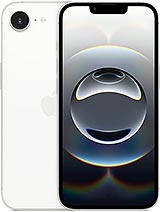
Motorola Razr 40 Ultra

iPhone 16e wins 4 of 8 categories
Here's exactly where each phone is stronger.
Bigger shape = better phone.
Scores out of 100. How we score
- SpeedTie8080
- CameraiPhone 16e8272
- VideoNot enough data
- SelfieMotorola Razr 40 Ultra6088
- BatteryiPhone 16e7058
- DisplayMotorola Razr 40 Ultra6296
- ConnectivityMotorola Razr 40 Ultra6875
- SecurityiPhone 16e10034
- ValueiPhone 16e8055
- iPhone 16e has the bigger battery4,005 mAh vs 3,800 mAh
- Motorola Razr 40 Ultra charges faster30W vs 20W
- iPhone 16e has a sharper main camera48 MP vs 12 MP
- Motorola Razr 40 Ultra has a smoother screen165 Hz vs 60 Hz
- Motorola Razr 40 Ultra has the bigger screen6.9" vs 6.1"
- iPhone 16e is lighter167 g vs 184.5 g
- iPhone 16e launched cheaper$599 vs $999
- Motorola Razr 40 Ultra has a sharper selfie camera32 MP vs 12 MP
- iPhone 16e has the faster chipApple A18 vs Snapdragon 8+ Gen 1
- Motorola Razr 40 Ultra has faster Wi-FiWi-Fi 6E vs Wi-Fi 6
- iPhone 16e is better protected from water and dustIP68 vs IP52
Why buy each phone
Swipe ⇄iPhone 16e wins — BeastScore 74.9/100
The iPhone 16e is the better pick for most people thanks to its bigger battery (4,005 mAh vs 3,800 mAh) and sharper main camera (48 MP vs 12 MP). The Motorola Razr 40 Ultra is worth a look if you prefer its faster charging (30W vs 20W).
Larger battery: 4,005 mAh vs 3,800 mAh · Higher-resolution main camera: 48 MP vs 12 MP
Faster wired charging: 30W vs 20W · Smoother display: 165 Hz vs 60 Hz
Common questions
Which is better: iPhone 16e or Motorola Razr 40 Ultra?
The iPhone 16e is the better pick for most people thanks to its bigger battery (4,005 mAh vs 3,800 mAh) and sharper main camera (48 MP vs 12 MP). The Motorola Razr 40 Ultra is worth a look if you prefer its faster charging (30W vs 20W). BeastScore: iPhone 16e 74.9/100, Motorola Razr 40 Ultra 74.3/100.
What are the main battery and display differences between iPhone 16e and Motorola Razr 40 Ultra?
iPhone 16e has a 6.1-inch display and 4005 mAh battery. Motorola Razr 40 Ultra has a 6.9-inch display and 3800 mAh battery.
How do iPhone 16e and Motorola Razr 40 Ultra compare for speed?
iPhone 16e scores 80/100 for performance; Motorola Razr 40 Ultra scores 80/100.
Similar Smartphones

Galaxy A71

iPhone 17e

Google Pixel 10 Pro Fold UW 5G Global TD-LTE 1TB GU0NP (Google Rango)

OnePlus Ace 3V 5G Standard Edition Dual SIM TD-LTE CN 512GB PJF110 (BBK Audi)
Xiaomi Mi 15T Pro 5G Global Dual SIM TD-LTE 1TB 2506BPN68G (Xiaomi Klimt)
V40e

Oppo Find X7 5G Premium Edition Dual SIM TD-LTE CN 256GB PHZ110 (BBK NVWA)

Motorola Moto G Play 5G (2026)
More Smartphones comparisons
iPhone 16e vs iPhone 17e
iPhone 16 Pro vs iPhone 16e
iPhone 16 Plus vs iPhone 16e
iPhone 16 Pro Max vs iPhone 16e
iPhone 16 vs iPhone 16e
OnePlus 13R vs iPhone 16e
Motorola Razr 40 Ultra vs Motorola Razr 70 Ultra
Motorola Razr 40 Ultra vs Motorola Razr 50 Ultra
Gear for the iPhone 16e
All Amazon Finds →Related articles
All articles → Guide
Here are the Apple iPhone Duo alternatives
Explore top alternatives to the $2,000 Apple iPhone Duo, including the Samsung Galaxy Z Fold8, Xiaomi 18 Fold 5G, Vivo X Fold5 Pro, and OnePlus Open 2.
Read → Tech News
Pixel 10a Now $599 vs Galaxy A57 & iPhone 17e: Still Worth It?
Google quietly raised the Pixel 10a from $499 to $599 in early October, and Samsung pushed the Galaxy A57 up to $599.99 the same week. That puts three "budget" phones at the same $599 starting price as the iPhone 17e. Here is what changed, how the three compare, and which one makes sense now.
Read →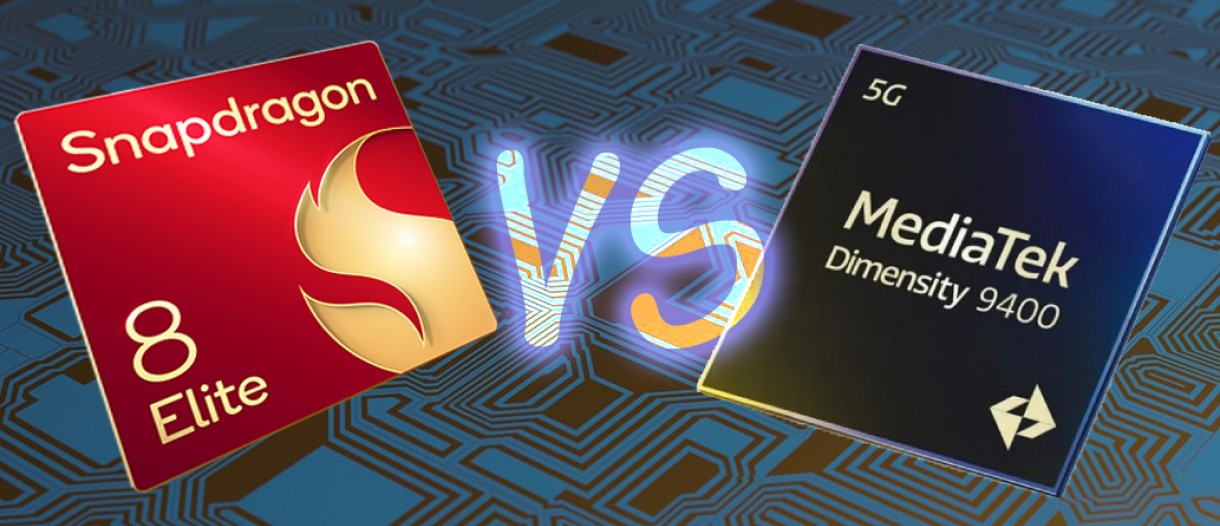 Flagship SoC Architecture
Snapdragon 8 Elite vs. MediaTek Dimensity 9400 vs. Apple A18 Pro: The Definitive 3nm Mobile Silicon Architecture, GPU Ray Tracing & Gaming Benchmark Showdown (2026)
An exhaustive 3nm architectural deep dive comparing Qualcomm custom Oryon CPU, MediaTek All-Big-Core Dimensity 9400, and Apple A18 Pro—covering microarchitecture, Adreno 830 vs Immortalis-G925 ray tracing, NPU compute, thermal throttling, and real-world gaming frame rates.
Read →