

The short answer: the OLED MacBook Pro is a great screen, but for most people it is not worth $900 more than the M6 model.
Apple announced it on October 28, 2026, at its "Pro and Tell" event. The 14-inch starts at $2,899. Most write-ups stop at specs. Below you get a clear buy verdict, the price gap to the models you can buy cheaper today, and who should skip it.
What Apple announced
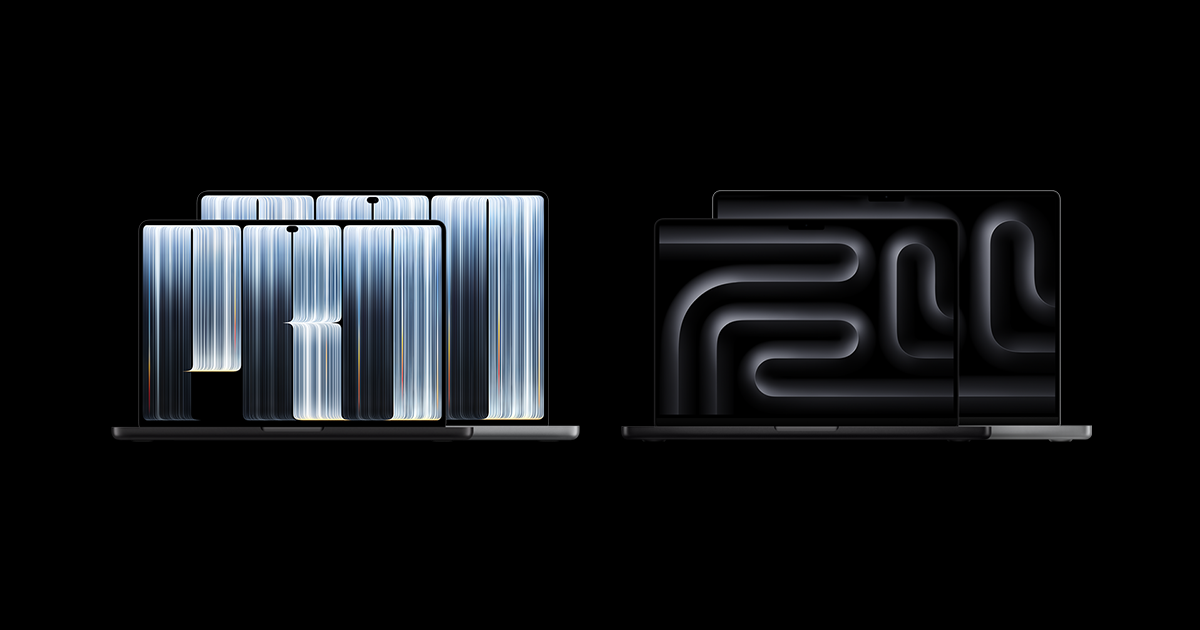
Apple calls the display PROLED XDR. It is a tandem OLED panel with built-in touch, and it replaces the notch with a smaller Dynamic Island. The laptop comes in 14-inch and 16-inch sizes with M5 Pro or M5 Max chips, the same chips as the mini-LED models from March. It does not use the new M6 chip.
Pre-orders opened on October 28. It goes on sale Friday, November 6, the same day as the M6 MacBook Pro. Apple sells all of them side by side.
Key dates
| Date | What happens |
|---|---|
| October 27, 2026 | 14-inch MacBook Pro with M6 announced ($1,999) |
| October 28, 2026 | OLED MacBook Pro announced, pre-orders open |
| November 6, 2026 | OLED and M6 models go on sale |
Prices: OLED vs the cheaper models
| Model (US starting price) | Mini-LED | OLED touchscreen |
|---|---|---|
| 14-inch M6 | $1,999 | Not offered |
| 14-inch M5 Pro | $2,499 | $2,899 |
| 16-inch M5 Pro | $2,999 | $3,399 |
| 14-inch M5 Max | $4,099 | $4,499 |
| 16-inch M5 Max | $4,399 | $4,799 |
The OLED model adds $400 to the same chip. Against the M6 it is $900 more. Base configs are 24GB and 1TB for M5 Pro, and 36GB and 2TB for M5 Max, per MacRumors. The M6 base is 16GB and 1TB. A maxed-out M5 Max with 128GB and 16TB reaches $14,249 (14-inch).
14-inch OLED vs M6 vs M5 Pro: real differences
| OLED (M5 Pro) | M6 mini-LED | M5 Pro mini-LED | |
|---|---|---|---|
| Starting price | $2,899 | $1,999 | $2,499 |
| Base memory, SSD | 24GB, 1TB | 16GB, 1TB | 24GB, 1TB |
| Display | Tandem OLED, touch | Mini-LED, no touch | Mini-LED, no touch |
| Peak HDR brightness | 2,000 nits | 1,600 nits | 1,600 nits |
| Contrast | 10,000,000:1 | 1,000,000:1 | 1,000,000:1 |
| Camera area | Dynamic Island | Notch | Notch |
| Weight | 3.0 lb | Not listed in our sources | 3.5 lb |
| Max SSD (M5 Max only) | 16TB | n/a | 8TB |
Sources: Apple, MacRumors, Macworld. Apple says both screens reach 1,000 nits sustained full-screen. Brightness and contrast are Apple's own figures.
What is new, and where each one wins
OLED wins on the screen. Apple lists 10,000,000:1 contrast, up to 2,000 nits peak, wider Adobe RGB color and a 10Hz to 120Hz refresh range. Blacks should look deeper than on mini-LED. For HDR video and photo work, that is a real step up.
OLED wins on weight. The 14-inch is about 3.0 pounds, against 3.5 for the mini-LED M5 Pro. It is also slightly thinner, at 0.59 inches against 0.61. If you carry it daily, you will notice 0.5 pounds.
Touch is new, but optional. macOS turns touch into clicks, and Apple redesigned the hinge so the screen stays steady. Apple says there is no added latency. It is a bonus, not a reason to buy on its own.
Battery is not better. MacRumors reports the same battery estimates as the mini-LED models. For the 14-inch M5 Pro that is up to 22 hours of video and up to 14 hours of web browsing. Apple's own page says "up to 24 hours" for the family, and that top figure belongs to the 16-inch M5 Pro.
M6 wins on price and has the newest chip. The OLED model has Wi-Fi 7, Bluetooth 6, three Thunderbolt 5 ports, HDMI, an SDXC slot and MagSafe. But it stays on M5 Pro and M5 Max, not M6. Apple's Pro and Max chips have more cores than the base M6, so heavy work should favor them, but we have not seen independent tests yet.
What is missing. There is no new chip, no battery gain, and no cheaper entry point. The cheapest OLED is $900 above the cheapest MacBook Pro.
Which should you buy?
- Student, office or everyday work: buy the M6 at $1,999. It does the job for $900 less. Do not buy the OLED for email, school and spreadsheets.
- Video editor, colorist or photographer working in HDR: buy the OLED. The brighter, higher-contrast screen is the reason it exists. Do not buy it if your clients view on ordinary screens.
- Want more power than M6 but no touch: buy a mini-LED M5 Pro at $2,499. That is $400 less than the OLED with the same chip and the same battery claims. You can find M5 Pro stock on Amazon today.
- Already own an M5 Pro or M5 Max MacBook Pro: skip it. The chip is the same. Do not upgrade just for touch.
- Carry it every day and weight matters: look hard at the OLED. It is lighter by about half a pound.
- Wait: you want proof first. Independent reviews and real battery tests should land around the November 6 ship date. If you do not need a laptop this month, waiting costs you nothing.
Check MacBook Pro 14 M5 Pro price on Amazon
FAQ
What is the MacBook Pro OLED price?
The 14-inch starts at $2,899 and the 16-inch at $3,399, both with M5 Pro. M5 Max models start at $4,499 and $4,799.
What is the MacBook Pro OLED release date?
Pre-orders opened October 28, 2026. It goes on sale November 6, 2026.
Is the MacBook Pro a touchscreen now?
Only the new OLED model. It has a built-in touch sensor, and macOS adapts its controls for touch. The M6 and mini-LED models are not touchscreens.
MacBook Pro OLED vs M6: which is better?
The OLED has the better screen and is lighter. The M6 costs $900 less and has the newer chip. For most people the M6 is the better value. For a detailed look at M6 against M5, read our M6 vs M5 MacBook Pro guide.
Other tech news this week
- M6 MacBook Pro. Apple announced the 14-inch model at $1,999 on October 27. See our event preview for how the rumors compared.
- iPad mini with OLED. Apple announced it on October 26, with an A20 Pro chip (Apple Newsroom).
- iMac with M6. Apple also unveiled a new iMac with the M6 chip that week.
Sources
- Apple: MacBook Pro
- Apple: Buy MacBook Pro
- CNN Underscored: MacBook Pro with PROLED XDR Display, specs and release date
- Macworld: Touchscreen MacBook Pro guide
- MacRumors: Apple Announces OLED MacBook Pro With Touch Display
- MacRumors: Touchscreen MacBook Pro starting configurations and prices
- MacRumors: MacBook Pro Mini-LED vs. OLED Buyer's Guide
- MacRumors: OLED vs mini-LED size and weight
- MacRumors: touch added no battery loss
Image: Apple